


“The Clean Room” is a column by David Serlin on science and technology.
In September 1958, millions of tourists from around the world flocked to the World’s Fair in Brussels, Belgium, to climb inside the Atomium, an enormous and somewhat exaggerated model of an atomic particle comprised of spherical exhibition rooms connected by enclosed escalators. Like the Trylon and Perisphere, its precursor at the 1939 World’s Fair in New York, the Atomium gave visitors a glimpse of the “world of tomorrow” in which the tools of Western science—and, at the 1958 World’s Fair, the benefits of atomic energy and nuclear power—would help to build a modern and sustainable global future. During the same month, in Geneva, Switzerland, representatives from about a dozen industrial nations—including Australia, Britain, Germany, and the United States—attended the Second International Conference on the Peaceful Uses of Atomic Energy. An outgrowth of the US Atomic Energy Commission’s Project Plowshare, the conference was organized to discuss the non-destructive uses of nuclear fission and to promote creative ideas that were both ecologically sound and commercially viable. Among those proposals that received the highest marks at the conference were a series of what were called “earth-moving” projects. Under the pet name Project Chariot, for example, a series of contained atomic explosions would be used to create a coastal harbor in Alaska, while the Cape Keranden Project detailed how a group of strategically placed and carefully detonated bombs could help to make a harbor in northwestern Australia.1
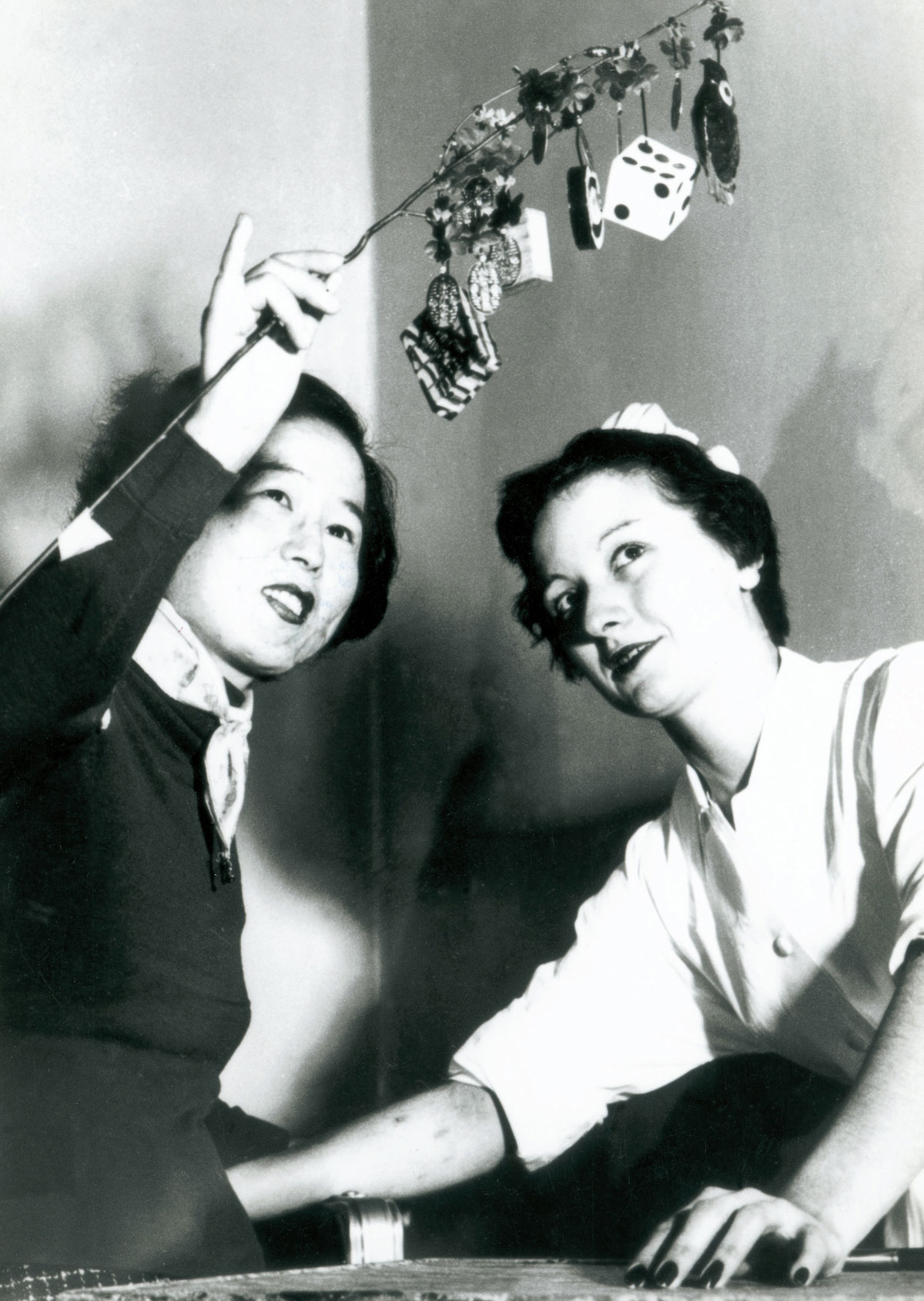
Government-sponsored “earth-moving” projects and artifacts of popular culture like the Atomium were part of a concerted campaign among many postwar nations to recover atomic energy from its pernicious association with mass destruction. Like a housewife coaxing marital fidelity out of her recalcitrant husband, the commitment to domesticating the atom’s wayward side became a national obsession during a period in which the United States maneuvered its resources and rhetoric in order to take charge as the globe’s scientific and economic leader. During the postwar Occupation of Japan, for example, which lasted from 1945 until 1952, the State Department forbade US newspapers, magazines, and books from publishing images of individuals who were killed or disfigured by the 1945 bombings of Hiroshima and Nagasaki. The threat of anti-nuclear activism in the United States, which emerged in Japan shortly after World War II and spread to a worldwide movement by the mid-1950s, was regarded as a direct impediment to the growth of atomic energy as an industrial boon at home as well as a tool of consensus building in the postwar global economy. More often than not, however, attempts to transform atomic energy into a benign and even utopian force for social good were met with skepticism. This was evident in the public outcry that followed Ford’s announcement of its new automobile model for 1958, the Nucleon, which engineers designed to be powered by a small, rechargeable on-board nuclear reactor.
Unlike proposals for projects like the Nucleon, which were regularly met with derision, the censoring of images of survivors of Hiroshima or Nagasaki was a strategy of domesticating atomic energy that took place in complete absence of popular opposition. Until the mid-1950s, the vast majority of Americans had little or no idea what victims of the atomic bomb—those the Japanese called hibakusha—actually looked like. The containment of potential dissent, the State Department must have believed, would result over time in the public’s assent to a future in which nuclear energy was a tool of foreign policy and free from the taint of death. In May 1955, the State Department’s worst fears materialized. This was the month in which twenty-five young women from Hiroshima were brought to the United States for plastic reconstructive surgery on their faces and bodies. Known as the “Hiroshima Maidens,” the young women became celebrities during their eighteen months in the United States not only because of their unique status as tourists but also as the first and only survivors of the atomic bombing of Japan whom Americans would ever encounter.
The story of the Maidens provides some insight into the ways in which Americans sought to recuperate the stigma of the atomic bomb within the patriotic framework of postwar science. In the late 1940s, Reverend Kiyoshi Tanimoto, a Methodist minister living in Hiroshima during the Occupation, sought out ways to bring a group of young women who had been badly burned and disfigured by the atomic bomb to the United States for plastic surgery. For most of their adult lives, the young women had been kept from public view by their embarrassed families, most of whom believed their daughters’ disfigurements were subjective reflections of family status rather than as the objective effects of atomic warfare. Although the young women bore deep physical and psychological wounds, they became known locally as Tanimoto’s “Keloid Girls,” an awkward term of endearment that referred to the hard pieces of scar tissue that formed on their bodies after their radiation burns.
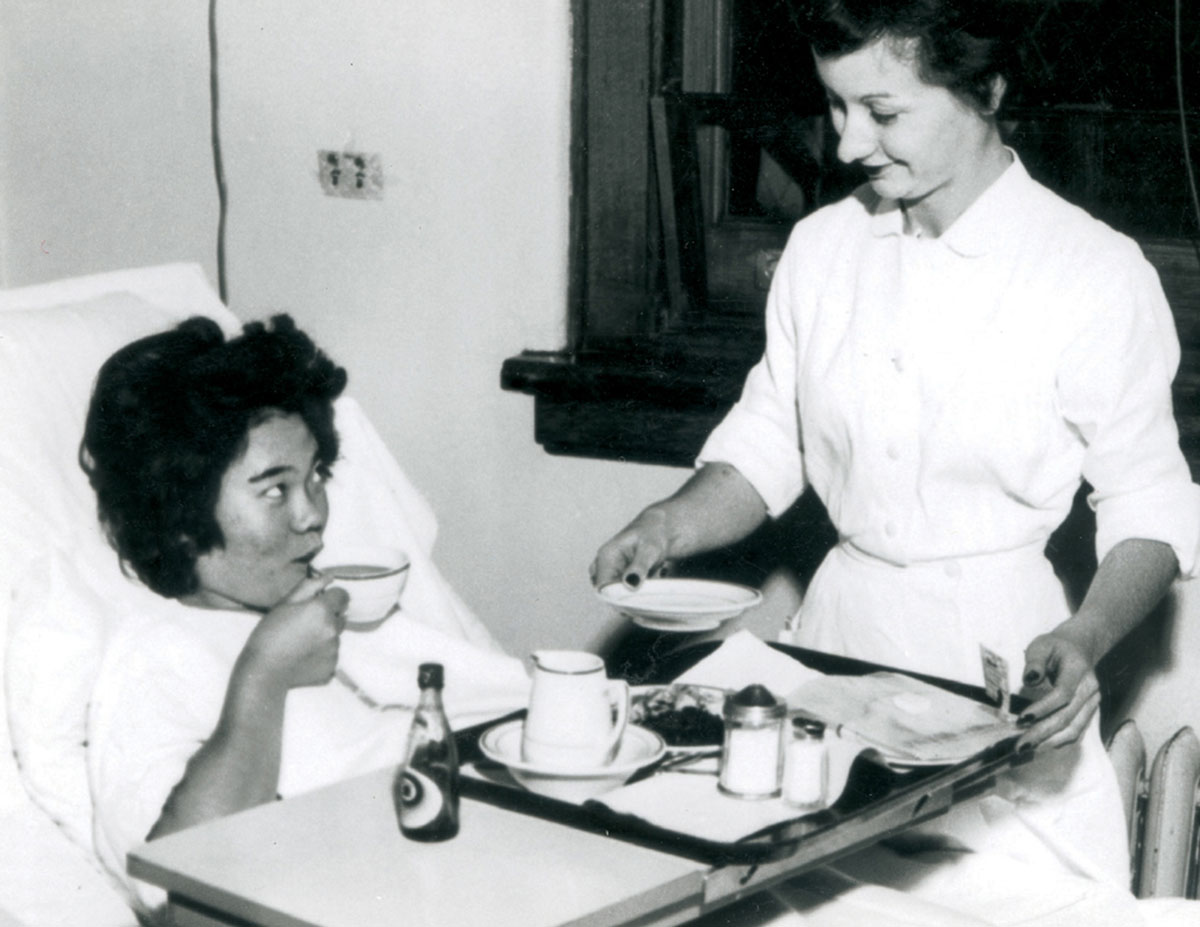
In 1951, Tanimoto met Norman Cousins, the influential editor of the Saturday Review of Literature, who had commenced a series of well-publicized tours to increase public awareness for the plight of Japanese orphans and war victims in both the United States and abroad. Tanimoto implored Cousins to help him arrange for his Keloid Girls to travel to the United States and undergo reconstructive plastic surgery on their faces, hands, and bodies. Cousins granted Tanimoto his wish, and twenty-five of those who would most benefit from surgical treatment were selected. Beginning in the late spring of 1955, a team of plastic surgeons at Mount Sinai Hospital in New York City performed over 140 operations on Tanimoto’s Keloid Girls. Known shortly thereafter in the United States and abroad as the “Hiroshima Maidens,” they recovered from their multiple surgeries in the homes of Quaker families in the metropolitan New York City area who had agreed to sponsor them during their surgical tenure, which lasted from May 1955 until November 1956.
Unlike survivors of conventional war, the Maidens elicited an unprecedented outpouring of medical anxieties and fears concerning the treatment of the body (and, especially, the female body) as disabled by the effects of radiation and nuclear fallout. Much to the State Department’s chagrin, the visual and symbolic evidence of the Maidens’ damaged bodies in public view helped to forge unavoidable links between their physical scarring and the damage wrought by the atomic bomb. In newspapers across the country, the young women were described variously as “bomb-scarred,” “A-scarred,” “Hiroshima-scarred,” “A-burned,” “Atomic-bomb-scarred,” or simply as “A-girls” or “A-victims.” These epithets proved that, regardless of visual propaganda or political intervention, the Maidens would not only retain an atomic resonance during their time in the US but that their relationship to the bomb—and not, as the State Department had hoped, to the compassionate war tropes of World War II used to describe veterans or concentration camp survivors—would be forever sustained by the American public.
On 11 May, just three days after they arrived in New York City, Tanimoto, his family, and Maidens Toyoko Minowa and Tadako Emori flew to Los Angeles to appear on Ralph Edwards’s popular NBC television program This is Your Life with the intended goal of raising money to help pay for the Maidens’ surgeries.2 Toward the middle of the program, Edwards introduced a “voice” from Tanimoto’s past that no one had ever heard before. Edwards brought out from behind a sliding translucent screen door the nervous figure of Lieutenant Robert Lewis, the co-pilot of the Enola Gay who, along with Paul Tibbetts, was responsible for flying the plane that dropped the bomb on Hiroshima. Lewis reportedly had spent the afternoon drinking himself into a stupor at a bar in downtown Los Angeles to anesthetize himself in preparation for the imminent encounter. As a low wave of electric organ chords began, soap opera style, to make their chromatic descent, he wiped perspiration from his face and in a soft New Jersey accent recited precariously the words he had prepared for this moment of public reckoning:
Well, Mr. Edwards, uh, just before 8:15 am Tokyo time, Tom Ferribee—a very able bombardier—carefully aimed at his target, which was the Second Imperial Japanese Army headquarters. At 8:15 promptly, the bomb was dropped. We turned fast to get out of the way of the deadly radiation and bomb effects. First was the big flash that we got, and then the two concussion waves hit the ship. Shortly after, we turned back to see what had happened. And there, in front of our eyes, the city of Hiroshima disappeared. I wrote down later, “My God, what have we done?”
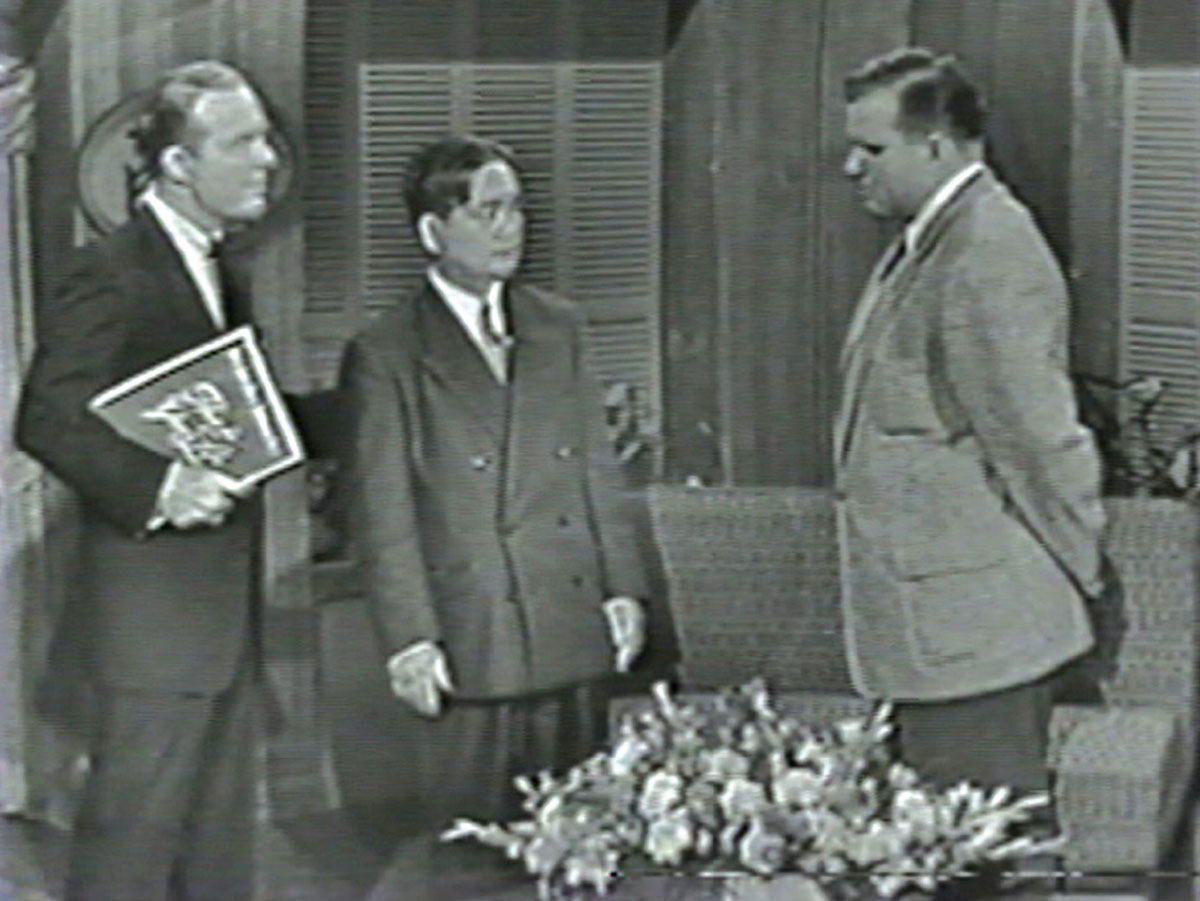
Bloated and sweating profusely, the embarrassed Lewis presented the Maidens with a check for $50.00 for surgical treatments he had inadvertently helped to make necessary.
Despite the lurid voyeurism and brutal insensitivity of Lewis’s appearance, a moment unprecedented on television in the United States, what truly disturbed This is Your Life’s production staff was not the potential awkwardness of the on-camera meeting between Lewis and the Hiroshima survivors. It was the presence of Minowa and Emori on a live national broadcast. They had been deemed too hideous to be shown to American television audiences. Some might argue that Ralph Edwards and his production staff feared that the Maidens’ appearance would clash ignominiously with the program’s regular sponsor, Hazel Bishop cosmetics. Edwards told the audience, “To avoid causing them any embarrassment, we will not show you their faces.” As he spoke, Edwards pointed to simple, docile silhouettes hidden behind a translucent screen. The opacity of the Maidens’ appearance on commercial television might have been a last-chance effort to obscure the visible effects of the atomic bomb from public view. On camera, however, it was a disturbing exhibitionary form that seemed to make Minowa’s and Emori’s shadows visually resonant with those of undisclosed criminals, anonymous homosexuals, or finger puppets animated by the light of a nineteenth-century lantern slide.
Japanese survivors of the atomic bomb, like the Maidens, often suffered as much from the social stigmas attached to ethnic or national difference as they did from their radiation burns.3 In the US, the popular media constantly linked evidence of their physical difference to the atomic bombing, which made their scars seem even more elastic and uncontrollable than they already were. Reconstructive plastic surgery on the Maidens offered one possible strategy for producing control in an out-of-control situation. After the Hiroshima Maidens arrived in the United States for reconstructive surgery, however, the distinction between emergency plastic surgery used to ameliorate suffering and elective cosmetic surgery used to facilitate beauty was entirely lost on the popular media. The Newark Star-Ledger, for example, announced the Maidens’ arrival in the United States with the headline “Disfigured Jap Girls to Get Facelifting,” while the New York World-Telegram explained that “25 A-Burned Girls … Hope to Regain Beauty.” The social consequences produced by this misunderstanding or blurring of surgical genres caused enormous criticism of the Maidens project. Some members of the Japanese press accused Cousins and Tanimoto of luring the Maidens away for medical experimentation despite the seemingly objective language of “expertise” espoused by American plastic surgeons. A May 1955 article in the Communist Daily Worker referred explicitly to the Maidens as guinea pigs of Western imperialism: “It is the supreme duty of the American workers to rescue mankind by taking the power from this ruling class whose disfigured face, pitted by the disease of degeneration of capitalism, can never be repaired by plastic surgery.”
The professional distinction between plastic and cosmetic surgery was emphasized strategically by Cousins and Tanimoto to ensure that the Maidens project would receive the appropriate support from the public, who might otherwise resent the fact that Japanese girls were getting facelifts. It was imperative for Cousins and others to establish Western medicine as a paradigmatic example of American scientific superiority and humanitarian aid. In 1952, for example, long before they even arrived in the United States, a group of surgeons from the Soviet Union approached Tanimoto and offered to perform reconstructive surgery on them for free on the condition that they speak out against American imperialism and nuclear weapons testing.4 This is why the four primary physicians for the project—Arthur Barsky, William Hitzig, Sidney Kahn, and Bernard Simon—were regularly identified in the media as board-certified plastic surgeons who had also served distinguished records during World War II, which promoted the Maidens project as not only humanitarian but also patriotic.
Moreover, whatever initial otherness the Maidens brought with them on their journey from Japan was neutralized by reconstructing them in the image of American women—if not physically, then certainly socially. Early observers commented that when the Maidens descended the runway in New York, they were not only exhausted and airsick but were dressed in “ill-fitting” blue polyester travel suits. The Maidens had teased their straight black hair into tangled knots that became “all frizzed out” since they assumed that all American women wore coifed and permed hair. The Quaker families that sponsored the Maidens endeavored immediately to improve the young women’s appearance. They lavished the Maidens with gifts befitting comfortable young American girls of a certain socioeconomic bracket and taste niche. Many families bought the young women expensive tweed skirts, cashmere sweaters, and saddle shoes for daily wear, evening dresses and shawls for formal functions, and gifts of beauty products designed to restore hair to its lustrous sheen. In addition, between surgeries, the Quaker families encouraged the Maidens to pursue professional and recreational interests. Many of the Maidens took classes in painting, nursing, cosmetology, and secretarial skills, even if many of them anticipated that all of the glamour would dissipate upon their return to the family fishing business.
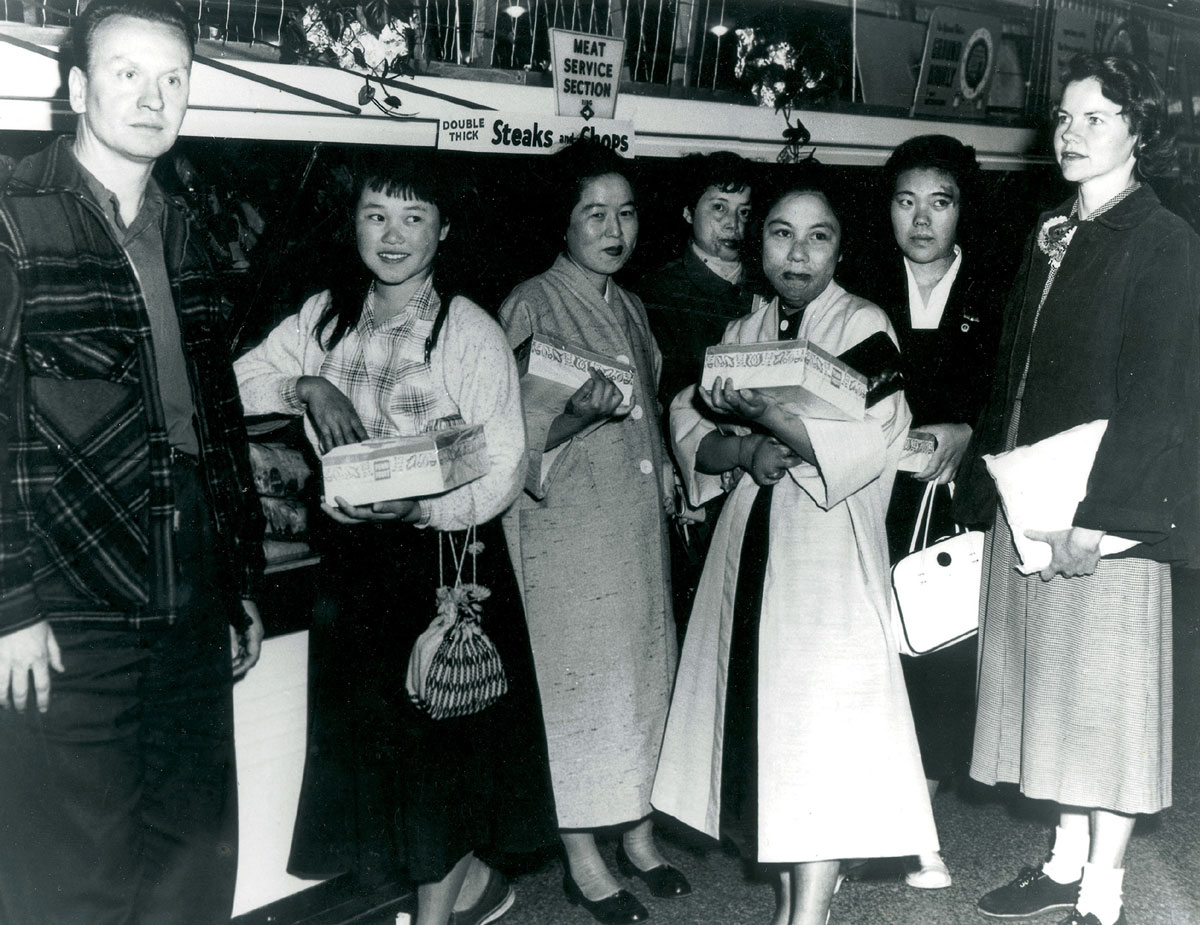
In the hands of their American doctors and Quaker sponsors, the Maidens became poster children for whom the stigmas of bodily damage inflicted by the chaos of applied physics could be healed through the miracles of modern medicine. More than merely offering them cultural opportunities or material gifts, surgeons and Friends offered their guests an entrée into the triumphant culture promised by Cold War economic liberalism. Indeed, for the American public that watched their miraculous transformations, the Maidens proved that plastic surgery, aimed at both emergency cases as well as at beauty’s common denominator, could serve as a democratizing force for these hibakusha, or for survivors of war, or even for those with ungainly appearances. They may have been poor female Japanese victims of radiation burns, but the Maidens were imagined partly as pioneers of innovative medical technology and partly as upwardly mobile career girls. The Maidens became literally the public face of those foreign nationals to whom the magic and mystery emanating from American goods and services flowed during the aggressive foreign policy initiatives and equally aggressive conspicuous consumption of the Eisenhower years. As the New York World-Telegram reported, “for years [the Maidens] have avoided society’s gazes and stares, helpless in their common sorrow. But now there is hope. … Twenty-five Japanese girls are seeing what America is really like.”
In early April 2003, during the first few weeks of Operation Iraqi Freedom, the Indian author Arundhati Roy tried to distinguish the naked ambition of the Bush Administration’s military campaign in Iraq from earlier (and allegedly more controlled) models of American military activity during the Cold War era.5 Roy assumed that in the past the American government was much better about concealing its brute tendencies toward economic and cultural imperialism. In promoting the Bush administration’s plan to rebuild Iraq, Roy argues that the president “has achieved what writers, activists, and scholars have striven to achieve for decades. He has exposed the ducts. He has placed on full public view the working parts, the nuts and bolts of the apocalyptic apparatus of the American empire.” The State Department may have been able with great success to censor images of Japanese atomic bomb victims in the decade following World War II in order to recuperate the weapon and further the federal government’s political and economic commitment to the promise of atomic energy. But perhaps we underestimate the ability of ideology to unravel, uncoiling itself even under conditions of its own choosing, and reconstituting the “apocalyptic apparatus” of empire for the whole world to see. Indeed, for both the State Department during World War II and the Bush Administration during Operation Iraqi Freedom, the shamelessness with which an empire exposes the apparatus of its ideology, its willingness to flex its muscle without remorse or apology, is perhaps the ultimate expression of its power. Within days of his admission of uncertainty on This is Your Life, the State Department contacted Robert Lewis and reprimanded him for showing any signs of reservation about the consequences of the Enola Gay’s mission. The combination of guilt and depression proved too much for Lewis, and by the late 1950s he was institutionalized in upstate New York. He committed suicide shortly thereafter. According to one account, in his remaining years Lewis was alleged to have built a sculpture as an art therapy project in the weeks before his death: an enormous, three-dimensional mushroom cloud with a single tear cascading down one side.
David Serlin is an editor and columnist at Cabinet. An expanded version of his column in this issue will be published next year in his forthcoming book Replaceable You: Engineering the American Body after World War Two (University of Chicago Press).