


Through the Vaste Spaces of the Aire: An Interview with Clive Hart
The prehistory of heavier-than-air flight
Jeffrey Kastner, Sina Najafi, and Clive Hart
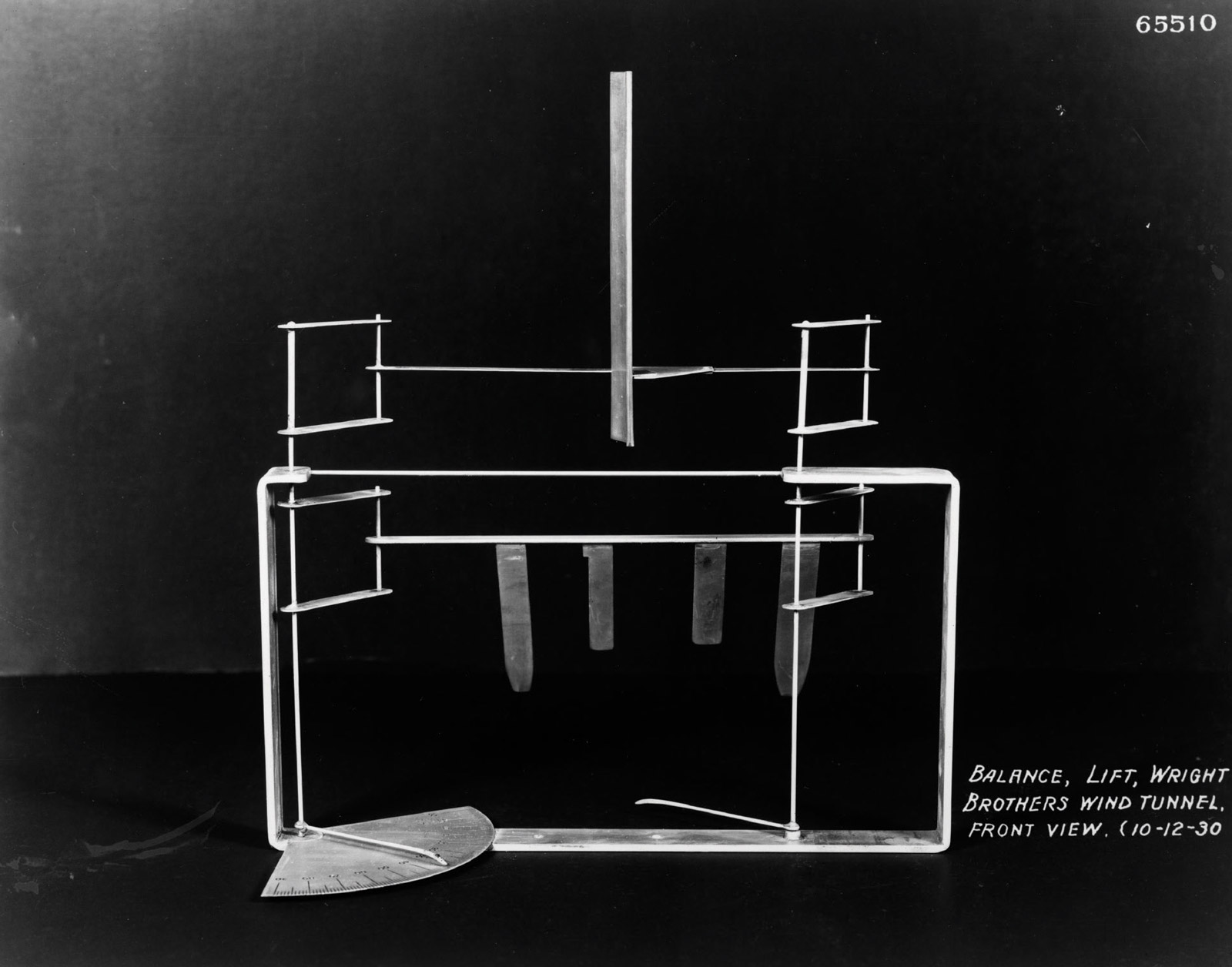
When the Wright brothers finally flew at Kitty Hawk one hundred years ago, they brought to an end a long history of attempts to fly in heavier-than-air machines. The role of scientific knowledge in this success has, of course, long been acknowledged, but in his classic book The Prehistory of Flight, Clive Hart analyzes the vast web of theological, philosophical, and political factors that determined the course of this history. Jeffrey Kastner and Sina Najafi spoke to Hart by phone.
Cabinet: In your book, the first thing you mention is that the ancients thought the air was gendered and was female.
Clive Hart: Yes, it’s female partly for etymological reasons and the association of the air with Hera, the chief Greek goddess. And it was fairly common to think of the possible ascent of a man into the air—it was always a man in question, of course—as having some vague relationship to the penetration of a female by a male.
So there was both desire and fear already from that very first moment?
There were a lot of legends about flight that ended in failure, the most famous of them, of course, being that of Daedalus and Icarus, where Icarus flew too close to the sun and had his wings melted off. There’s a real sense of inappropriateness in human aspirations to flight, an inappropriateness that leads to punishment for hubris.
One of the first codified descriptions of the air you mention comes from Aristotle, who attempted to describe its elemental character. By the time Aristotle started to do this, were there already established ideas of what the air was?
There is very little documentation of what anybody was thinking about the air in Aristotle’s time. It was when Aristotle became familiar to scholars in Western Europe—especially in Paris—in the late 12th century that people started thinking intelligently and analytically about the nature of the four elements and so on. There was a huge volume of commentary on these ideas.
Can you quickly sketch Aristotle’s theory of the air?
The air was the third of the four terrestrial elements, and Aristotle proposed that that it was divided into three regions: one that we live in down here; the second region above that, full of storms and clouds and general disturbances of meteorological effects, and above that a region of calm and serenity that bordered on a region of fire above it. That was the dominant idea for a very long while.
What effects did this idea have on the fantasy of flying?
It certainly influenced people’s ideas about what could and could not be done. The region above the storms and clouds was considered not only to be an area of great serenity but also of superfine air in which if you could somehow survive—and it was not clear to people that you could actually breathe this air—you would be in a region of calm, happiness, serenity, and also to some degree free of gravity. The propensity to fall would fade away so that, if you could somehow get up there, you could float along with almost no effort and in a state of peace—no problem from the elements, all would be clear, bright, full of sunshine. That attracted people a great deal. By the 14th century, you had Albert of Saxony with his wonderful idea of floating a little ship on top of this region of superfine air. He wrote, “if this ship is placed on the upper surface of the air, filled, however, not with air but with fire, it will not sink through the air; but, as soon as it is filled with air, it will sink. Just as, if a ship is filled with air rather than water, it will float on the water, and not sink; but when it is filled with water, it sinks.”
You said there was not much scientific discussion of the nature of air in Western literature prior to the re-emergence of Aristotle, but were there ideas of humans going into the air even though there wasn’t any kind of scientific knowledge about what the air might be?
That depends what you mean by ideas. People were fiddling with putting wings on their arms and trying to flap them from time immemorial. I don’t know whether these could be credited with being ideas. There is, I think, reason to suppose that there was some degree of success by accident with a number of people. I think we shouldn’t dismiss all the attempts at gliding flight out of hand. Probably some people did make a short hop and broke their legs or something in the process.
A lot of the people in the cases you document seem to have broken their legs.
Oh, breaking legs was absolutely the norm and there were obviously many injuries that were much worse. But this was usually written off as one of the obvious punishments that God would mete out to people who tried to get above their station.
But was there some sense after Aristotle’s rediscovery that perhaps there was a way to approach this in a more scientific manner?
Certainly. Of course, most of the ideas were very wrong and, in the long run, were not going to work. But yes, it did encourage people to think it could be done and they kept on doing it.
In what ways was Christianity a factor in this history? We’re talking about man’s hubris—which can be read in a Christian sense—but also gravity and the fall of Man. And we’re also talking about angels at some point, right?
Certainly, and the Bible has passages saying the air is the home of the demons. Satan is the prince of the air, so to get into the air was to associate yourself with the forces of evil. And that was seized upon as a way of trying to suppress people’s attempts to get above their station.
But weren’t the angels also in the air?
Well, until about 4th century or so, angels didn’t have wings, they were just messengers. The word angel means “messenger.” They didn’t necessarily fly. From the 4th century on, not only do they start to fly, but they also get younger and younger and eventually they become female as well as male, which was previously never the case. But they weren’t floating around all the time, the way demons were thought to be. They simply passed through the air in order to carry messages from heaven to earth, whereas demons actually inhabited the air. So it was a dangerous place to be up there, in the air—both physically and because it was inhabited by these forces of evil.
Was flying considered to be a heretical activity?
By the Renaissance it was certainly viewed as heretical. There were lots of denunciations of attempts to fly. There was a lot of ambivalence about it. For example, Bishop John Wilkins—who in the 17th century was Master of Wadham College at Oxford and a member of the Royal Society—was fascinated with the idea of human flight, but also was aware of the general attitudes toward it, writing that “it may seeme a terrible and impossible thing ever to pass through the vaste spaces of the aire.”
Despite these misgivings, there seem to have been consistent attempts to work out the basics of flight throughout this whole time. And also a growing interest in looking at animal behavior and animal mechanics as a way to understand flight. You quote a 13th-century Franciscan monk, Roger Bacon, who made one of the earliest comments on the practical possibility of flight when he alleged that “it is possible to make flying machines such that a man may sit in the middle of the machine turning some kind of device by means of which artificially constructed wings strike the air in the manner of a flying bird.” But in terms of trying to figure out just what “the manner of a flying bird” was, it seems people were often way off the mark.
If I could just interpolate a little bit here, people should have been thinking about bats. But of course, bats were figures of evil. If they’d based their ideas a little bit more on bats, though, they might have gotten a bit further.
Why is that?
Because bats fly better and because the structure of bats’ wings is much easier to imitate. I shouldn’t take that too far, however, because nobody had an accurate idea of how birds or bats fly until about the late 19th century.
But there were attempts to study it.
Very much so. Many people looked at birds and tried to propose designs for human wings, which would be based on the principle of bird flight, but nobody understood why they flew so they designed the wings all wrong. Curiously, very few people seemed to have thought of fixed wing gliding flight. They always wanted to flap and, of course, human muscles can’t possibly do that, so they were doomed to failure unless somehow they had—as they did in one or two cases—some kind of structure that enabled the wings to remain horizontal until they pulled downwards.
Let’s talk a bit about the way birds actually do fly and how these early ideas varied from what turned out to be the truth.
I’m no ornithologist, but basically, a bird’s wings work just like the wings of a fixed wing airplane in producing lift, and they do it by flapping their wings downward and sometimes forward to produce an aerodynamic flow. But that process of lift was not fully understood until about 1897.
It seems that by the Middle Ages, though, people were at least beginning to figure out that it might help to start from a height.
Yes. But the trouble was that they had no idea that human musculature was simply incapable of giving as much force as was necessary and there is, of course, a large problem of scale. The bigger we get, the larger wings we need and the largest bird is very much smaller than we are. I’m not sure how widespread the false beliefs were. But I suspect they were much the same as Leonardo’s. He certainly thought that birds flap their wings down and back and squeezed the tips of their wings in order to produce a region of compressed air below.
It’s interesting that out of all the different things that were tried, all the different misconceptions, that somebody didn’t stumble along and try the fixed-wing approach earlier than they did.
There is almost no evidence of anybody really trying a fixed-wing glider. And of course they had no idea about control systems; the function of the tail was always misunderstood. The tail was thought to be some sort of rudder, and of course it can be, but there was a great deal of muddled thinking about the use of the tail.
But there seem to have been many different kind of “ornithopters,” or machines designed to create flight by mimicking the way a bird flaps its wings. That seems to be the general drift of attempted flight design for five hundred years.
It was of course based on the usual assumption that the way to do better in all respects was to follow nature. You’d look at a bird, and birds are the ones that fly, so we’d do the same. I think it’s a reasonable thing to assume, at least as a first shot.
So what are the moments when this framework starts to shift, where people start to think about flying in a very different way?
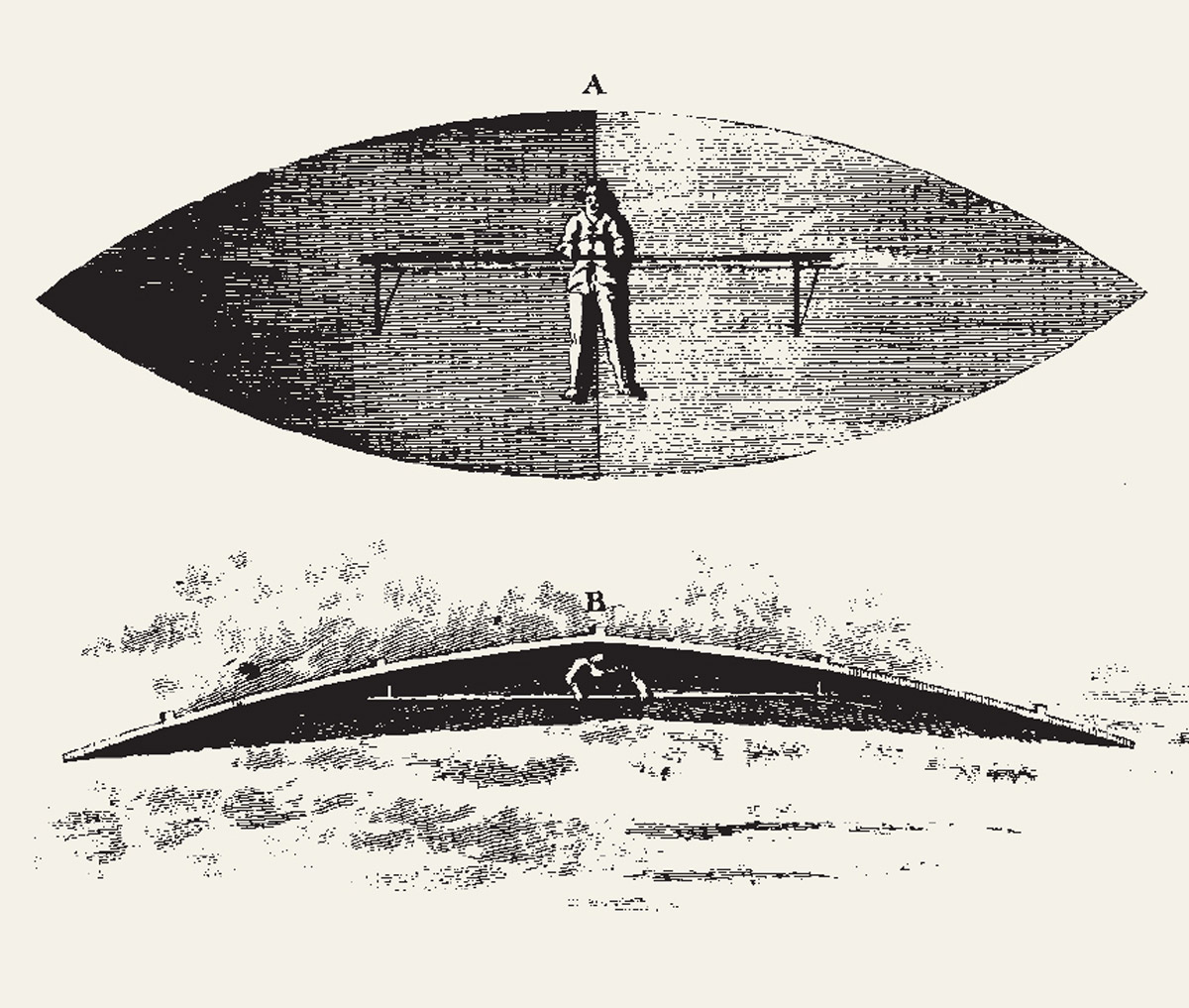
It doesn’t become significantly different until the 17th century, by which time there had been a considerable increase in the development of mechanical engineering. A few people were trying to design wings that would withstand the pressures. There were a few ideas in the 1660s and 1670s from Robert Hooke, who was Secretary of the Royal Society, and Christopher Wren was interested. And into the early 18th century there was quite a lot of activity. They still didn’t know how birds flew, but they did propose structures which had some semblance of reality about them.
So by this time, had the enterprise evolved from a kind of heretical behavior to something that was seen as having the potential to benefit man?
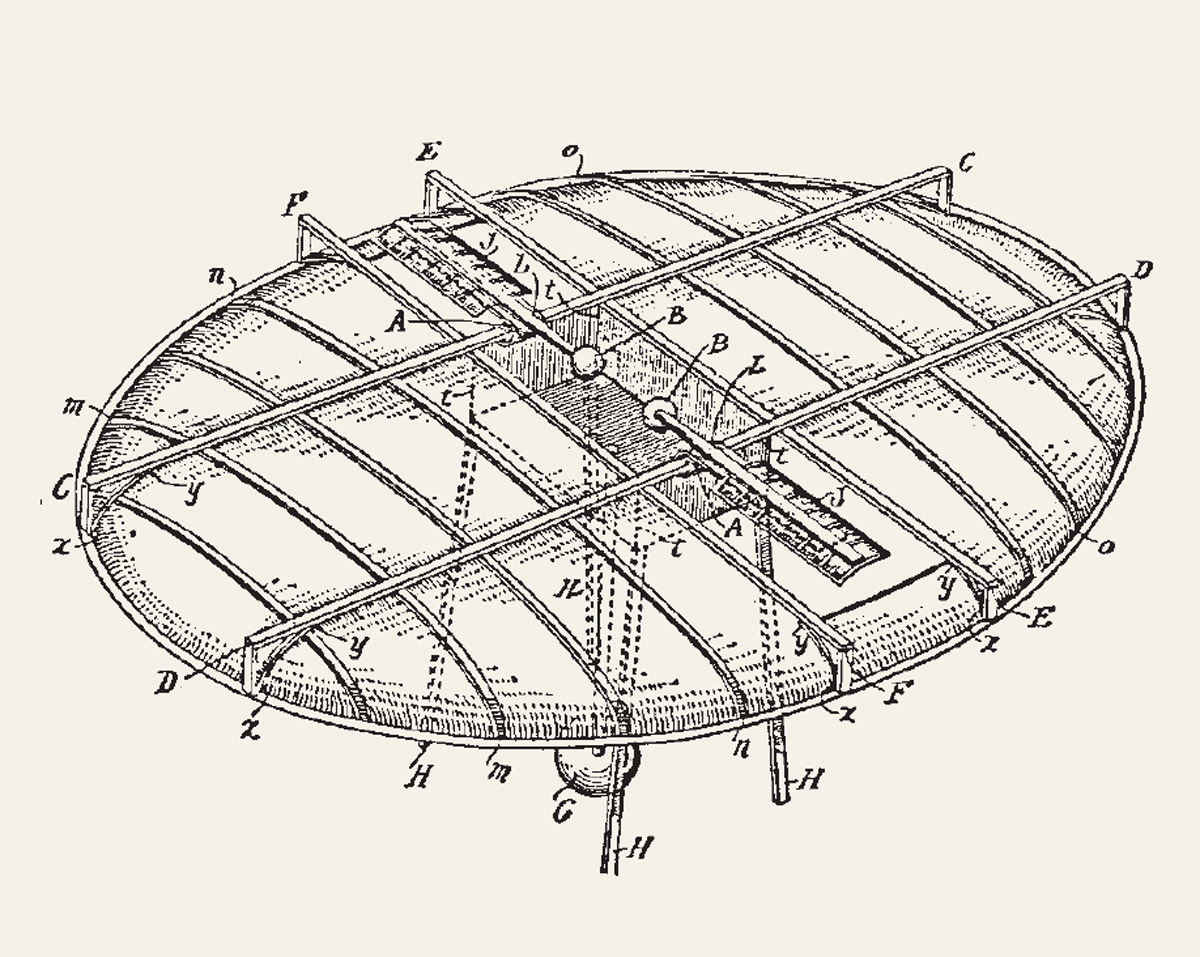
Yes, but there were still a lot of doubters. One of the most famous and somewhat more serious proposals for a flying ship, frequently discussed and imitated, is in a book called Prodromo (Preliminary Treatise) published in 1670 by the Jesuit priest Francesco Lana de Terzi. Basing his idea on the growing scientific interest in air pressure and the vacuum, he suggested that a light wooden ship could be raised into the air by attaching to it four globes made of very thin copper and about 20 feet in diameter. If the globes were fully evacuated they could carry the ship aloft, he thought. Yet for all his invention, he felt that his airship would probably never be built, because God would never allow the construction of something that could so easily be used as a weapon of war and pillage.
He was aware that he was operating in some unnatural way.
Not only that, but also contrary to church teaching. Again, in the 18th century there’s Melchior Bauer, who goes really rather the other way in claiming that his invention would serve the church, by hailing “fire, brimstone, and stones the weight of a talent on to the anti-Christian and idolatrous peoples … which choose to rebel against the true Christian Kingdom.” But this was all still within the realm of church thinking, where if you did wrong you would be punished, but if you proposed it right, you might get rewarded by the heavenly powers. And at this point, scientific inquiry was not to be distinguished from religious thought. It was just another aspect of looking into God’s ways with life.
And there was concern about flying machines being used for ill in other cases.
Certainly the further you go on, the more this becomes apparent. And so by 1784, you’ve got the French writer Laurent Gaspar Gérard laying down a set of rules for state control of flying machines—everybody has to be approved, you have to have an accredited pilot, and the whole thing should be financially sponsored by the state, as well.
All the research in your books relates to heavier-than-air flight. But as you mention, the first example of sustained human flight that we see is the Montgolfier balloon in 1783. Once someone saw that balloon flight was possible, was there a loss of interest in heavier-than-air flight because people assumed that balloon flight was the way to go?
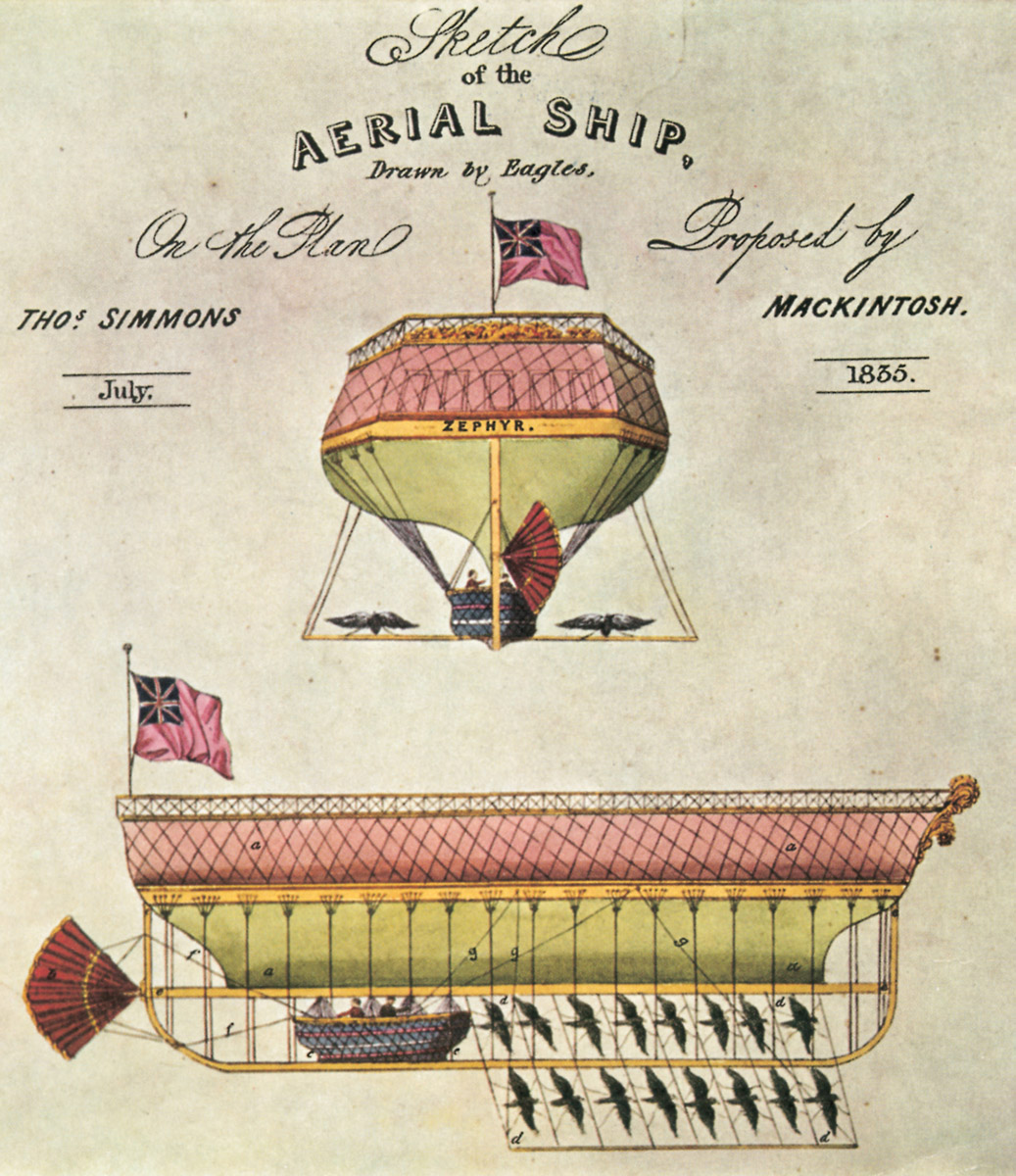
I don’t think so. But in the first place let me just add a personal comment. I’m not terribly interested in lighter-than-air flight and I want to distinguish—it’s my prejudice, I suppose—ballooning from flying. Flying, for me, is managing to control in three dimensions a machine that doesn’t inherently rise into the air, like a balloon. Jean-Pierre Blanchard had been fiddling with heavier-than-air designs some time before the Montgolfiers succeeded, but then he turned his attention to balloons and became one of the most celebrated of the early balloonists, making some 60 or so flights. But not everybody did that. There were still people who were thinking about trying to fly with wings.
Why is ballooning less interesting to you than heavier-than-air? Because it’s too easy?
I would say that it’s rather the other way around. It’s too difficult, because you can’t do anything with it. It’s a truly personal thing. I’d like to be able to do everything I want any time I’d like: up and down, sideways, anything. And the balloon, of course, can’t.
Do you have a pilot’s license?
Yes I do. But the balloon is fine. It’s a beautiful thing. It just doesn’t allow you to do an awful lot.
And then in the 1890s, the dirigible balloon is developed by Santos Dumont, and taken forward by von Zeppelin. So there was a moment between that and the Wright brothers’ first successful flight when you could control your balloon—a sort of tipping point between floating in a balloon and actually being able to direct your flight.
Yes. I mean, the dirigibles can do things. But, boy, slowly!
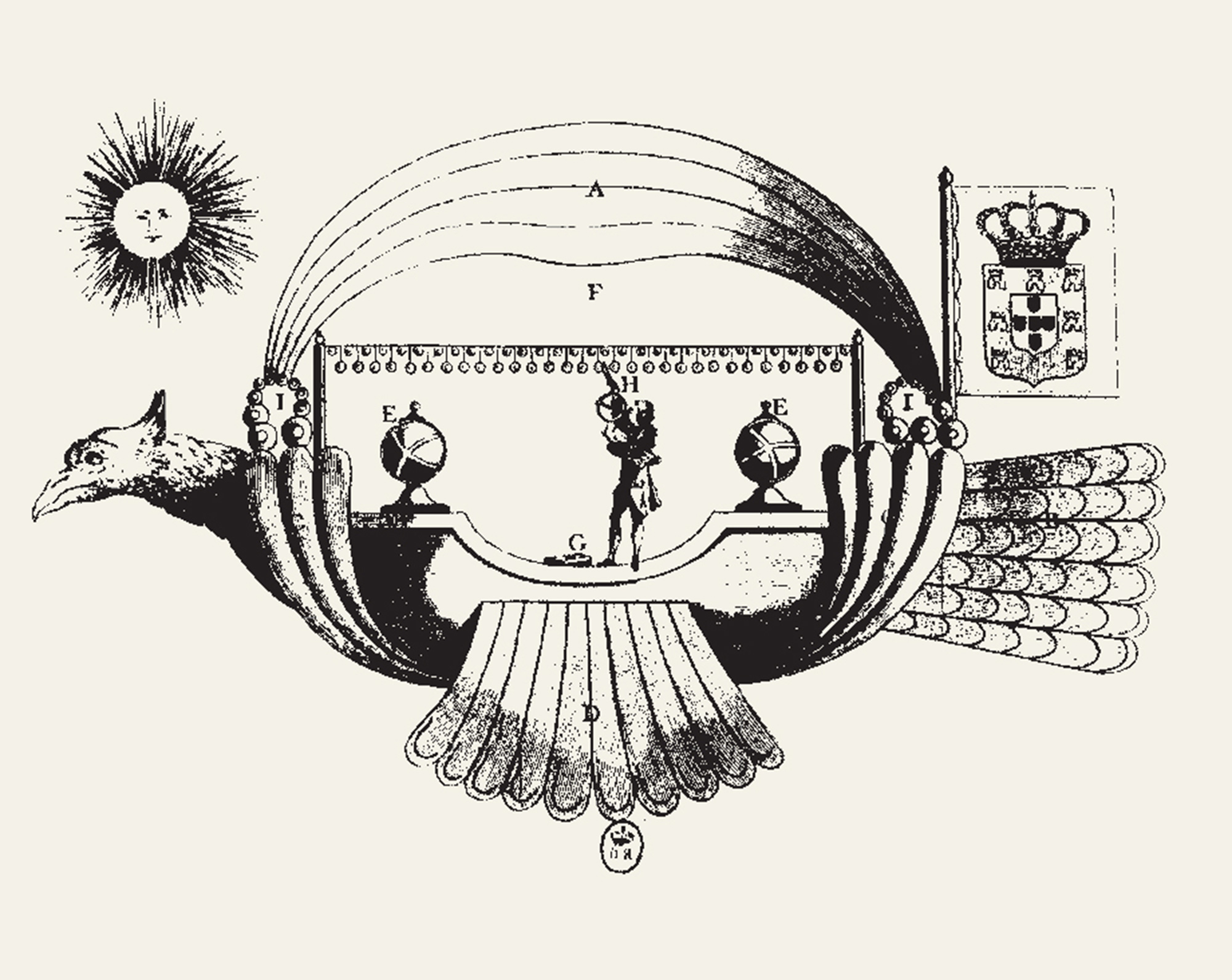
In the final part of your book, there’s a fascinating section on so-called flying ships, accounts of which appear throughout history, but seem to multiply in the Middle Ages. In drawings, these flying ships often seem to be shown from the perspective of someone on the ground looking up at them; people report being visited by them. The ships also typically seem to carry groups of people, rather than individuals. And so you get this idea of communal flying, which earlier seems to have been imagined as a very individual kind of practice. These flying ships seem to represent a different kind of model.
Yes, I think so. I’m not sure why suddenly there is an outburst of commentary on demonic flying ships that somehow visit the earth and cause destruction. But as I said, there’s plenty of evidence in the Renaissance associating flying ships with the demonic, descending from the air where the demons lived, or things being somehow perceived in the clouds, where you look up there and you see something that might be some sort of form or shape.
Presumably it suggests that flight is entering into the general consciousness of society. You wouldn’t think of a cloud as a floating ship until you had some idea that people were flying.
I think that’s true. On the other hand, it’s not so much people that are flying in these cases, as demonic forces of some sort.
Should we understand these as coming from the same place that we imagine UFOs would be coming from today? Is it a similar fantasy, structured in a similar way?
I think so, because UFOs become very, very prominent in the 16th and 17th centuries. There was an awful lot of science fiction around then. When people started thinking about other worlds—certainly stimulated by Galileo—you start to get suggestions that we might find civilizations up there.
And that they might visit us.
They could visit us or we could visit them. So there’s a huge outburst of stories about flying to other worlds—flying to the moon, flying to Mars. These are very similar to simple modern science fiction narratives.
Who are some of the prominent people in this history of early science fiction?
There’s Francis Godwin, who was a contemporary of Shakespeare, who wrote The Man in the Moone about a hero who escapes from an island by training a flock of wild swans to accept a harness. They carry him through the air but take him, to his surprise, to the moon, which is where they hibernate. And Cyrano de Bergerac, who wrote accounts of a wide variety of wildly improbable ideas about piloted flight to other worlds. And they’re not the only ones. The moon was very favored, of course. To ride to the moon was conceived of as a real possibility. In 1638, Bishop Wilkins published A Discovery of a World in the Moone, a book reflecting the excitement generated in the 17th century by observations of the moon through telescopes. A few years later, he even added a substantial chapter discussing the proposition that “’tis possible for some of our posteritie, to find a conveyance to this other world.”
And who were the readers of these science fiction stories? One usually thinks of science fiction as a 19th-century phenomenon.
By no means. It goes way back to Greek and Latin times. You’ve got a lot of science fiction throughout the ages. It’s not the kind of science fiction that we think of these days, but certainly what I would call science fiction, that is to say stories based on fictional ideas dressed up in scientific thought. And much of it relates to flight.
Click here for a historical directory of attempts at heavier-than-air flight, culled from Clive Hart’s The Prehistory of Flight.
Clive Hart has written widely on the history of aviation. His books include Kites: An Historical Survey (1967), The Dream of Flight (1972), The Prehistory of Flight (1985), and Images of Flight (1988).
Jeffrey Kastner is a Brooklyn-based writer and senior editor at Cabinet.
Sina Najafi is editor-in-chief of Cabinet.
Spotted an error? Email us at corrections at cabinetmagazine dot org.
If you’ve enjoyed the free articles that we offer on our site, please consider subscribing to our nonprofit magazine, which includes unlimited access to all our archives.