


1 in 32
The culture of secrecy
The Speculative Archive
The Speculative Archive for Historical Clarification is a long-term project that produces documents that investigate the political and cultural implications of state self-documentation. Its work focuses on the processes through which covert government activities are documented, classified for reasons of national security, and, at times, selectively declassified. Founded in 1999 by Julia Meltzer and David Thorne, SAHC has recently completed a series of interviews with government officials involved in the regulation and release of secret government information. Below are excerpts from three of these interviews.
Could you state your name and position?
My name is Charlie Talbott. My position is the Deputy Director of the Directorate for Freedom of Information and Security Review in the Pentagon.
How does someone formulate a request for documents pertaining to a specific subject? Are they assuming that secret materials must exist?
People who make a request are informed because they know that there is something on the subject matter. They don’t know exactly what sometimes, but they know that there is something. To give you an example, every time we have a military conflict anywhere in the world, you can expect a Freedom of Information Act (FOIA) request to come in later for all the records related to that. The best example I can give you is near the end of Jimmy Carter’s administration, when we had the hostages in Iran and the aborted attempt to rescue them. After that we had The Washington Post come in and ask for everything on the planning—everything—and it was at that time, paper stacked end on end, about 32 linear feet of paper for the planning of that raid. Just the planning. So they wanted everything on that—they wanted 32 linear feet of top-secret information. To make a long story short, we went into FOIA litigation, which took ten years to litigate through the court, and what we released finally was a stack of papers about this high, about 1 linear foot, that was redacted heavily, and also some maps on the raid. That took 10 years of litigation.
Has the rest of that material subsequently been declassified?
I have absolutely no idea, I don’t know where it is or what happened to it.
Could you state your name and position?
My name is Lee Strickland. I’m a career intelligence officer with CIA. For the last year I have been a visiting professor here at the University of Maryland, a joint appointment between the College of Information Studies and the College Park Scholars Program. I’ve had several positions at the CIA. I’m a litigator for the office of general counsel and thereafter I moved over and managed the FOIA program. Most recently I was Chief of the Information Review Group and manager of all of the disclosure programs. Everything from Freedom of Information Act (FOIA) requests to the CIA’s historical program, JFK, Nazi war crimes, Clinton’s executive order for 25-year automatic declassification, and the State Department’s “Foreign Relations of the United States” publication series.
How does the concept of “historic value” play into the declassification process?
Documents with historic value, by definition, become permanent records of the United States. Typically these kinds of documents surface because of the special declassification projects. The fact is that when you are dealing with historically or politically important things, people will make an effort to be as forthcoming as possible—but it’s a slower and more deliberate process where you are making the finest judgments, so as to make it possible for the best redaction job to be done. The minimum will be withheld. It’s the difference between doing it fast—and I’ve got a million pages—or saying, this is really important and I want to do as careful a job as possible.
How specific are the declassification guides?
Declassification guides are very exact documents. They are quite lengthy, and are organized by type of information, for instance “cover.” So, if you go to the section on “cover,” it might have 20 or 30 entries, which would tell you that this type of information is classified for this length of time at this security level. If you want to know about classifying a particular area of information—cover, human sources, whatever—you would go to the guide and it would tell you specific kinds of things, for instance, the name of an organization providing cover for a CIA officer. The guide tells you the classification level and duration, etc. So the guides are quite specific. Most declassification guides are classified.
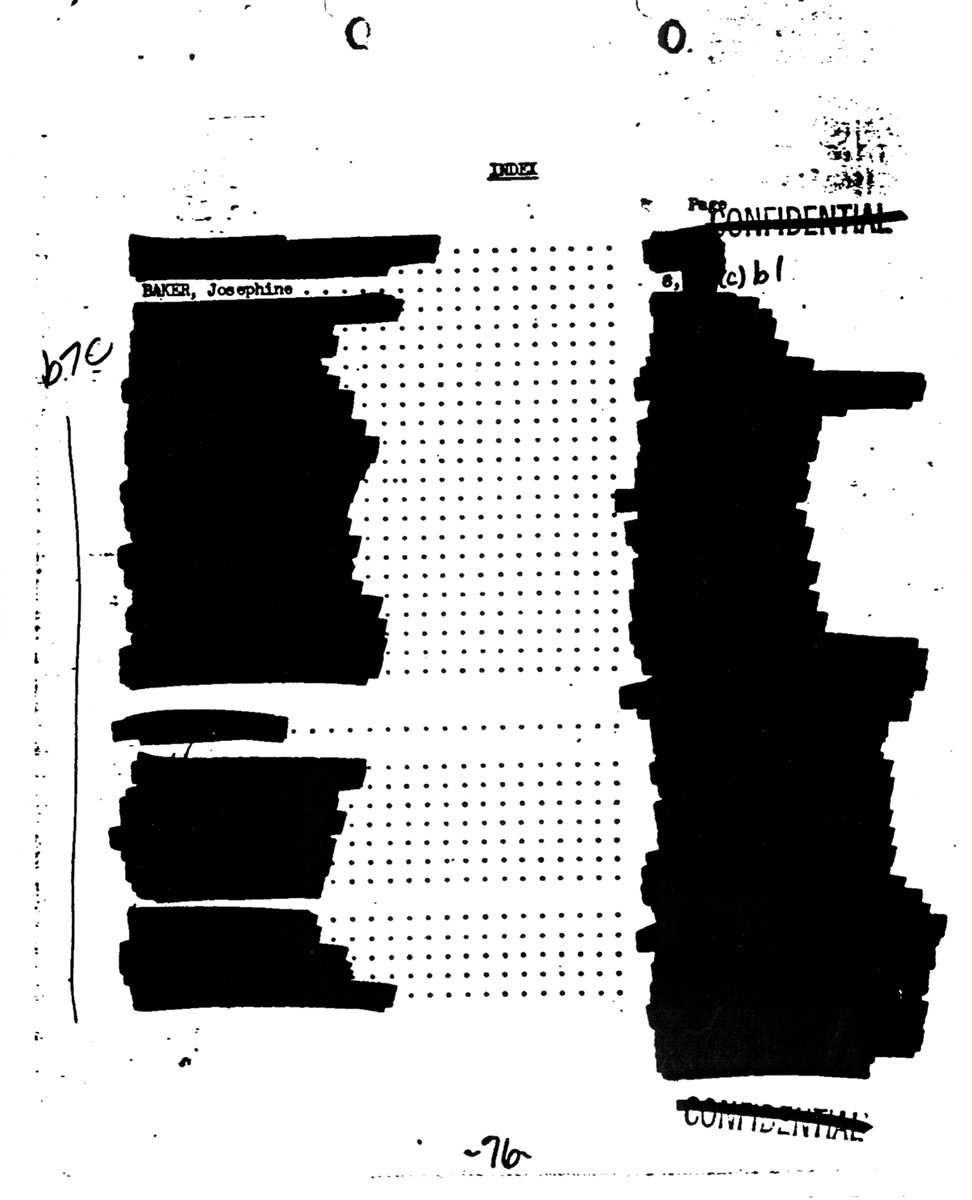
But it must be difficult because the information within documents is not always clear-cut. It might be easier to assess potential damage from release of technical information, for example, than from other types of information.
Right. For instance if you had a quote that came from a communications intercept, that’s easy—you know the whole paragraph is going to be cut out. That would be very clear. Other information is more difficult. For instance, you are not allowed to take out everything that a source said to you, but you are allowed to protect the identity of the source. Let me give you an example. You have a paragraph, “The case officer met with colonel so-and-so yesterday, such-and-such a date, at the hotel whatever at 7 o’clock in the lobby bar. He was a bit drunk and proceeded to have some more drinks and we discussed the following three things. Paragraph A: his chances for promotion in the army. He said that his buddies so-and-so were promoted. Paragraph B: He discussed his family life and that his wife, the former so-and-so, and their three children were _____. Paragraph C: He discussed rumors in the army about who was responsible for killing American tourists.”
OK. Now, when you start the declassification—and I’m being a little bit silly here—the only thing that you know for certain is that you can take out “so-and-so.” You can take out his name, because you are protecting the source. But how much more information does one need to withhold to protect the identity of the source? Now, let’s go to the silly side of that. OK, he had too much to drink that evening. You probably don’t need to take that out. How about “We met at the Hotel Excelsior in the lobby bar?” You probably want to take that out. Then you would look at paragraph B: He was whining about his wife and children. Well, that’s not responsive to the request, and it would identify him. When you get to paragraph C, when he was discussing rumors in the military with regard to the American tourists, you’re obviously going to be looking at that and thinking about releasing it, because it is at the heart of what is relevant to the request. Now, if it says, “There were rumors in the military...” you might well be able to release that. However, if it said, “He told me that his close buddy X had told him,” then you have a more difficult problem and decision about releasing the identity of X. That’s the process one goes through. The only thing that is clear-cut is the person’s name. Then you have to go through the document sentence by sentence.
Are declassifiers selected or brought in because they have an existing knowledge of what was going on at a particular time in a particular place?
I call declassification a reverse engineering exercise. If you don’t understand how the document was compiled, you can’t understand how to declassify it. When I was declassifying, I liked to have somebody from the history staff or from the geographical division involved, or else I have to do a lot of research. When requests come in, I don’t necessarily know anything about the event. Before you can do redactions, or even begin a meaningful search for documents, you have to know what the request is about. Otherwise you are approaching it in a mechanical, mindless way, and the odds are that your search won’t be very productive. If you just take the terms that the requester provided and plug them into your search, you probably won’t get anything, because your retrieval system probably doesn’t even use the same terms. This gets into the issue of full text search systems and the fact that your request often has to be searched historically through six different systems that have been used over the years. So when you ask me about a particular subject matter, it’s not like firing up the PC and going to Google and typing in “El Salvador nuns” and finding everything. The point is that you have to be conversant with the ways that the documents were being created and indexed back then, and how they are retrievable now, as well as documents that have been created in the interim and even today or yesterday. You have to understand that continuum of systems. As you know, even though the current system today might be capturing things in full text, this wasn’t the case in 1980 or in 1965. Requests have to be brokered into these different systems, and you have to create the search—the appropriate search—so you go from full text today, to “key words” yesterday, to file folders from 25 years ago. And even with full text systems, as we continually discover, you are likely to make the request—the death of the nuns in El Salvador—by using names. But there are dozens of other terms that may have been used instead of the nuns and their names. They may have been called “the Mary Knoll sisters”; they may have been called “American church women”; they may have been called “Catholic church women,” “Catholic church_women,” etc. You can see the problem. That’s why it helps to have a historian or someone with historical knowledge.
Could you talk about the physical methods of doing redactions once you have selected documents for declassification?
OK. There are two styles of doing redactions. There’s the old-style manual method where you would actually Xerox a page and use a special type of marker—the red El Marko marker—to redact the information and then Xerox it again. You can also use a black grease pencil. It’s specific to the Xerox machine. Now we have an electronic system called MORI—Management of Officially Released Information—which images the document as a TIFF file. You basically draw boxes around information and create overlays that can be color-coded, so that one can be yellow and another can be red. Then I can consolidate them. So the system maintains the original TIFF image and the overlay images—which are basically just mapped coordinates. Then we make what we call burned redactions. You actually apply the declassification markings to the burned redactions. We burn these images and in a way it’s like burning the classified information right out of the document. Some people used to use Exacto knives to redact. That’s just very slow. Then you lay it down on the Xerox machine and copy it. But I would say that the vast majority of people prior to the electronic system just used the red El Marko marker or the black grease pencil. The El Marko was a little bit nicer because if you had to go back you could use Clorox on a Q-Tip to undo it. If you decided you made a mistake, you literally had a bottle of Clorox with a Q-Tip. And it would take it right out.
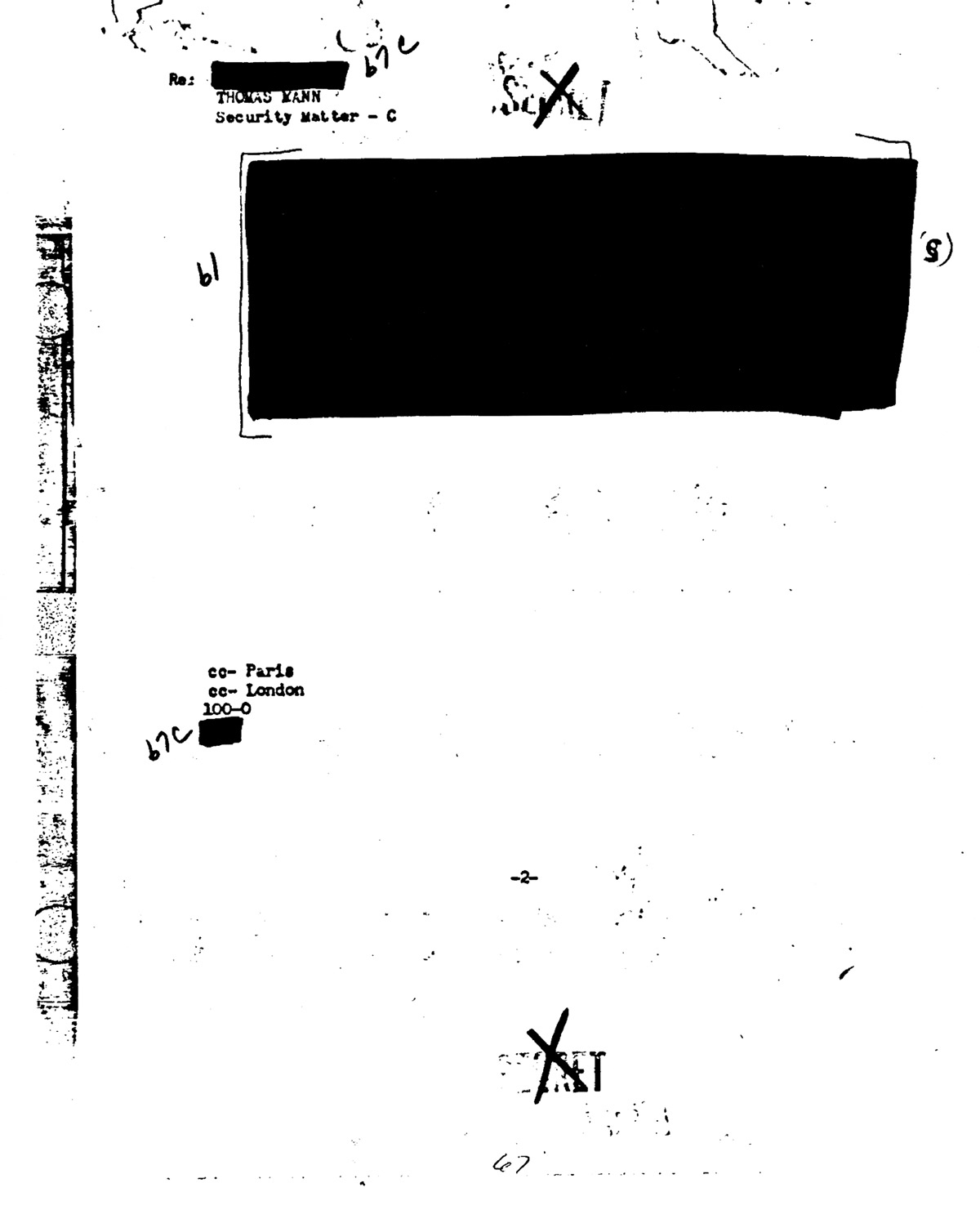
It is sometimes difficult to discern what the rules are for redaction—why is this information released, but this other information withheld? It can sometimes appear subjective or arbitrary or deceptive.
In any arena you have to have clearly understood rules to make decisions. I mean, whether you are talking about custody or child support, whatever arena you are in, it works best to have well-understood rules for reaching decisions. You don’t want to be arbitrary or capricious. So I think that’s what you want to protect; you want to prevent giving away a secret by accident. And you can see why. Are you familiar with the term “glomar”? A glomar is a “neither confirm nor deny” answer. It comes from the ship, the Glomar Explorer, whose classified mission was to recover a sunken Soviet submarine in 1974. A glomar is needed when the fact of the existence of records on a given subject is secret. So, it’s not so much whether you’re looking at whether the record is secret, you’re looking at whether the fact as to whether it exists or not is a secret. Imagine if you ask, “Do you have any records showing that X is a CIA asset?” We would answer with a neither confirm nor deny. Your request is denied, pursuant to exemptions one and three. I can neither confirm nor deny whether such records exist. And that’s because the fact as to whether a given person is or is not a source is a secret. If, in fact, they are, then their records would also be classified. So, that’s why it is important to have well-understood rules: so they can be administered fairly and consistently. Some people from the outside might attribute those to a sort of a knee-jerk mentality that the agency just doesn’t want to go into this. I think it’s much more that you want to have well-understood rules that can be applied in a consistent manner and not arbitrarily and capriciously.
So when you respond to requests for documents and you determine that the request merits a neither confirm nor deny answer, do you say, “That’s a glomar”?
Yes. You glomar a request by simply the way the response is worded. It doesn’t matter whether any records exist or not. So, for instance, if you ask me the CIA budget for the year, I don’t glomar that request, I deny that. You know and I know that the budget exists. But if you ask, is a certain person an asset? Then you glomar that—you don’t confirm or deny that. You know from the request that it’s really irrelevant whether you have any documents or not.
Was there a CIA station in Santiago, for example?
Right. Generally speaking, stations are not acknowledged, though there are exceptions. And again this has to come from the highest levels and for a certain reason. An example might be: The Department of Justice might say, “We are doing a criminal prosecution and we need to have this information declassified for the case.” So, in all of these decisions there is a balance that can be made. And that’s how you have exceptions to the rule. Essentially, the director has to make that decision. So, now you allude to the point that it’s well known. And that’s correct, there are plenty of things that are well known, but still have to be officially secret, because the US doesn’t want to acknowledge those. In all those cases, would lots of damage ensue if the information were released? Probably not lots of damage… some.
Could you state your name and position?
My name is Steven Garfinkel. I’ve been the director of ISOO (Information Security Oversight Office) since May, 1980. Essentially ISOO serves as a bridge between the president, who issues policy on security classification, and the agencies which implement that policy. Our responsibility is to see that the president’s policies are being implemented reasonably by federal agencies which create or handle classified information. ISOO, as its kind of silly acronym is, has been an administrative component of the NARA since 1995. Before that it was an administrative component of the OMB, and before that of the GSA. It’s an office that, since its creation in 1978, has taken policy guidance from the NSC.
Are there significant reasons why ISOO has been shifted around between these different agencies?
No, but there is a very long history which I can try to synopsize. When the office was first created in 1978, it was a creature of Jimmy Carter’s executive order that established the policy for the security classification system. At that time, there was a great downsizing of the White House going on, and so they said, “Well, even though ISOO is going to be performing a function for the president, we’re going to find it a home other than in the White House because we’re not going to add to the size of the White House.” So that established the precedent of having ISOO located somewhere other than where it was getting its policy direction. They found the GSA, which they thought would be a neutral home—it’s the government housecleaning agency and doesn’t have anything to do with classification. And then in 1992-93, we got embroiled in—and I don’t mind saying this—a pork barrel issue that upset two members of Congress, because we were proposing to issue rules regarding how you actually store classified information that would have created a non-monopoly situation for a company within one of the Congress members’ state. It was very silly—it’s a great Washington story because only in Washington could something like this happen. Essentially, the member of Congress tried to have ISOO disestablished by not funding us. And then at the last minute of that Congressional budget cycle, they said “OK, we’re going to fund you but not within GSA because GSA has no control over you, so we’re going to put you in the NSC, which does have control over you.” This is very complicated—only in D.C. At that time the NSC was involved in a very heated FOIA case over access to its records and they were arguing in court that they were not an agency. And so if ISOO had been put in the NSC, ISOO—which has agency-like functions—would not have helped their argument that they are not an agency. So without telling the OMB, which is, of course, in charge of the federal budget, the NSC managed behind the scenes to get Congress to put ISOO in OMB. So OMB woke up one day thinking they knew the President’s budget and they had this new office in them. That was an extremely difficult situation because they were not happy that somebody had played a trick on them. OMB decided right at the beginning, “Well, this won’t do at all. We don’t do agency functions either. We’re above that and so we need to find you another home.” Ultimately they decided on NARA, the hapless victim. We’re like a pawn. But the whole time we’ve been able to function. For one thing, 99% of the time we can function independently of even the NSC because things are going on and they’re not that controversial or whatever. There are no policy decisions being made per se. There are times when there are and then we deal with the NSC. So the moving around hasn’t affected our policy function, though it has been difficult at times to go from hither and yon.
Your work requires that you negotiate and regulate secrecy. When do you feel secrecy is necessary?
On occasion. I think secrecy is a temporary thing. There are two kinds of secrets in my view. There are real secrets, which are relatively few. These are things you would assume are real secrets, which are new discoveries, new developments, a position you’re going to take in terms of diplomatic or military maneuver. Real secrets generally have a life span of really being secret, and it’s not forever by any means. Then we also have a lot of secrets that I call protocol secrets. That’s my own term for things that are not really secret. Everybody knows that they happen, we just can’t admit that they happen. For example, we can’t admit that we cooperate with another country in an intelligence operation against a third country. Without talking about the specific intelligence operation, every American assumes that we cooperate with our allies in intelligence matters just as we might in military or diplomatic matters. And there are lots of protocol secrets. They are secret in the sense that they’re not admitted and they’re not formally true, but everybody assumes they’re true and their assumptions are generally pretty correct. Because we have to work with other nations, a lot of these things stay secret, many of them for far too long. And that’s the area of declassifying what really isn’t secret that I push, and where I feel our office needs to be aggressive, vis-à-vis the CIA, NRO, DoD, the State Department; because they are arguing a valid position and so are we. We take the role that we need to minimize what I call secrecy by protocol rather than by actual confidentiality.
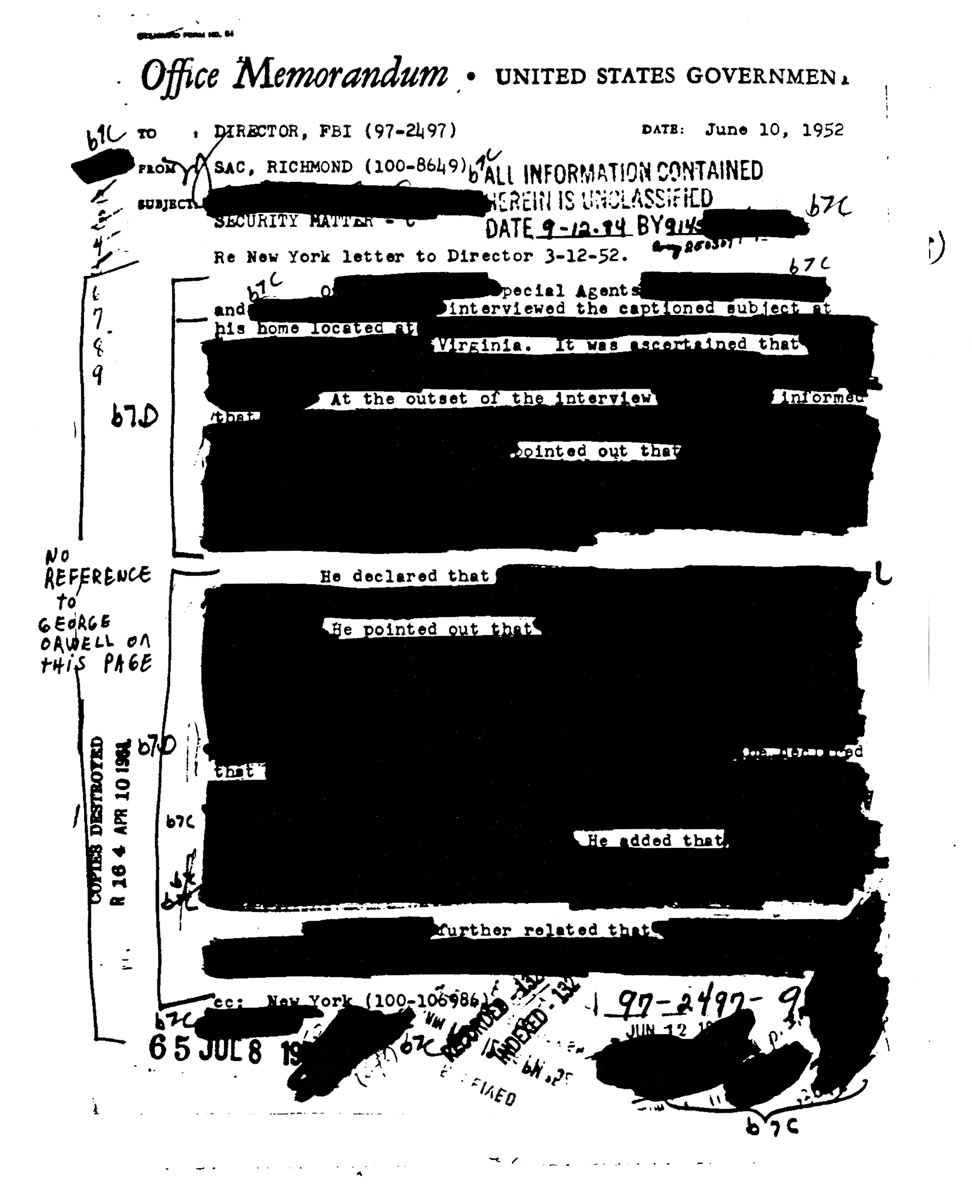
Do you think that secrecy functions not only to safeguard information but also to sustain a power dynamic between those who keep secrets and those from whom secrets are kept?
I don’t much believe that the reason we have secrets is merely the power dynamic that people would like to think. I’ve just seen too many secrets. There was a time when it was kind of cool to have something called a special access program. If you were in the military and you were a general responsible for a special access program that no one else could see, that was a kind of privilege. The Pentagon has reformed this a great deal. But the idea that people are creating national security secrets for non-national security reasons is grossly exaggerated. For example, there is currently a lawsuit going on over documents that were classified in 1917, during World War I, and it’s easy to say, “that’s ridiculous, this information should no longer be secret.” Many people in government would agree it’s ridiculous that this material is still secret. Others would disagree and say it’s critical for national security. But the point is that when the secret was first created it made a lot of sense. So for people to say our secrecy system is corrupt because we have secrets that are 80 years old is missing the point entirely. There are millions of examples like this and there was a sense behind why these secrets were created.
Can these lingering secrets be accounted for by pointing to bureaucratic inertia?
If this system were not scrutinized constantly, I might say yes. But in the US there’s always somebody looking over your shoulder. Secrecy is not trusted. Americans do not like secrets. They assume you are trying to hide something to cover your ass. I would think it is very difficult for somebody to live in a secret world that really is secret.
What is your opinion about the government secrecy reform legislation currently before Congress?
I have to testify about that, and I will testify very positively. It’s obviously vastly different legislation from what Senator Moynihan originally proposed, which would have, in effect, substituted a statutory framework in place of the executive order on classification and declassification. The current bill will just create an advisory committee, the Public Interest Declassification Board, with a terrible acronym . . . PIDB.
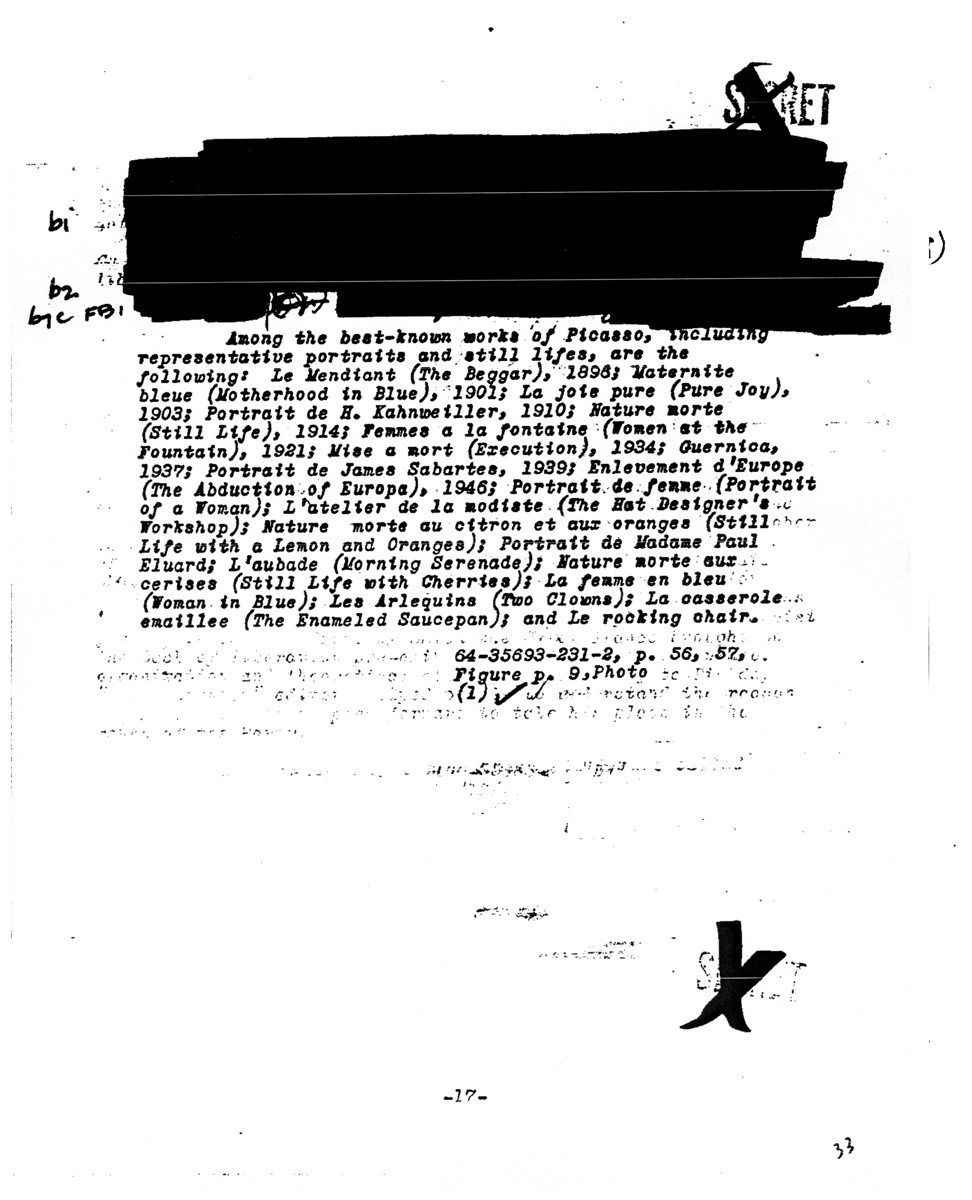
The Speculative Archive for Historical Clarification was founded in 1999 by Julia Meltzer and David Thorne.
Spotted an error? Email us at corrections at cabinetmagazine dot org.
If you’ve enjoyed the free articles that we offer on our site, please consider subscribing to our nonprofit magazine, which includes unlimited access to all our archives.