


Deception as a Way of Knowing: A Conversation with Anthony Grafton
The cops and robbers of history
D. Graham Burnett and Anthony Grafton
Anxiety about deception runs deep in the philosophical and religious traditions of Europe, and new techniques for mastering this fear mark episodes in the history of the modern world. Over the course of the nineteenth century, both the playfulness and the peril of deceit came to be distanced from the sphere of rational inquiry: the sciences ceased to have much use for legerdemain; metaphysicians lost interest in the theater. But it was not always so, as the conversation below with Anthony Grafton suggests. Grafton is the Henry Putnam University Professor of History at Princeton University and the author of a shelf of major works on the Renaissance, classical scholarship, and the history of science, including Forgers and Critics: Creativity and Duplicity in Western Scholarship (Princeton University Press, 1990). D. Graham Burnett, editor at Cabinet and also professor of history at Princeton, sat down with Grafton to discuss his work on deception and forgery.
Cabinet: Tony, let’s play name that tune. “We have also houses of deceits of the senses, where we represent all manner of feats of juggling, false apparitions, impostures, and illusions…” I have a feeling you’ll recognize this wonderfully strange passage from one of the hallucinogenic masterworks of the early modern period.
Anthony Grafton: I do indeed.
In The New Atlantis, written around 1624, the English prosecutor-cum-epistemologist Francis Bacon dresses up his new theory of knowledge as a sensational travelogue, in which a shipload of Englishmen, having gone astray somewhere in the vast reaches of the southern Pacific, find themselves towed into the harbor of a mysterious island...
And they discover a kind of utopia there, a community built around the continuous pursuit of power over nature. At the center of the life of the island is a huge quasi-religious institution called Salomon’s House where a priestly caste of investigators pursue mastery of natural forces in a suite of dedicated laboratory-like spaces.
Readers today are often amazed by how much Bacon seemed to foresee about the world of modern technoscience: genetic engineering, robotics, voice synthesis, and so on. But this passage, where the master of Salomon’s House describes the “houses of deceit,” has long stuck out as something of a stumper. Why would a bunch of guys pursuing truth want to erect a deception laboratory?
Yes, sometimes you are just reading along in an old book and wham, it’s like you sat on a cat! Something squirms up from under you. Something you were not expecting. Here is one of those moments.
I want to talk with you today about this cat! I want to talk with you about deception as something like “a way of knowing.” The Bacon passage seems to suggest a world in which it was possible to think along these lines. Tony, you are a serious student of this problem: your remarkable book Forgers and Critics took up the changing relationship between deception and knowledge production in the Renaissance, and recast the history of learning as a kind of arms race between deceivers and un-deceivers—an arms race where the two sides shared many weapons in common, and where they gradually bootstrapped each other’s capacities. So let me put some questions to you: Has deception always been the simple enemy of veracity? Is it possible to imagine theories of knowledge in which illusion and deceit are understood as integral to the pursuit of truth?
It’s a great problem. Not least because several of our most cherished stories about the origins of modernity involve techniques for revealing and transcending crucial deceptions. Take for instance the story of Lorenzo Valla and the Donation of Constantine. The Donation was an important ecclesiastical document, dear to the heart of late medieval popes, since it laid out the legal basis for papal authority over the whole of the Western part of the Roman Empire, which is to say, over Europe. The Donation basically tells the story of how the fourth-century emperor Constantine got a nasty case of leprosy, which the pope cured. The text goes on to explain that Constantine was so grateful that he gave him half the known world and then buggered off to Constantinople, never to return.
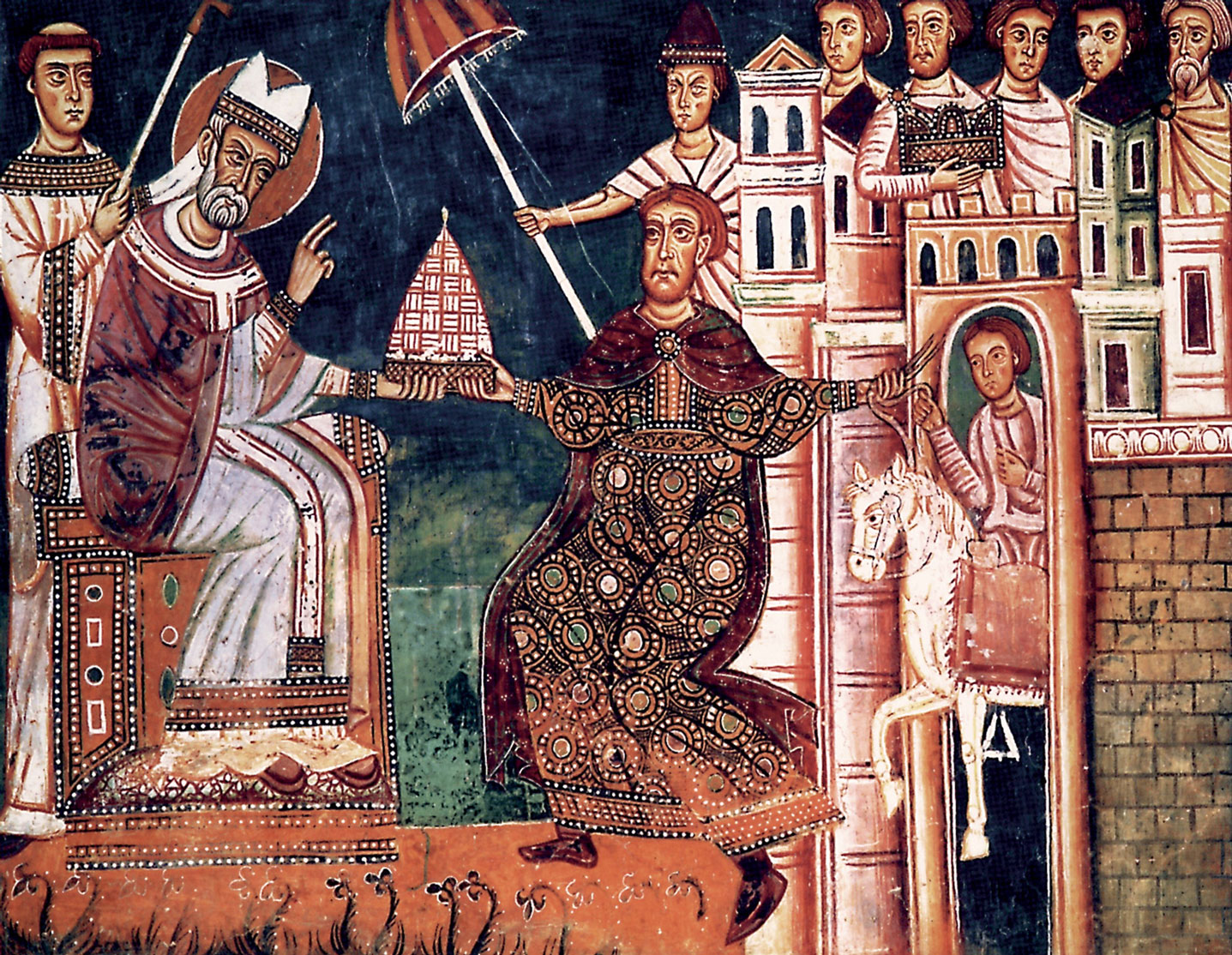
Voilà, the Catholic Church is in charge forever…
Bingo. But, as you know, it didn’t quite work out that way. In the early fifteenth century, an exceedingly learned Latinist, Lorenzo Valla, rolled up his philological sleeves and red-penciled a copy of the Donation. “Wait a second,” he says, “this doesn’t look to me like the kind of Latin they were writing in the fourth century!” And he amasses this magnificent demonstration that the Donation could not have been written when its author claimed. They just didn’t use the language of the document in those days. Now, people had argued about this text since forever, but everyone before Valla had basically been preoccupied by its juridical elements (as in, exactly what implications did it have for the proper relationship between emperors and popes, etc., etc.). Valla bracketed those thorny legal questions and went after the document in a different way.
He went after it historically.
Yes, philologically. And to do that, you really have to have a very deep sense of how language works, to be sure, but you also need to have an equally deep sense of how time works; you need to understand that a given period has a style in everything that it does, from plumbing to personal relations, and that any product of the period has to show the traits of that period and style.
You have to understand the distance between now and then.
Exactly. G. K. Chesterton has a wonderful explanation of this. His Father Brown says, “Tell me the devil is sitting in the belfry of the church next door howling hava nagila, and I’ll say, could be, might not be. But tell me that Gladstone walked into Buckingham Palace, slapped Queen Victoria on the back, said ‘Hi Vicky!’ and lit a cigar, and I’ll tell you, no, that could not have happened. In that time and place, it was impossible.” And that’s an insight, one that we like to think of as fundamental to modernity: it has been presented as nothing less than the “discovery of the past.”
Yes. The insight is itself a rupture, even as it is an insight about ruptures—it is the discovery of temporal discontinuity. That sense of rupture has been central to so many narratives of the origins of modernity.
And various ruptures can be made to stack up in the mid-fifteenth century. Valla’s revelation—that we live at a fixed distance from the past—bears a striking resemblance to the realization of his contemporaries, those first modern painters, who deployed linear perspective to show that we live at a fixed distance from objects. Just as we take our stand and we see the object in the world as it really is, we take our stand and we see the past as it really is; we can identify a bad perspective construction or a bad historical construction. This analogy between philology and the visual arts—between the sense of history and the sense of perspective—was formulated by Erwin Panofsky in the middle of the twentieth century in a set of books and articles that shaped me as a young scholar.
Odd then that you did so much to muddy these waters in your own work.
Or maybe not! Yes, it is true that I loved these heroic narratives of the break to modernity. And as something of a philologist myself, how could I not love a script that gave the philologists the star role? But the deeper I dug into the classical tradition, the less satisfying the whole thing started to feel. Look at book six of the Aeneid, for example, where Virgil sets up the contrast between the Rome that isn’t there yet for Aeneas (he himself is going to set the foundation stone, of course) and the glorious Rome of Virgil’s own time. I mean, you can hardly argue that there is anything but an acute sense of historical distance here. And it became clear to me, as I taught in courses with classicists and learned their ways of reading, that my Renaissance humanists did not really invent a new sense of history; they found a new sense of history in the very ancient texts that they applied it to. And they found new tools for understanding the past in those texts as well. Take Valla himself. He was a distinguished student of ancient rhetoric, and this gave him a powerful technology for thinking about history, since the basic exercise of the rhetorician is to help an orator give a speech. But that speech has to fit a time, a place, a persona, an audience. How did one practice and teach rhetoric? You gave an assignment: “For Wednesday, prepare the speech that Alcibiades should have given to avoid being exiled during the Peloponnesian war.” You can see very quickly that this sort of thing is a perfect school for historicist thinking!
And for forgery, as it happens.
Quite right. When I sat down to write Forgers and Critics, what I wanted to do was think my way through the long tradition of reasoning about the coherence and character of the past, but I ultimately came to a slightly disturbing conclusion: forgery was deeply rooted in this tradition, as deeply rooted as ways of thinking about the past that we might now call historical or philological. After all, that notion of the integrity of an historical epoch—that sense of what is possible and impossible in a given period—is literary as much as it is historical. Critics like Valla could spot inconsistencies, but in many cases it was the forgers who took on the most ambitious projects of historical recovery. They were the ones who were trying to make the past live again, to animate, to resurrect the lost worlds. They had to steep themselves in these worlds enough that they could actually inhabit them creatively.
The most radical version of this claim is fantastic: the forgers are the first real historians, since it is they who genuinely want to bring the past to life!
Yes, and in many cases there is a sense that these sorts of forgeries are not an effort to falsify the past, but in fact to rescue it. The truly passionate historical forger of the Renaissance was often saying something like, “I really know what was going on back then. I know how this tradition in antiquity worked. I know what the record ought to show, and if it’s not there in our crappy manuscripts, well then, dammit, I’m going to put it there!”
Right, and in doing so, I am just going to be doing justice to the past (and to my knowledge of it), using these techniques that we all share in order to create something worthy of being a part of the historical tradition—even though it doesn’t actually happen to be in the record that we have!
And this sets up a kind of dialectic, a game of cops and robbers. Some philologists are busy tuning up their skills in order to sort out the genuine wheat from the forgers’ chaff, and others are tuning up their skills at making chaff pass as wheat! And plenty of guys, like Erasmus, played both ways, depending on the situation. I started off my research with the cops like Valla as my heroes, but you know how it goes: the robbers are always a little more fun, and by the time I finished writing the book, they had sort of won my heart.
It is such a remarkable idea. I can’t resist pushing it. Go back to Valla and the Donation of Constantine again for a moment. If from him we inherit the story of a kind of Apollonian modernity, a modernity that knows about boundaries, then perhaps from the forgers we can construct a story of Dionysian modernity—a modernity that wants to enter the dance, sing the song, be consumed by its object.
If the former is what we call history, the latter might come down to us as ethnography.
The latter has always made people more nervous.
Ventriloquizing the dead is a touchy business. Take the great example of the historical Faust. Not Goethe’s Faust, but the actual German conjurer and itinerant magician of that name who studied at the University of Heidelberg and wandered around the inns and towns of central Germany in the 1530s. There is a story that when he was teaching temporarily at Erfurt, he stood up at a school banquet and offered to bring back the lost Latin comedies of Plautus and Terence. What fun, right? Nope. Apparently the faculty got up in arms about the proposition. Why? They feared that the Devil might well have interpolated all kinds of horrible, scary, dangerous things into those texts, and that if Faust brought them back to life, he’d be revivifying these satanic elements.
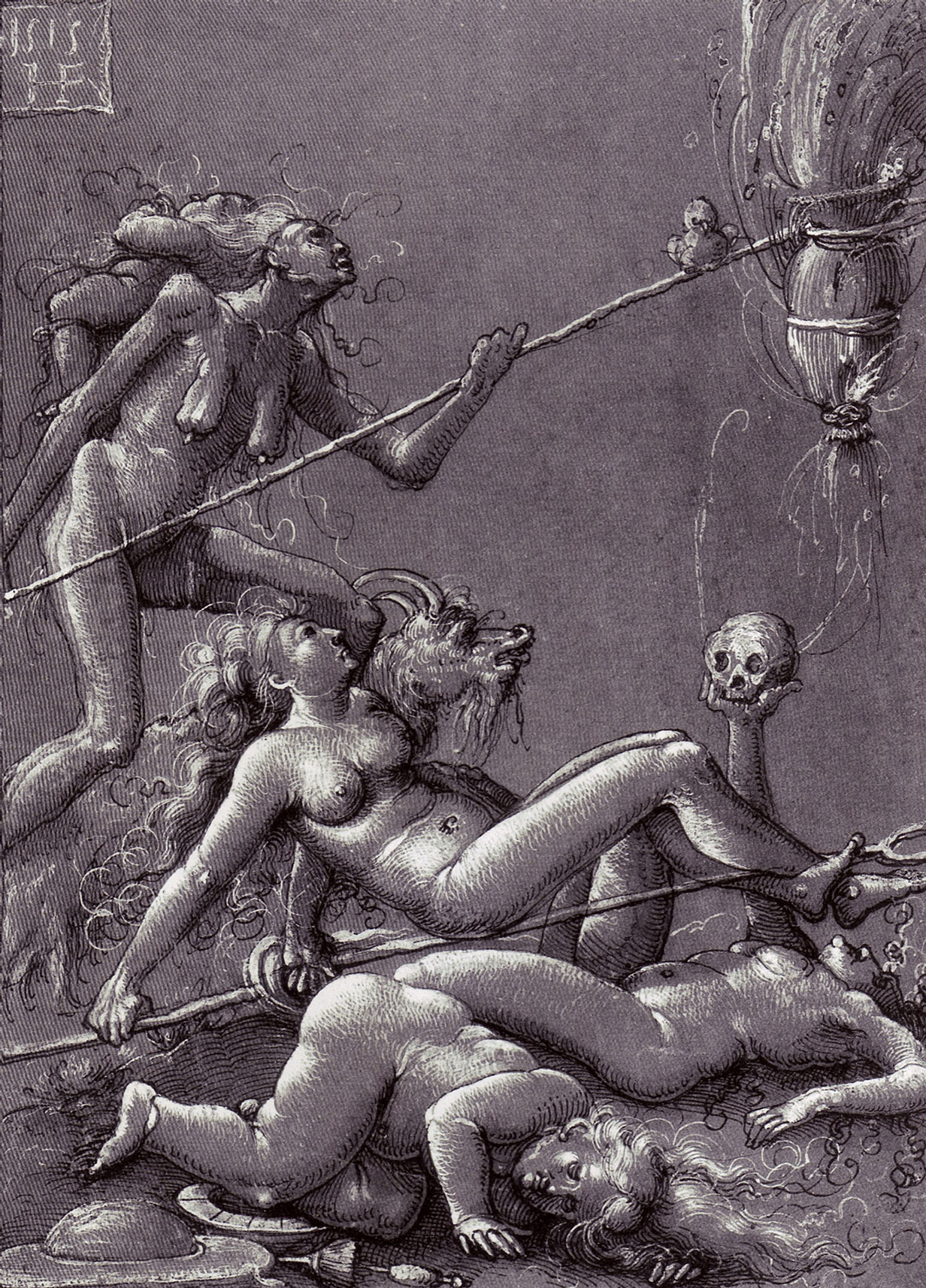
That’s crazy!
Well, it shows that the idea is out there: the humanists are resurrectionists of a sort, and the issue of deception is never far away when one is talking about textual recovery.
This isn’t about garden-variety forgery and deception, either. Here we catch a glimpse of the Deceiver-with-a-capital-D: the actual Devil. The story suggests that what is dead or lost is subject to diabolical power in a very particular way.
Absolutely. You can’t forget that every baby in this period was exorcized as part of the baptismal ritual, because it was assumed that every baby came into the world in the power of the Devil. And there was a general sense that nearly all the dead not actually in hell were lodged in purgatory, where they remained subject to dark powers.
This certainly puts the idea of resurrection in a very different light. It raises the stakes a great deal if bringing things up from the dead can mean serving as a midwife for demonic agents.
You bet. And this sort of thing quickly brings to the fore some very disturbing questions about the Bible itself. After all, the “Old Testament” was basically lost during the exile, and then, according to Ezra and Nehemiah, it was really kind of written again (by Ezra) once the Jews were restored to the land of Israel and rebuilt the Temple. Now, you can read those passages as saying something like, “There were these old scrolls kicking around, and Ezra sat down and did a bit of copywork, and maybe a little editing.” Or you can interpret them as saying, “This guy named Ezra sat down, rubbed his neck, and wrote out the Old Testament.” If you go with the latter, then it isn’t all that big a leap to claim that, in a way, Ezra himself was a kind of forger. The historical Faust said as much.
Eeegaads! That’s terrifying. And in an age of pan-European confessional conflict too.
Stuff like this worried the Catholics a lot less than their new Protestant brethren. The Catholics never put too much stock in the Bible per se, since what mattered was the magisterium of the church, the tradition of the teachings of the church fathers, and so on. But for the Protestants, who wanted to put the biblical text at the center of a life of conscience, the idea that diabolical forces might have insinuated themselves into the very heart of Revelation was an exceedingly troublesome notion. If one couldn’t trust Scripture, then what could one trust?
That sort of paranoia makes me think of the other great deceiver that looms over early modern theories of knowledge: Descartes’s “Evil Deceiver” of the Meditations. If ever the idea of deception played a critical role in epistemology it was here, since Descartes set to the task of regrounding philosophical inquiry precisely by imagining that some sort of evil genie had insinuated itself into the core of his being. Descartes wants to know if it is possible to establish anything as “true” if we consider a worst-case scenario: a Mephistophelean Wizard of Oz who orchestrates the theater of our sensory life, a demon who can conjure everything that seems to us to be reality—what we see, what we touch, what we hear, all of it might be a diabolical puppet show. How would we know? Does the very possibility of certainty wither in the face of this hypothetical? Descartes thinks that the only kind of knowledge we could feel confident about would be knowledge that could face down this nightmare possibility. It is a very odd way to think about thinking.
But is it? On the contrary, Descartes’s idea was in the air all around him in the early seventeenth century. It is we modern readers who are really deceived. We read Descartes, we read Galileo, and we think, “This guy’s really one of us. He’s a modern.” I mean we can imagine having a conversation with Descartes in a way that we probably can’t imagine having a conversation with, say, a rather overzealous chap like Martin Luther. There is only a century between them, but Descartes feels much more like our contemporary. But don’t fool yourself! Descartes’s Evil Deceiver isn’t a philosophical heuristic, it’s the basic anxiety of a late fifteenth-century Dominican!
Right! There is a one hundred percent, bona fide Evil Deceiver around every corner.
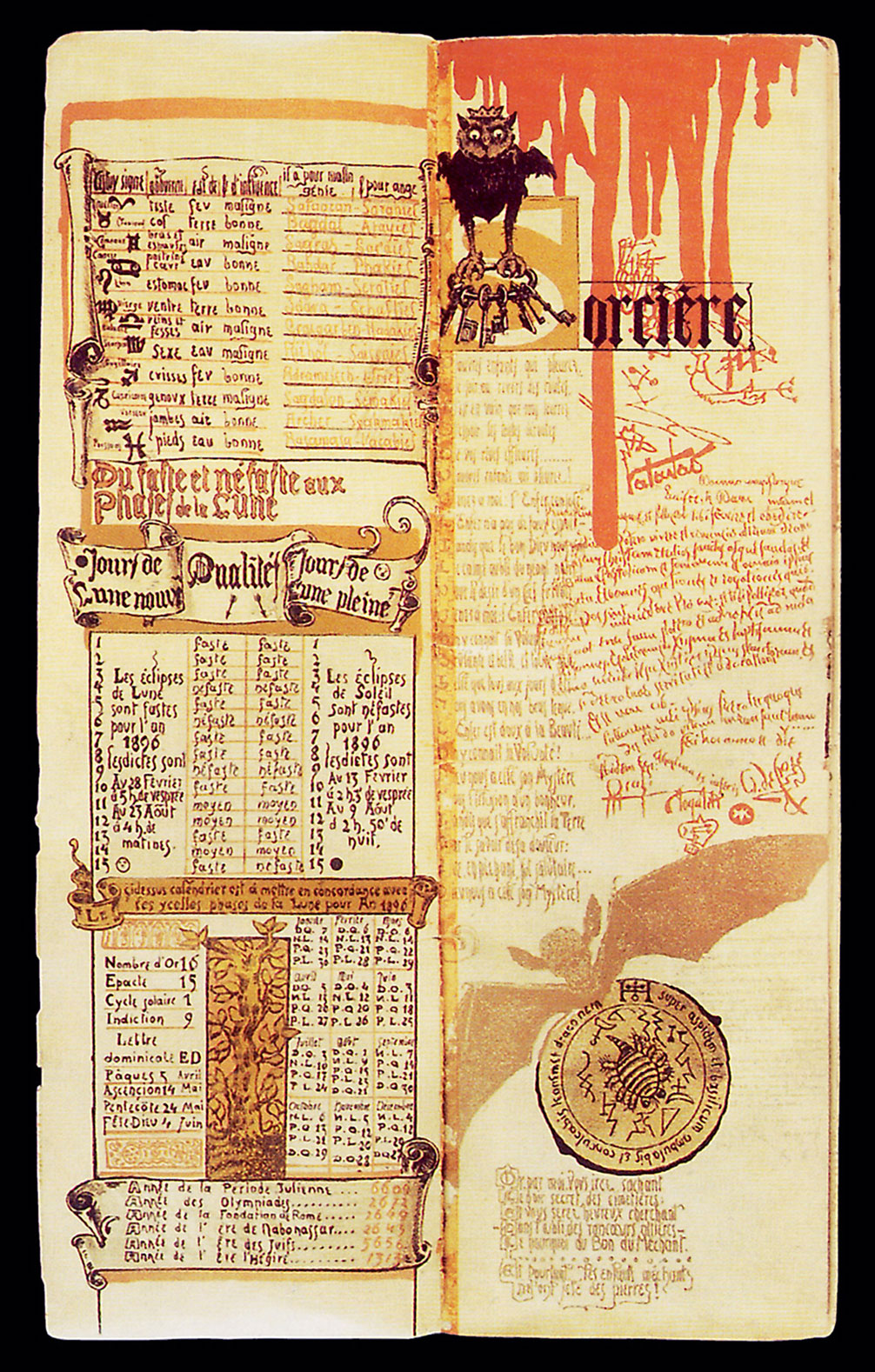
You bet. Descartes’s “hyperbolic doubt,” his histrionic concern about deception, is the standard operating procedure of Descartes’s theological contemporary: the witch-finder. From the late Middle Ages—and more and more intensely from the late fifteenth century on—Christian theologians had elaborated the doctrine that the world is permeated by the work of the Devil and that the Devil recruits human help from witches. Now there had been conjurers and “cunning” men and women in every village since forever. These were the folks who could do your simple kinds of magic: charming off warts, telling you who stole your cow, finding your lost colander—that sort of thing. Some of them probably did rather darker things, or claimed they could do rather darker things, but all of this was seen in the early Middle Ages as relatively minor business. Starting in the fourteenth century, though, a doctrine is elaborated that any kind of conjuring or divination—basically any effort to manipulate the universe—is the work of people who are in league with Satan against humanity.
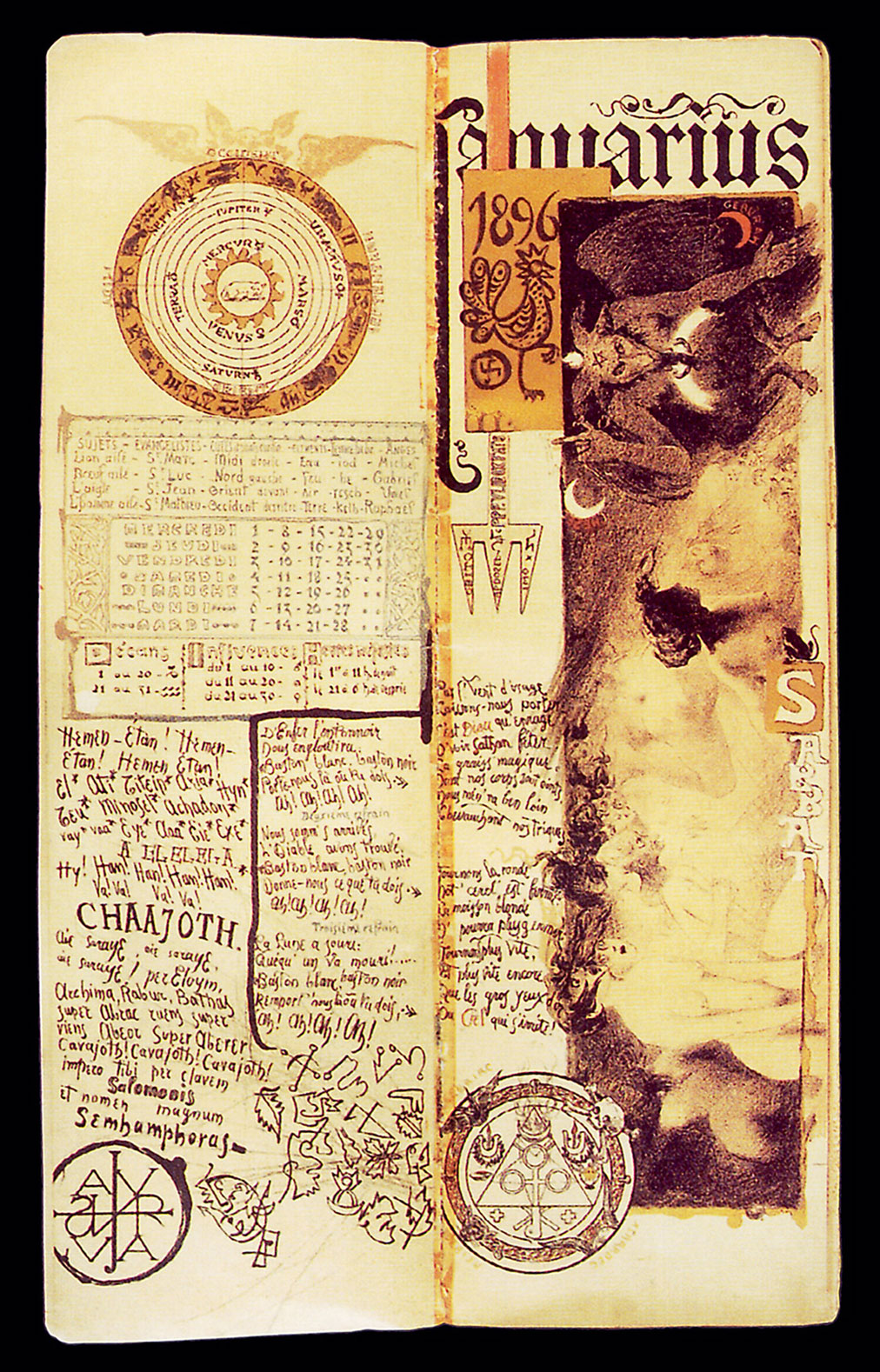
And they lurk in every village.
That’s exactly the trouble. They are everywhere, but now their work is understood in a newly expansive and frightening way. From the pulpit you hear that these people are always looking to stir up trouble. Their job is to call down a hailstorm to destroy the corn just as it ripens. Their job is to take a newborn baby and say an incantation over it and condemn it to death, or condemn it to possession by an evil spirit. So the whole human race is actually divided, and the Devil has his agents among us everywhere, working mayhem and recruiting new slaves to the army of evil. These agents look like human men and women, but they aren’t. Their bodies are made of tightly packed, compacted air, which feels rather like cotton when you push on it; they have an imitation voice box which enables them to make the sound of speech, though they don’t have the internal organs that make speech possible in humans. They can, in the form of women-like succubi, receive the semen of men, and then turn themselves into incubi, male demons, and deposit that semen into sleeping human females, having infected it with an evil spirit, so that the child that comes forth will be possessed.
I am kindling a large fire here for all these Satanists…
You and a fair number of early modern prosecutors. These folks, with their great witch-finding handbook, the Malleus Malificarum, exterminated some 50,000 to 70,000 victims in the sixteenth and seventeenth centuries. It’s a pretty extraordinary number. Suffice it to say that this was a universe in which the Devil was pervasive, omnipresent, and continuously working to deceive us. You never know whether the person you are talking to is your friend Graham or Amalek pretending to be Graham.
Reading Descartes against this social history of demonology is wonderfully disorienting. Suddenly it becomes clear that Descartes is taking a basic problem of civil and religious administration and turning it into the point of departure for a new theory of knowledge. He takes that pervasive anxiety of early modern village life—which is that I don’t know whether you’re Anthony Grafton or a giant airball speaking Mephistophelean parrot talk—and he sublimes it, pushing it deeper even as he makes it more abstract. What is strangest, perhaps, is that he tries to solve the problem on a radically new plane. After all, we peasants from Languedoc have a basic repertoire for dealing with the giant airball problem: we can cross ourselves, sprinkle a little holy water, mumble paternosters, wave a crucifix around. These are practical techniques for escaping from the Deceiver. Descartes refuses all help. He goes into a small overheated room and thinks his way down to a claim he can make regardless of all impostures: cogito, ergo sum. And then he starts to claw his way back up, working from this toehold, restoring God, the world as we know it, and finally the adequacy of our minds as instruments for knowledge of that world. Why did the old techniques no longer seem reliable? Why not go into that small overheated room waving a crucifix?
Well, those prosecutors were waving crucifixes as they lit the pyres. For a certain line of humanists, that technique had been compromised by the early seventeenth century. Montaigne and other anti-absolutist philosophers with the tools of ancient skepticism at their disposal had found their own ways to resist the worldview of the witch-finder. But their tactics were a little more ad hoc, a little more case by case. They asked questions about evidence: “Hmmm, we are torturing witnesses here, and getting accusations that violate all common sense—that people are flying, that they are eating babies. I’m skeptical.” Montaigne more or less says, “I just think it’s giving my conjectures too high a value to burn old ladies for them.” But this is not much of a philosophical position. It makes the whole thing into something like a matter of taste. Descartes wants more. He wants a way out of that whole universe, and it is this that makes him feel like a new kind of person. The fear of pervasive diabolical deception can be put behind us. It’s not just that, with Montaigne, we wrinkle our noses; it’s rather that, with Descartes, the whole thing is an error.
One is still left with sort of a funny conclusion, though. If we put Descartes at the end of the sixteenth century, rather than at the beginning of the seventeenth, we’re left with something like “the birth of modern philosophy” as the product of a gigantomachy—an actual giant-slaying, something like single combat with the great Deceiver. This doesn’t look like the birth of modernity; it looks like a scene from Highlander!
Or better, The Matrix! Which raises a serious question: Who actually won? After all, many contemporary philosophers find Descartes’s arguments wholly unsatisfactory. Indeed, by our standards it does look rather like he “waved a crucifix at the problem,” if you like, since he gets to a proof for God in a hustle after the cogito, and that loving God then does a good deal of work for him as he goes about constructing a new theory of knowledge.
It’s funny, but I never really thought of Descartes’s Evil Deceiver and Bacon’s “houses of deceits of the senses” in parallel, but they are almost exactly contemporary efforts to lodge the problem of deception at the heart of a new theory of knowledge.
Yes, though they are structured rather differently: one you go visit, the other you try to escape!
Where did they go? What happened to these ways of thinking about deception as the helpmate of truth?
Maybe they didn’t go anywhere: the Cartesian project is psychologized and becomes Freud; the Baconian project is commercialized and becomes cinema, right?
Read follow-up correspondence between authors Anthony Grafton and D. Graham Burnett, published in issue 34, here.
D. Graham Burnett is an editor of Cabinet and teaches history of science at Princeton University. He is the author of several books, including Descartes and the Hyperbolic Quest (American Philosophical Society, 2005). His study of the nineteenth-century American mapmaker Robert F. Pinkey, “Hydrographic Discipline Among the Navigators,” has just been published in The Imperial Map, edited by James Akerman (University of Chicago Press, 2009).
Anthony Grafton teaches European intellectual history at Princeton University. His books include Defenders of the Text (Harvard University Press, 1991), The Footnote: A Curious History (Harvard University Press, 1998), and What Was History? (Cambridge University Press, 2007). He is co-author of Obelisk: A History (forthcoming from MIT).
Spotted an error? Email us at corrections at cabinetmagazine dot org.
If you’ve enjoyed the free articles that we offer on our site, please consider subscribing to our nonprofit magazine, which includes unlimited access to all our archives.