


Letter Bombs, 1904–1998
Going postal
Carl Michael von Hausswolff
The top winner in the contest for the greatest blunder of 1998 was a Latin American patriotic terrorist who sent a letter bomb to a US consulate in order to protest against America interfering in local politics. As a conscientious citizen, he wrote his return address on the envelope. However, he did not put enough stamps on it, so that the post returned the packet to him. Forgetting what he put in it, he opened it and blew himself to death.
—Slavoj Žižek
If this apocryphal story marks the symbolic end of this now quaint terrorist technique, when does it begin? When does the first letter bomb begin its long journey in the sacks and trolleys of the 20th century’s postal systems, traversing every continent and political feud only to finally return to its sender?
It is 19 August 1904. We are in Stockholm and Director Karl Fredrik Lundin of the firm Svenska Centrifugbolaget is about to receive a packet. It is the age of postal innocence and this packet, apparently from Stockholm’s largest department store, is sure to contain some treat. Instead, the packet will inaugurate a new era of anonymous long-distance violence. Director Lundin opens the packet, which “rumbles and shakes like thunder. The director feels as if he has been hit by lightning. An intense flame bursts out from the box and burns his hands, arms, chest and face terribly. His clothes are on fire.”[1] The next day a postcard arrives for Director Lundin: “A former employee of yours has decided that you’re ripe for the picking.”[2]
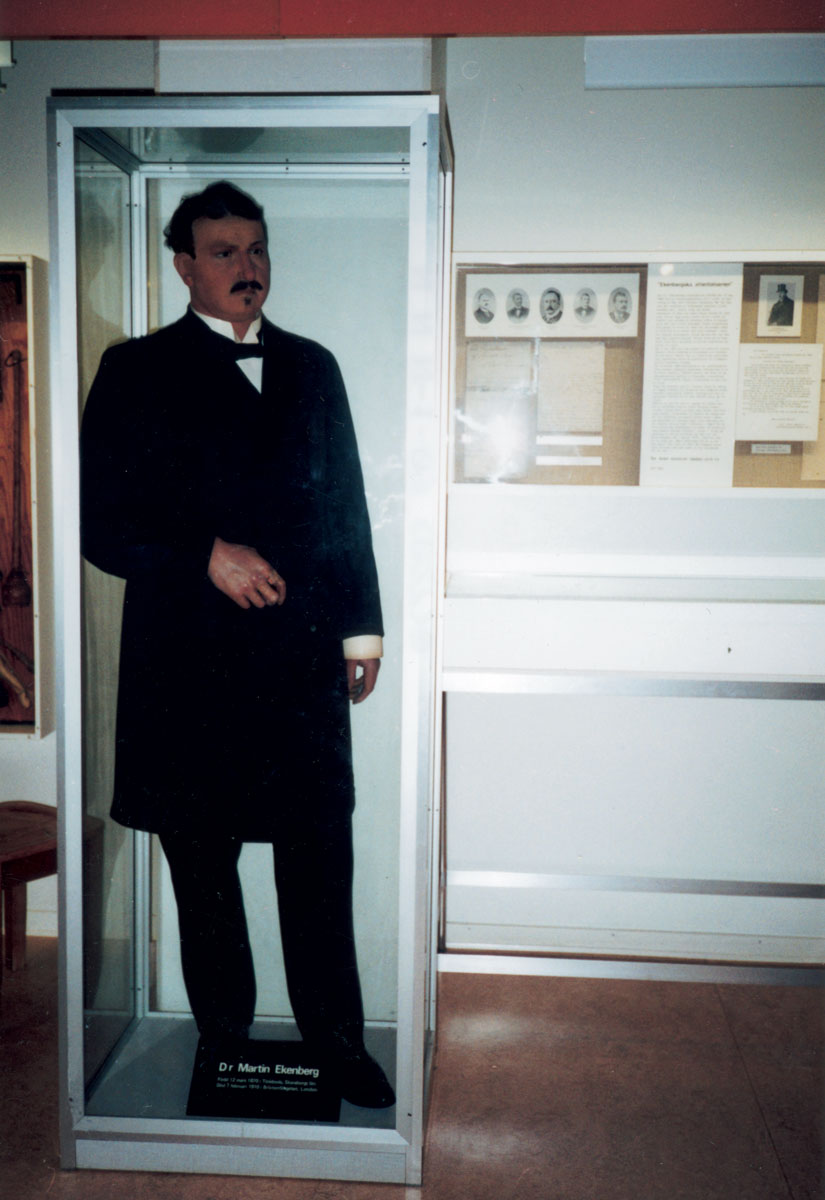
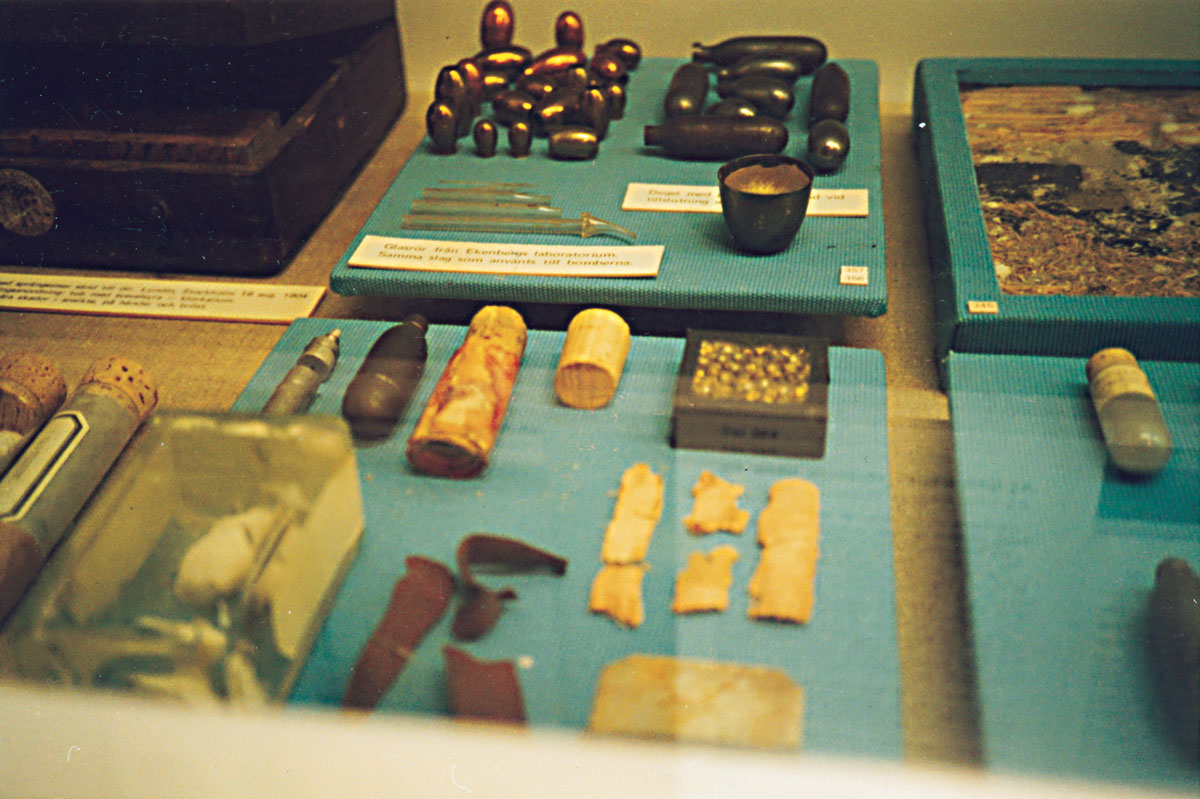
The man who assembled the bomb, Martin Ekenberg, was born on 12 March 1870 in Töreboda, Sweden, and began a career as a chemist in Stockholm when he was 15. After studies at the Royal Technical College, he moved to Königsberg (now Kaliningrad) where he received a Ph.D. at Immanuel Kant’s old university. Back in Stockholm, he developed various techniques for handling milk products. In 1896 he moved to Gothburg and founded Aktiebolaget Oljeraffinaderi, based on his invention for refining fish oil into engine oil. Unfortunately for Director Lundin, the project failed because the oil produced a terrible smell in engine rooms. Ekenberg continued to establish various companies on the basis of his inventions, and he even received several awards for his innovations. Ekenberg’s finances remained shaky, however, and like all scientists, he had to turn to wealthy industrialists and financiers for support. Every time a project failed or seemed about to fail, he was dropped by the moneymen and had to search for new investors. But Ekenberg could never forgive these traitors for abandoning him. Director Lundin was first among a number of former financiers to receive vigilante justice. On 4 May 1905, Ekenberg sent a second letter bomb, but it exploded back at the post office after the recipient, Alfred Valentin, refused to sign for it. Three postal workers were injured. A third package was sent on 9 October 1909 to Director Sjöholm in Gothenburg, but the police intercepted the packet. That same day, a fourth package reached the managing director for the Swedish Export Society, John Hammar. Today Hammar’s thumb is on display at the Museum of Police History in Stockholm.
Ekenberg, living in London, was finally identified by his handwriting. His trips to Sweden had all coincided with the bombs and the London police placed him in Brixton Prison until they could send him back to Stockholm for trial. On 7 February 1910, while awaiting deportation, he was found dead in his cell, apparently from poison. He never confessed.
An exhibition on the life of Martin Ekenberg will open at Färgfabriken, Stockholm, in May 2002.
- Björn Kumm, Terrorismens historia, (Lund: Historiska Media, 1998), p. 58. My translation.
- Ibid.
Carl Michael von Hausswolff is an artist based in Stockholm. His work has been exhibited in many international events, including documenta X, the Istanbul Binennial, and Site Santa Fe. Von Hausswolff and Leif Elggren are the double monarchs of the Royal Kingdoms of Elgaland-Vargaland. For more information on the kingdom, see here. Von Hausswolff is a contributing editor to Cabinet.
Spotted an error? Email us at corrections at cabinetmagazine dot org.
If you’ve enjoyed the free articles that we offer on our site, please consider subscribing to our nonprofit magazine. You get twelve online issues and unlimited access to all our archives.