


Artist Projects / Seed Packets
Planting an idea
Kim Dickey, Kris Lee, Alan Sonfist, Laura Stein, and the Royal Potter
A month or so after we asked four artists to “curate” special seed packets for this issue of Cabinet, we received the following letter and photograph. We suspect Major Lazarus Pine to be a pseudonym but neither of our two suspects confessed, despite long interrogation sessions where we threatened to place soil in their ears and grow plants in them. We publish the letter verbatim, hoping that despite his cowardly use of a pseudonym, the Royal Potter will honor his promise and send a pot to any reader who asks for it. Readers can also receive the four unlimited edition seed packets shown below by contacting our main office. The set of four costs $10. [Seed packets are now sold out—Eds.]
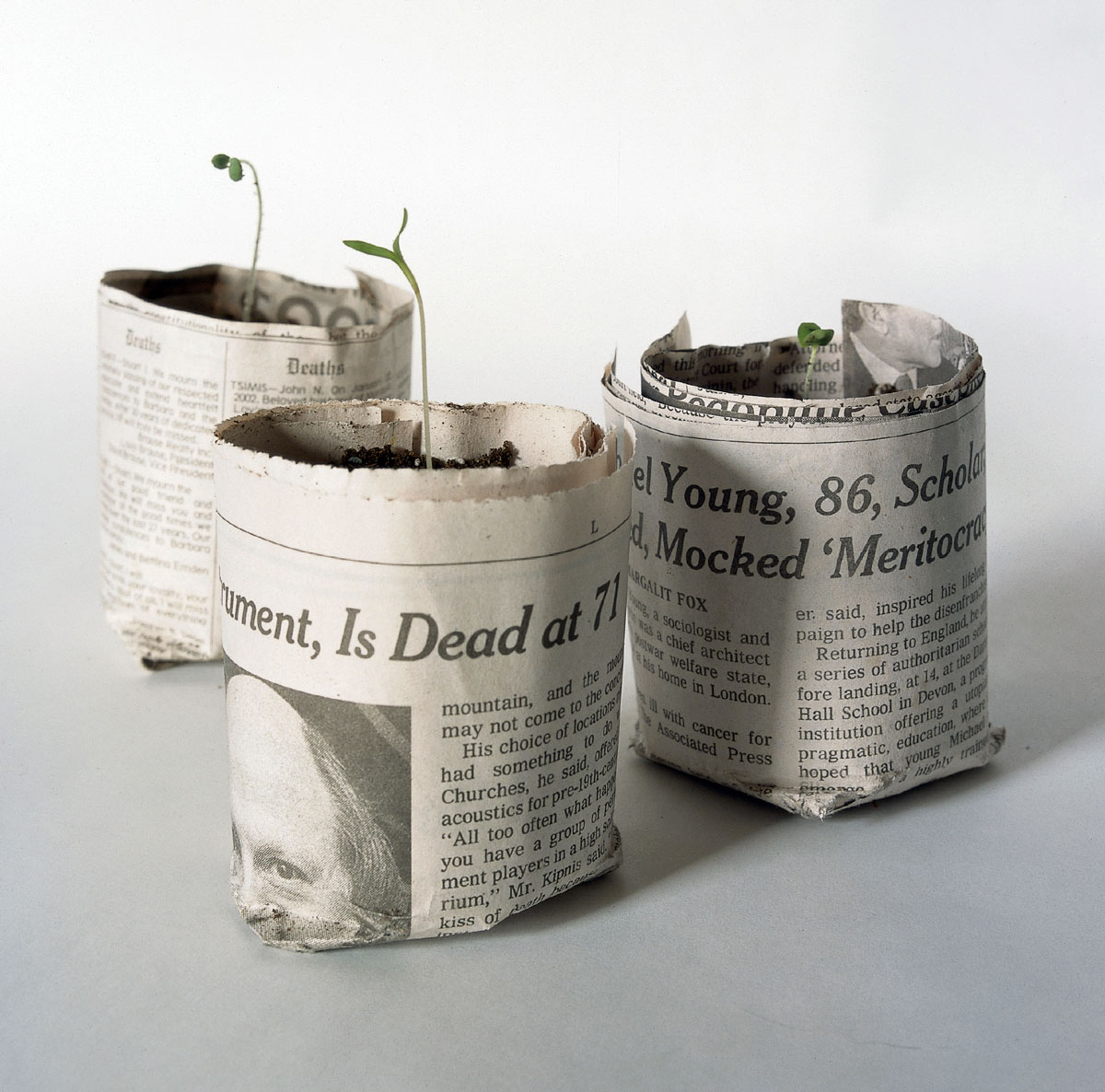
Major Lazarus Pine
The Royal Potter
P.O. BOX 1953
Church Street Station
NY, NY 10013-0873
February 1, 2002
Dear Cabinet,
It has come to my attention that your garden is composed exclusively of paper and ink. I realize that in your universe, clay or plastic pots are undesirable for aesthetic as well as for ontological reasons. Be what it may, I am but a humble potter and cannot approve or disapprove of your customs. Still, may I suggest that your upcoming attempts at colonizing your reader’s minds with non-native species make use of paper-and-ink pots?
This would preserve the material limitations of your universe, and would at least contain the spread of the seeds you are so freely giving away. (It is important to limit the encroachment of these invasive plants, lest they completely take over the native ideas of the reader).
I could supply you and your subscribers with a series of pots crafted entirely from newspapers. I would even add some soil from the Royal Compost. I am very busy and I will only be able to make these pots on demand. All your readers need to do is to write me. Furthermore, I am too fond of my daily newspaper and am loath to give it away. However, I am deadly afraid of the obituaries and would be happy to rid myself of this evil text about death and the past. The Royal Potter, like all gardeners, is only concerned with the future and the germination of new plants. There is no death in the garden—only compost.
Yours,
MAJOR LAZARUS PINE,
Royal Potter
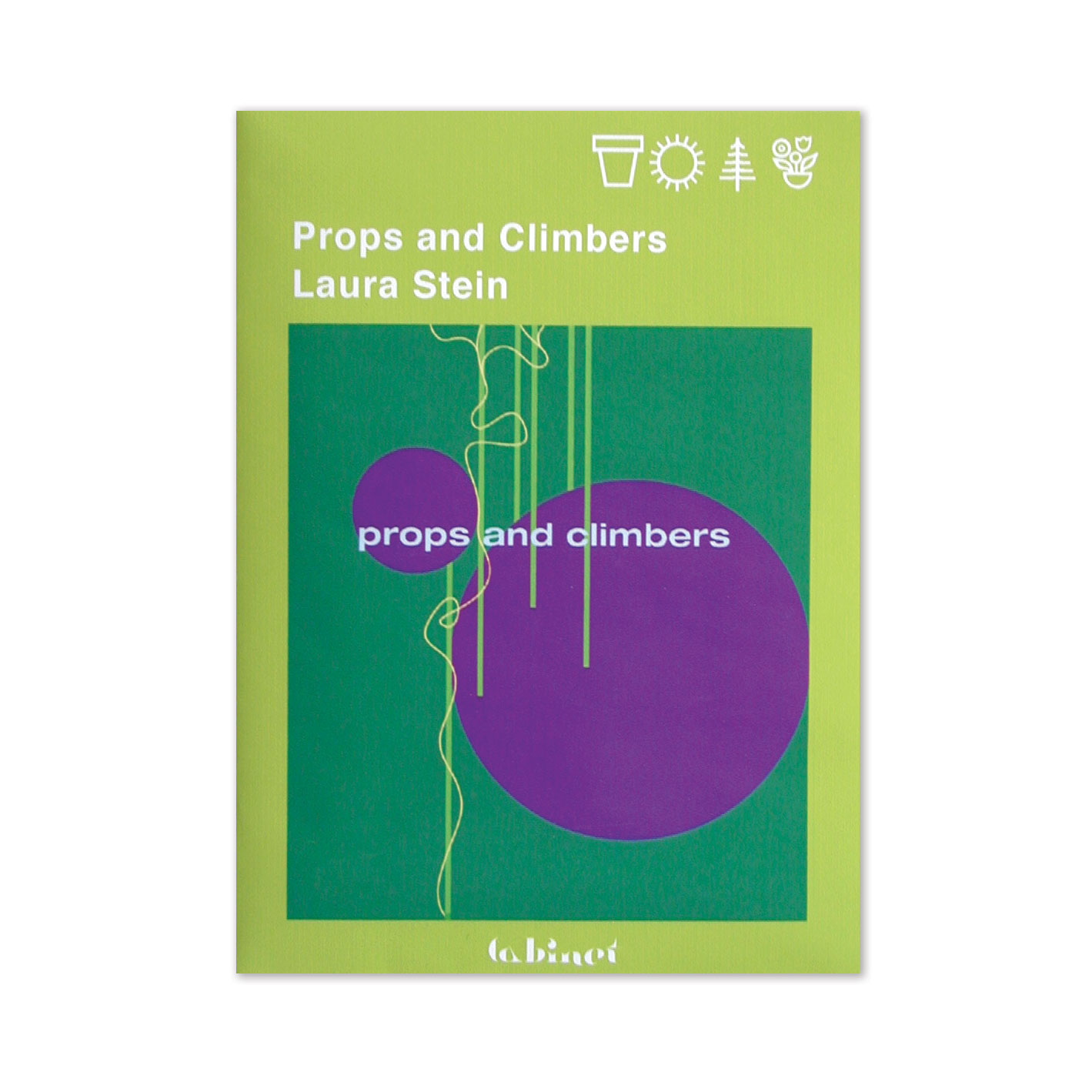
This potential garden “props and climbers” consists of several tall stemmed plants and non-aggressive vines. The large plants act as support for the climbers to work their way up. The vines use the larger, firmly stemmed plants for their own benefit to achieve a certain height. There will be pressure on the tall counterparts but they will not be harmed in any way. The strongly directed assist the malleable ones.
The end result will be five-foot-tall flowering flowers with spherical overtones.
SEEDS: Props: Sunflower “Velvet Queen” (Helianthus annus); Globe Thistle (Echinops ritro); Lion’s Ear Staircase (Leonotis leonurus).
Climbers: Susie Series Black-Eyed Susan Vine “Susie Mix” (Thunbergia alata); Love-in-a-Puff (Cardiospermum halicacabum)
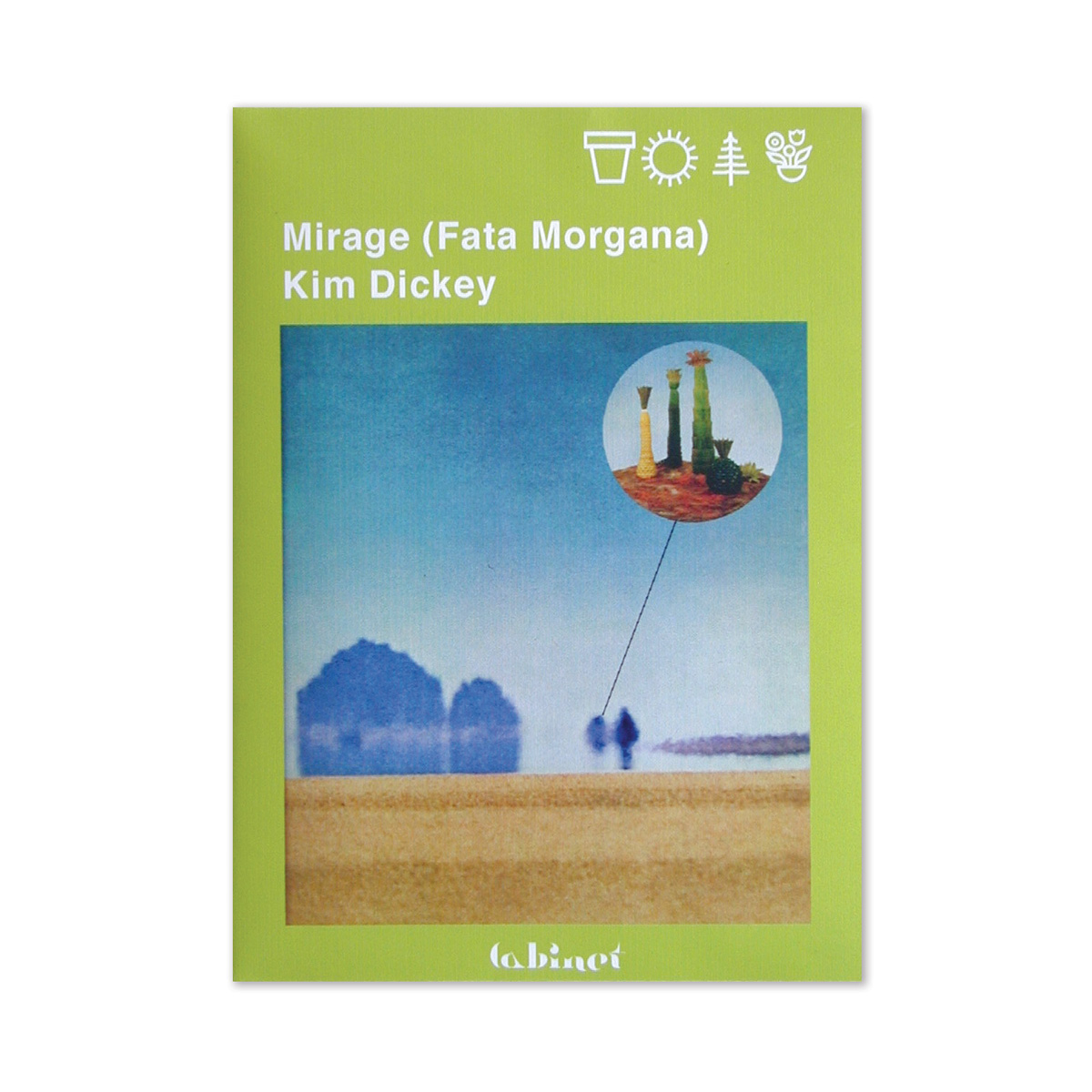
As illusory as any mirage is the belief, held by many a man, that ahead of him lies only good fortune.
—Advertisement for the Travelers Insurance Company, Hartford, Connecticut
At the age of sixteen, I worked on a cattle ranch in Bolivia and traversed seemingly endless expanses of the savanna on horseback. Though there was little sand, there were oases—clumps of trees in the distance—forming islands separated by flat grassland stretching for miles. During the rainy season they became real islands and hence a refuge for the cattle, ostriches, capybaras, and other grazing creatures.
On subsequent trips to American deserts, I sought out more oases. The mysterious and triumphant survival of plants surrounded by a hostile environment haunted me. Wherever they were, they seemed to huddle against an ever-encroaching barrenness. My fascination with this harsh, though strangely appealing, aesthetic was reinforced by my interest in literature of the west—Cormac McCarthy novels, for instance—and films such as Sam Peckinpah’s. Now, living in Colorado year round, I continue research on “desert life”—an apparent oxymoron that still intrigues me.
The desire to find one’s own oasis is a powerful one. This promise of a place in the distance that will offer you shade, quench your thirst, and ease your struggles is familiar, yet elusive. So if you’re tired of looking and one can’t be found, why not grow your own with this Mirage seed packet. The idea is to create a reflexive landscape, a construction that refers to its own construction.
The seeds I’ve included in this package offer the essential ingredients for a classic oasis. While this collection of palms, cacti, and banana tree will set the stage, no true oasis is complete without a source of water. As this is no easy task to find in a desert setting, where these plants are best suited to grow, you will have to search for just the right spot. This may take a while to find, but persevere. You’ll probably anticipate its appearance long before you reach it.
SEEDS: Red Travelers Palm (Ravenala guyanensis); Solitaire Palm (Ptychosperma elegans); Velvet Banana (Musa velutina); Mixed Cacti (Lemaireocereus thurberi, Lemaireocereus prunosis, Echinocactus ingens, Ferrocactus stainsii, Pilocereus palmeri, Carnegiea gigantea, Pachycereus pringlei, and Opuntia engelmaniana)
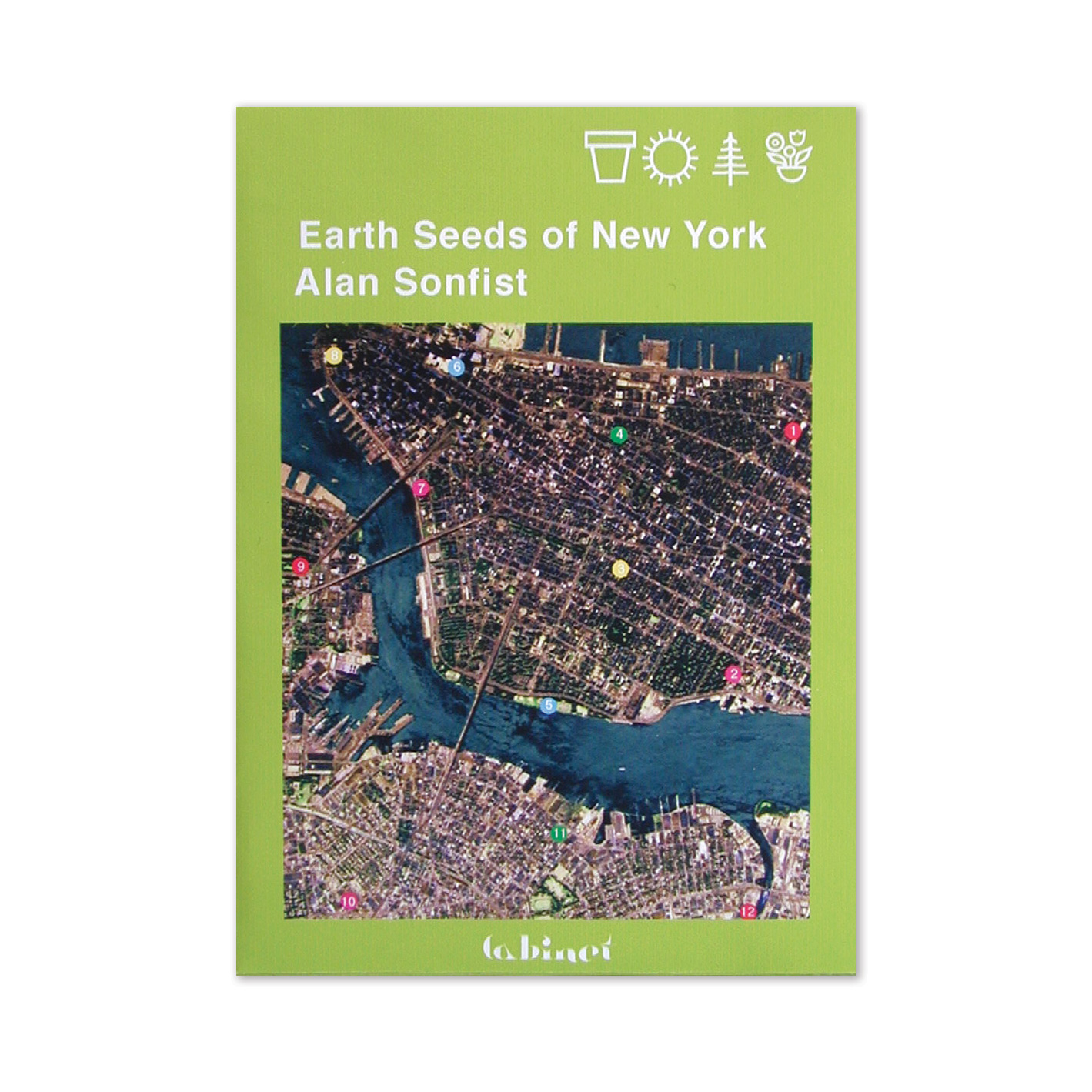
Seeds with soil collected from locations around the city, including cracks in the sidewalk, numerous lots, and various open areas. The assortment of seeds contained in each sample is unplanned and spontaneous. They represent both historical seeds and those newly introduced into the city’s ecology. Seeds can stay dormant for thousands of years—some may be as old as New York’s first tree.
The contents of each packet are distinct and unpredictable, perhaps containing exotic plants from different times. One might contain the undiscovered de Vinci of seeds. The package design features a satellite view of New York City, with markings indicating the sites where the seeds were gathered. This artwork revisits the project I created for the first Earth Day (1970), for which I placed mounds of indigenous seeds all over lower Manhattan. It is also a response to my first “Time Landscape” (1965), where I reintroduced historical vegetation to the city. This new exploration is in turn excavating the hidden forests dormant under the city’s concrete. I have created similar artworks in the past in Europe, exposing the hidden natural past of contemporary cities.
SEEDS: Variable

Though its Linnean designation honors the sixteenth-century Belgian botanist Matthias de Lobel, the perennial herb Lobelia is primarily native to North America, where it was familiarly known as Wild or Indian Tobacco. Its scientific name emphasizes a widely held belief that the plant functioned as a curative for venereal disease. The early colonists learned about Lobelia from the Native Americans, who prized it for its variety of uses in both medicinal and ceremonial contexts.
Lobelia is a paradoxical plant. Its primary alkoloids simultaneously stimulate and relax the respiratory system, making it a valuable tool in treating complaints such as asthma, bronchitis, and pneumonia. Because of its vivid emetic properties (its colloquial names include pukeweed, vomitweed, and gagroot), lobelia is often used to induce vomiting in cases of poisoning. Taken in large doses, however, it itself becomes poisonous, causing tremors, dizziness, paralysis, and death. It is these contradictory effects that led tribes such as the Penobscot to use it both to attract and repel love.
A popular garden plant, lobelia grows to three feet tall with light blue or lavender blooms.
SEEDS: Lobelia siphilitica
Kim Dickey is an artist and assistant professor at University of Colorado, Boulder. Her current project, “Knots,” reinterprets the rich traditions of gardening and bocage to create an environment about various entanglements.
Kris Lee is a multimedia person who lives and works in South America.
Alan Sonfist is an artist living in New York. The Ludwig Forum in Aachen, Germany, is currently organizing a retrospective exhibition of his work that will travel in Europe and the United States until 2007.
Laura Stein is a New York–based artist. She has shown her work in the United States and Europe for the past decade.
Spotted an error? Email us at corrections at cabinetmagazine dot org.
If you’ve enjoyed the free articles that we offer on our site, please consider subscribing to our nonprofit magazine. You get twelve online issues and unlimited access to all our archives.