


Defeat as Method
Thinking from within the ruins
Shahram Khosravi
My father, a son of the Bakhtiari—the Indigenous people of the Zagros Mountains in Iran—could sense it long before it arrived: defeat. Or perhaps it never arrived at all, because it had always been there, woven into the soil and the air. Like his ancestors, he watched as their land, and the future promised by it, were stripped away. It was the Bakhtiaris’ misfortune that French and British expeditions, wandering through their mountains in the late nineteenth century, found oil shimmering beneath their feet.
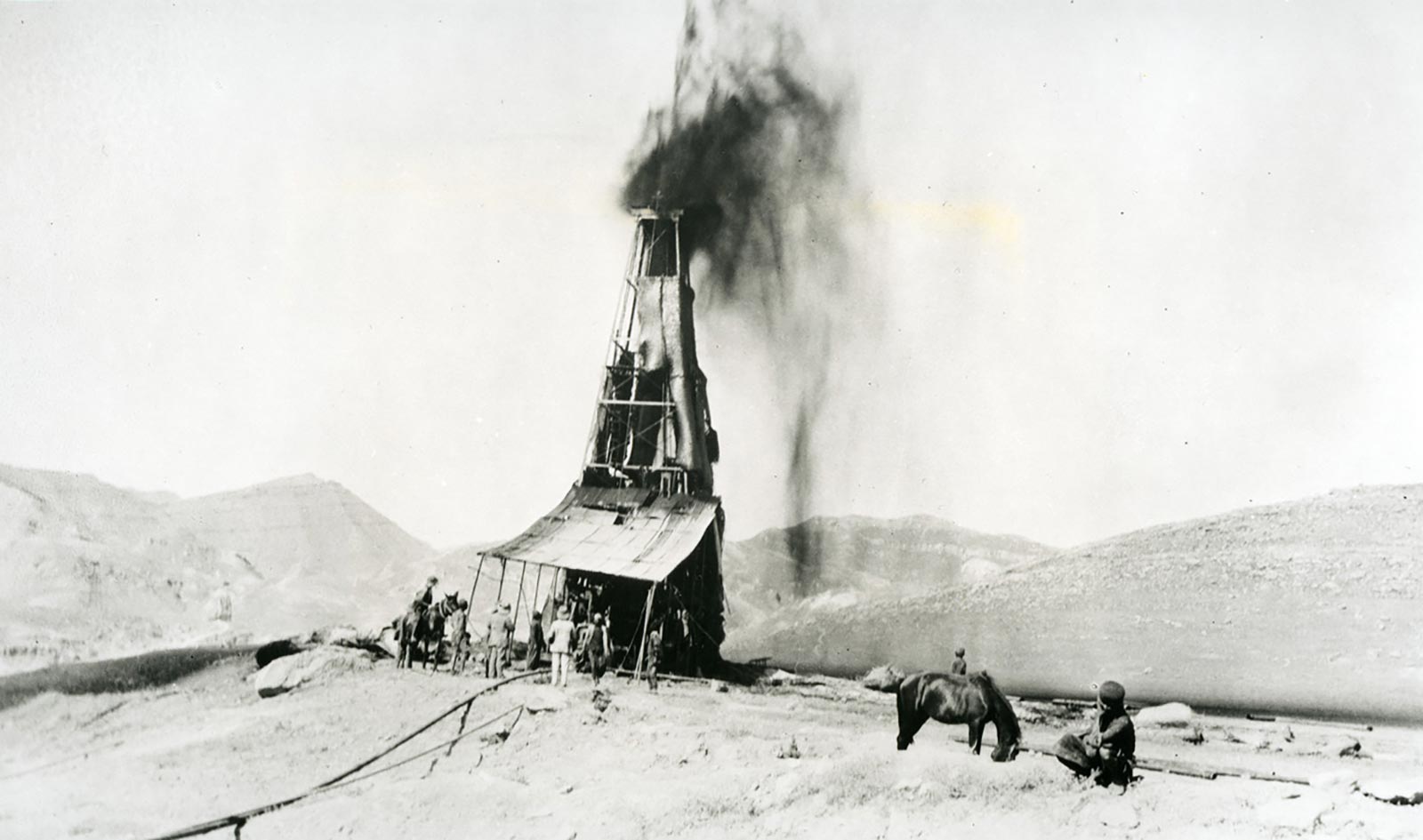
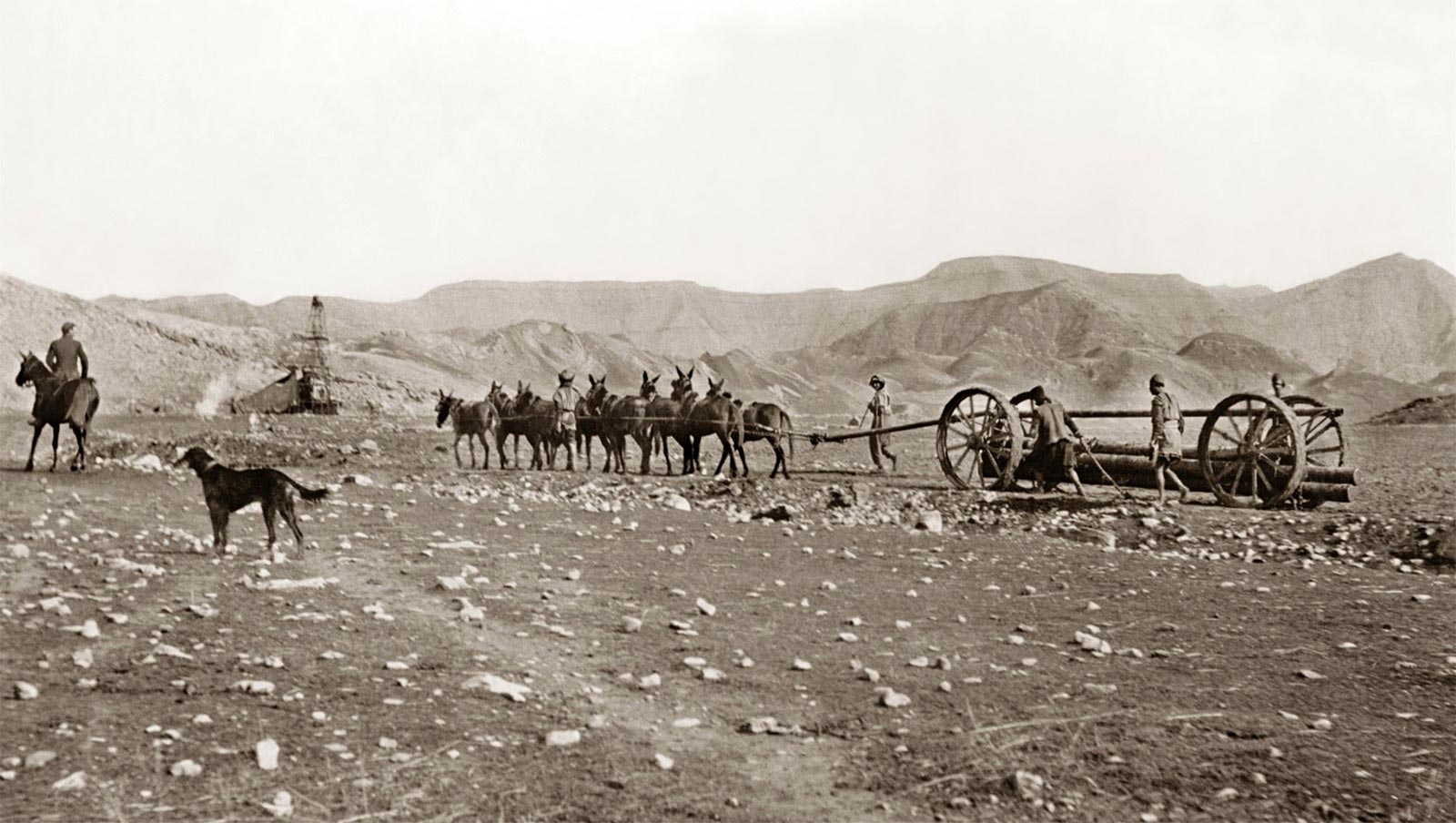
William Knox D’Arcy, backed by the British government, started to drill in the lands of Bakhtiari nomads, and in 1908, reached oil in the western part of the Bakhtiari region. The Bakhtiari had for a long time been regarded as a “savage race,” not only by Europeans but also by the Iranian rulers. A savage race is a waste race, and their habitat a wasteland. The Anglo-Persian Oil Company confiscated these lands, and displaced many people, as well as animals. Poor farmers and pastoralists were turned into low‐wage laborers. Pipelines were installed on their land to carry the black gold to metropoles. Oil extracted from Bakhtiari lands financed the modernization of Tehran and the consolidation of the newborn nation-state, while the Bakhtiaris themselves received none of the resulting benefits. The old pipelines were left in place after they fell into disuse, debris that discloses the link between colonial rule and the region’s current environmental disaster, between colonial accumulation by dispossession and the poverty and deprivation with which Bakhtiaris were, and are, struggling.
One of the few things of my father that remains with me is a letter he sent in late 1987, while I was crossing borders—one after another, illegally—trying to outrun the Iran-Iraq War. It is hardly a letter; more a brief warning. The last two sentences read:
Life, in general, is about defeat. Learn to face your defeats with an open face.
But how does one prepare for a defeat not yet arrived? For people like him—whose land, whose name, whose time have been taken—defeat is no stranger. It arrives like a season. It is expected. He, an Indigenous man, wanted to ready me, an undocumented migrant, for the rhythm of loss that returns, again and again, through generations. Another defeat is on its way. Learn to meet it with an open face.
In Black Skin, White Masks, Frantz Fanon describes the experience of watching films in which a Black character appears: “I cannot go to a film without seeing myself. I wait for me. In the interval, just before the film starts, I wait for me. The people in the theater are watching me, examining me, waiting for me.”[1]
The refrain “I wait for me” captures, with stark precision, the anticipation of defeat—the moment the Black body enters the frame and is, at that very instant, thingified by the viewers’ gaze. Throughout Fanon’s work, defeat in the visual field fashioned by the white gaze is ever present: a choreography of looking that reduces, freezes, and unmakes. Thingification is a form of unmaking. And the word defeat itself carries this history: it originates from the Old French defaire, meaning “to unmake,” to undo what has been done.
And yet, the history of the Black body, like the history of Indigenous and colonized peoples, is not only a history of being unmade. Unmaking is never the end of the story. The will to remake again is not born outside defeat but inside it. My father, a man shaped by the Zagros Mountains, had never read Fanon. Yet something bound them across distance and history: a knowledge of how to meet their defeats. With an open face. An open face is an openness to the world, and to all the risks the world contains. Openness is an act, a choice, an invitation to participate rather than retreat. It is the refusal to hide, to withdraw, to look away when disaster unfolds. An open face is the opposite of a closed one. To face one’s defeats with an open face is to live exposed, to accept vulnerability as a condition of being alive. It is to think dangerously, precisely because the enemy is dangerous. An open face is the willingness to look directly into the disaster approaching you—not with the illusion of victory, but with the will to survive. And survival requires knowledge. Those who endure defeat after defeat with an open face generate forms of knowing that emerge only from exposure, from vulnerability, from standing unshielded before the world.
The defeated of the world theorize what they endure. In truth, the only critical thinking possible today is thinking from the standpoint of the defeated. This standpoint is not one of passivity, nor of victimhood. On the contrary, it asks: How can one think from within brokenness, from within the ruins, and still produce meaning, and even possibility? What does it mean to transform defeat into a method?
The people of Iran carry a defeated revolution on their shoulders, a defeat that follows earlier ones: that of the Constitutional Revolution in 1911, and of the oil nationalization movement in 1953. It is a defeated revolution because Iranian society remains far from the promises proclaimed in its early days. Today, people confront a precarious social order marked by pervasive corruption, widening class inequality, family fragmentation, mass unemployment, social injustice, financial insecurity, and gender inequity.
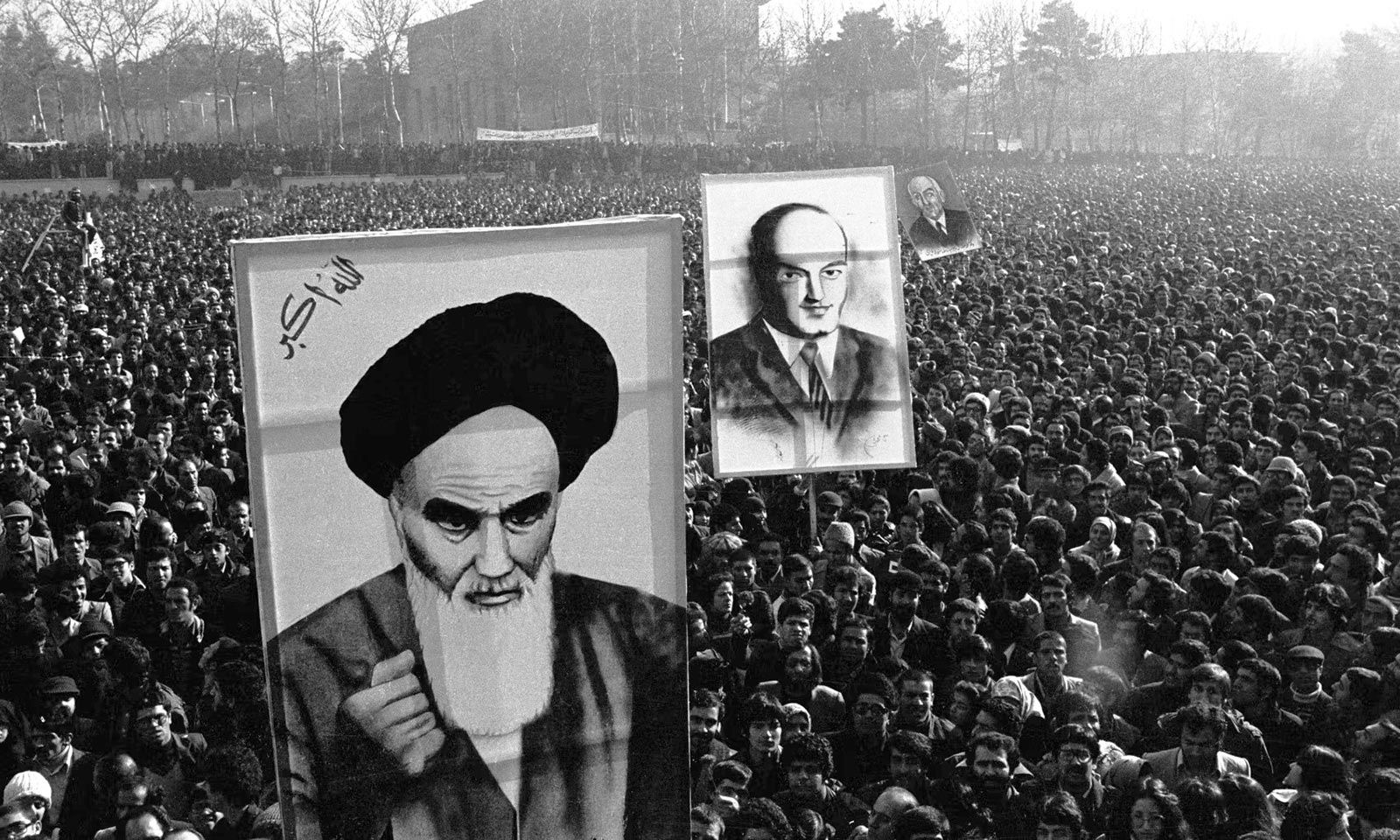
Ali Shariati, often regarded as the principal ideologue of the Iranian Revolution, was a student in Paris in the late 1950s when he became involved with the Algerian national liberation struggle and encountered the writings of Frantz Fanon. Shariati translated anti-colonial thought into Islamic symbols, locating within Islam a revolutionary potential capable of sustaining anti-colonial struggle. He sought to merge Fanon’s revolutionary anti-colonialism with an Islamic existentialist framework, linking the material struggle against oppression with the spiritual search for meaning.
In a letter, Shariati outlined this vision to Fanon. Fanon’s reply expressed a familiar hesitation, the same reservation he had voiced toward the Négritude movement. He regarded the pursuit of “one’s roots,” whether in religion, ethnicity, or race, as a misguided path to liberation.† His orientation was forward-looking. As he wrote in Black Skin, White Masks: “I do not want to exalt the past at the expense of my present and of my future.”[2]
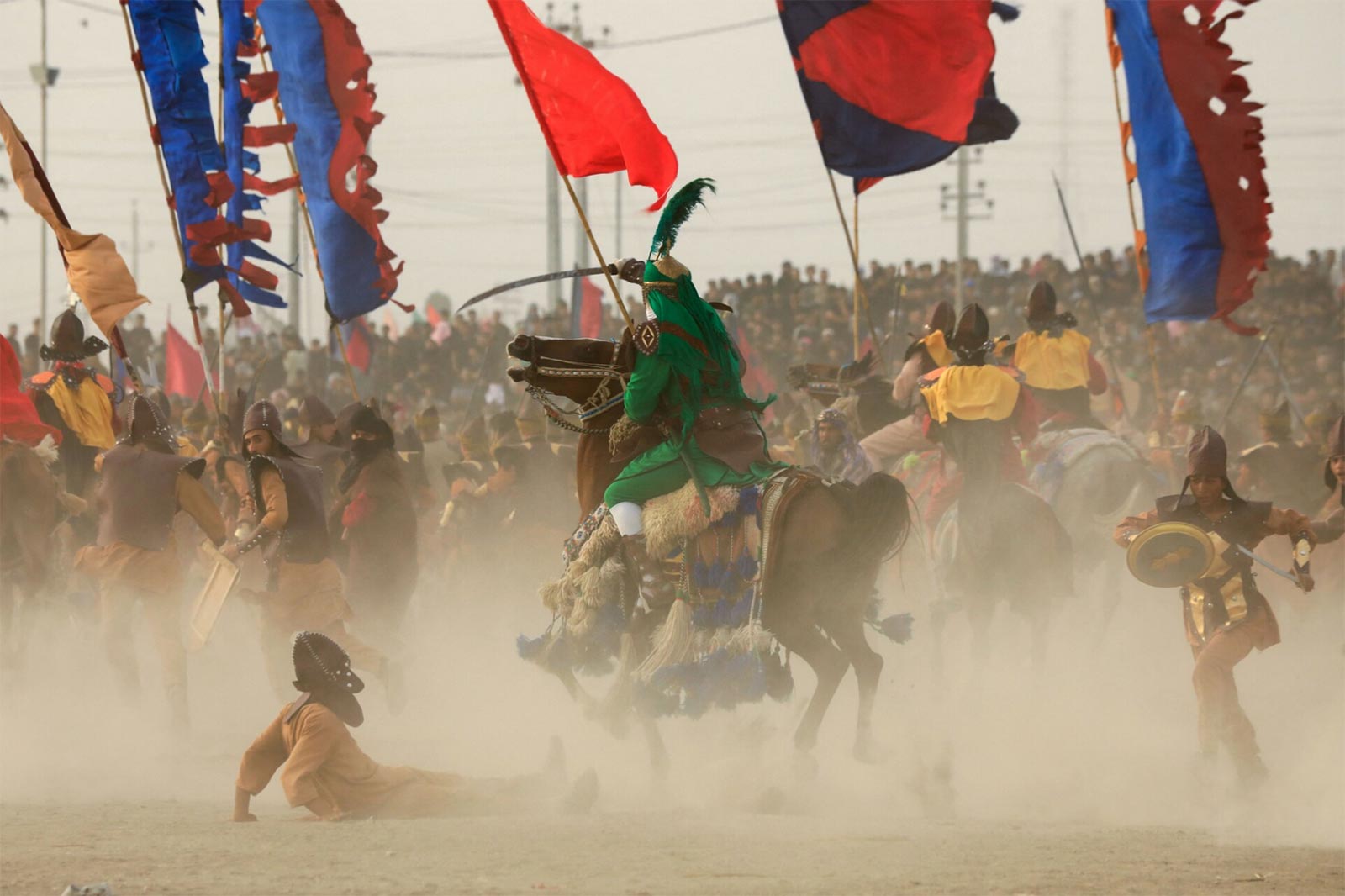
Decades later, the consequences of pursuing “one’s roots” are visible in Iran’s political catastrophe. Yet this is not the entirety of the story. The defeated 1979 revolution itself was built on another, much older defeat: the defeat of Karbala. In October 680 AD, on the plains of Karbala in present-day Iraq, a bloody battle took place on the tenth day of the month of Muharram, now commemorated as Ashura. On that day, the Prophet Muhammad’s grandson, Imam Hussain, and seventy-two of his family members and companions were killed. In Shia Islam, Ashura represents a history of loneliness, betrayal, thirst, loss, torture, and grief. The anguish and regret of the Shia are expressed annually through the ritual of Ashura, a communal mourning that transforms grief into collective remembrance. Observed across the Shia world, from Iran and Iraq to South Asia and diasporic communities in East Africa and the Caribbean, Ashura has generated a paradigm of defeat expansive enough to hold history, cosmology, and the human condition.
This tradition of lamentation resonates with Black elegy—songs and poems that mourn, reflect on, or celebrate Black experiences in the face of historical and ongoing racism and colonialism. Elegies are inherently political. They lament defeat while resisting it, serving as acts of remembrance and reclamation in the face of power.
The standpoint of the defeated engenders a profound question: Why are we defeated once again, and how can we survive it once again? Lamentation becomes a call to restore the promises of justice that have faded. This is precisely why lamentation is threatening to those in power. The Ashura ceremony was carried to the colonial Caribbean by indentured South Asian laborers, where it developed into a prominent ritual practice, especially in Trinidad. Known locally as the Hosay ritual, these commemorations were often viewed with suspicion by British colonial authorities and were at times met with open repression. In 1884, during the Hosay ritual in Trinidad, British forces opened fire on participants. The Hosay massacre of 30 October became a haunting echo of Karbala.
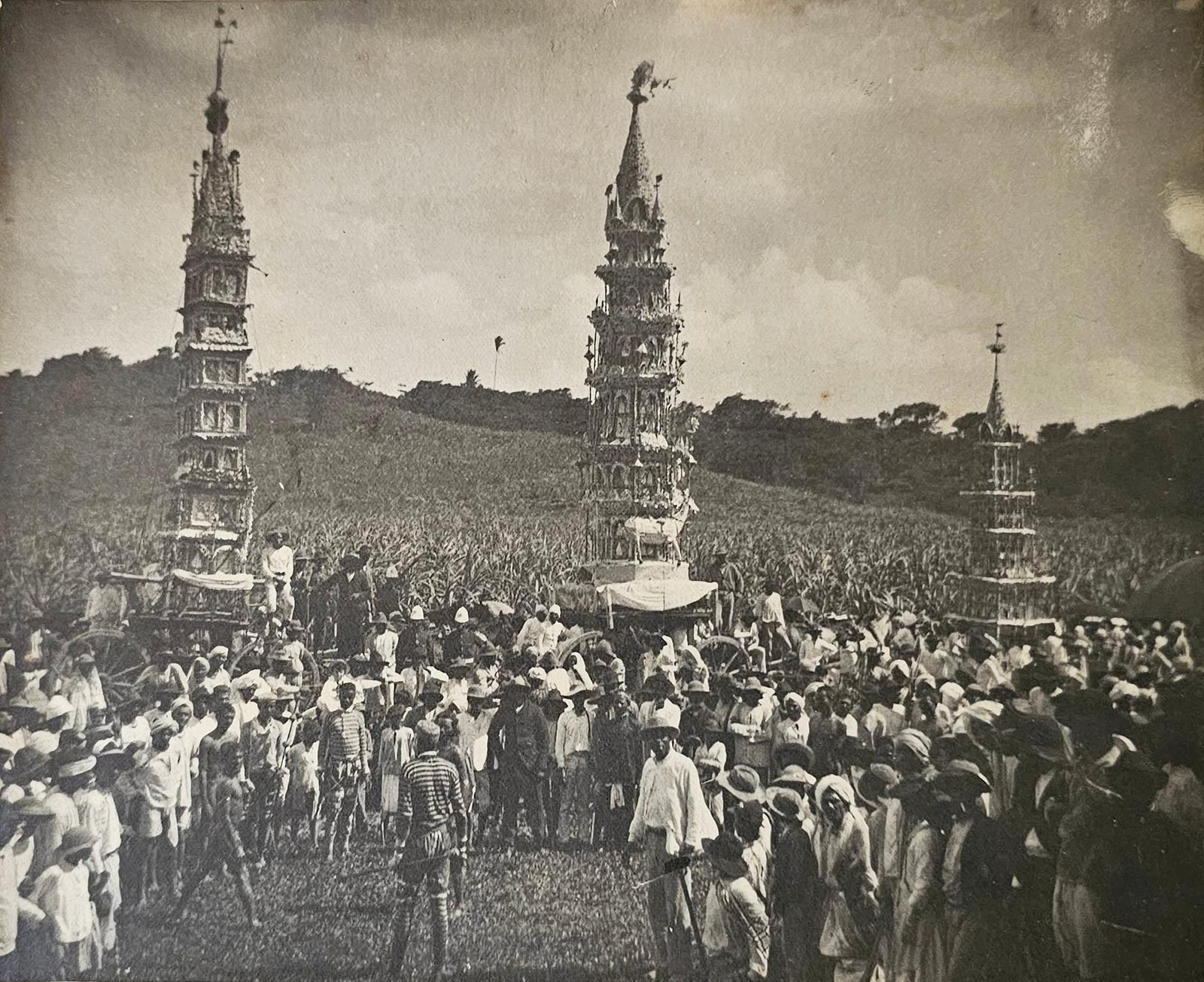
What makes the defeat of Karbala compelling is not its religious meaning or spiritual symbolism, but its political translatability—that is, the way it operates as a catalyst for social movements. Beyond religion and state ideology, Karbala conveys the shared pain of the defeated. As both a sorrowful elegy and a revolutionary one, it offers guidance on how to navigate the aftermath of a violent past. Rituals centered on this defeat form a post-apocalyptic narrative of the present, a living memory of loss that insists on resistance.
Defeat thus becomes a critical gesture, a refusal to make peace with injustice through premature resolution. Critical thought persists through its own brokenness; it is a mode of thinking that refuses to forget wounds. Defeat is not the end of critique, but its ethical point of departure. The defeated peoples of the earth, across times and geographies, live continuously within a post-apocalyptic frame. The ways in which narratives of past defeats have been practiced—by indentured migrant workers in the Caribbean, by enslaved workers on plantations in North America, or by marginalized communities in Iran—speak not to a distant history but to an enduring way of understanding the world.
The defeated of the earth already inhabit the very conditions that post-apocalyptic narratives attempt to describe. A historical defeat is never merely an event of the past; it carries within it the potential for future revolutionary moments. Lamentation over defeat is not a passive act of remembrance but a practice of hope—an orientation toward the possibility of the new. It is a willingness to meet an approaching defeat with an open face. This paradox, this tension, can be understood as a form of pessimistic hopefulness. When the interval between disasters grows so short that we have scarcely emerged from one before the next arrives, optimism becomes unimaginable. Yet to be without hope is unrealistic. Hope is realistic because I am still alive. I continue to breathe, even when, as Fanon put it, breathing itself becomes a form of combat.[3] This combative breathing compels us to hope without illusion. A pessimistic hope is a hope that drives us to struggle precisely because we recognize the impossibility of victory. Victory may be unrealizable, and yet it must still be imagined. If we cannot escape defeat, then we must learn to think with it. We cannot win, but we must think as if we could, not out of religious conviction or political ideology, but simply because we are still alive. We still breathe. The distinction between optimism and hope lies here: hope persists even in impossibility.
Thinkers who have lived through defeat testify to this. Walter Benjamin once wrote, “It is only for the sake of those without hope that hope is given to us.”[4] James Baldwin observed, “The future doesn’t exist for me.” He was not confessing despair so much as naming a condition. Colonial racism deprived him, and people like him, of any promised tomorrow. The future was already occupied. His pessimism is unmistakable, but his commitment to transformative action is even more resolute. Baldwin insisted that our most profound responsibility is to generations not yet born.[5]
A realistic orientation commands us to hope without expecting salvation. Such combative hope remains negative—a form of hope that persists through refusal rather than through any reconciliation with an intolerable present. Theodor Adorno once stated that “wrong life cannot be lived rightly.”[6] If life itself is “wrong,” shaped by domination, exploitation, and alienation, then to hope naively for redemption within its existing terms is to accept its false premises.
Another defeated people, the Crow, an Indigenous nation of the western United States—developed what Jonathan Lear describes as radical hope, a form of hope that enabled survival amid cultural collapse, when established ways of life and systems of meaning could no longer be sustained:
What makes this hope radical is that it is directed toward a future goodness that transcends the current ability to understand what it is. Radical hope anticipates a good for which those who have the hope as yet lack the appropriate concepts with which to understand it.[7]
Radical hope therefore demands a radical imagination: an effort not to restore what has been lost, but to create new possibilities for living when the familiar world has ended. The same can be said of Palestinians during the genocide. The hope of the defeated is precisely this: a hope that exists through its own impossibility, a hope that endures even when meaningful action no longer seems possible.
What the defeated of the earth share is the understanding that defeat is not the end of struggle but its very condition. For them, defeat becomes a method. Historical consciousness emerges most sharply through it. As Fredric Jameson wrote, “History progresses, not by way of victory, but by way of defeat.”[8] Defeat exposes what victories obscure. Where victory justifies the rightness of existing arrangements, defeat reveals their wrongness. Defeat is the ground of ethical thought: it forces us to imagine possibilities that cannot yet be realized, and that very act of imagining becomes politically generative. Defeat clears conceptual space for radical imagination.
Colonial modernity conceived history as progress, a teleology of victory, conquest, and mastery. Its colonial reason was founded on the denial of defeat, or what Ghassan Hage calls “a fantasy of omnipotence.”[9] Within this schema, only the victorious have history; the defeated are cast outside of time, their suffering depoliticized and their dispossession naturalized. An anti-colonial practice begins by breaking with this teleology. It requires learning to think in spite of defeat.
This resonates with what Mariana Alessandri, in Night Vision, describes as dwelling with darkness.[10] She does not call for thinking in darkness but for thinking with darkness. In contrast to the Enlightenment’s obsession with light, transparency, and clarity, the Indigenous and Black radical tradition affirms the right to opacity and fugitivity. Opacity is a refusal to be rendered fully knowable within colonial terms. Fugitivity, similarly, is not merely a desperate escape from horrific material conditions—such as slave plantations or Israeli occupation—but also a process of self-actualization. Fugitivity, as the rejection of captivity, engenders inner transformation. It produces new subjectivities, creating conditions in which it becomes possible to speculate the impossible, to imagine life beyond chains and confines.
Resistance, Fanon writes, clears the path to freedom through radical changes in consciousness. Like fugitivity, defeat as method enacts such transformation: it refuses objectification, rejects the singular identities imposed by colonial imaginaries, and affirms the right to exist otherwise. In this way, fugitivity intersects with defeat as method. Both disrupt the colonial fantasy of omnipotence. Both reveal what domination works so hard to obscure: We are still alive.
The moment we recognize our defeat is the moment we begin to experience it historically and politically. Even when defeat feels inevitable, we must historicize it; only then can we demand justice. Defeat as method is rooted in an imagination from below. It seeks to speculate the impossible, to envision life beyond the ruins of racial capitalism and colonial racism. If politics is a battle over the imagination, it is the only battle in which we can flee defeat.
Palestinians have understood this since 1948. We, the defeated of the earth, have learned from Palestinians how to face our defeats with an open face. We are defeated again and again and again, but never in the same way. Our defeats are not repetitions of the same. Because to repeat the world would be to betray it.
- Frantz Fanon, Black Skin, White Masks, trans. Charles Lam Markmann (London: Pluto Press, 1986), p. 107.
- Ibid., p. 176.
- Frantz Fanon, A Dying Colonialism, trans. Haakon Chevalier (New York: Grove Press, 1967), p. 65.
- Walter Benjamin quoted in Herbert Marcuse, One-Dimensional Man: Studies in the Ideology of Advanced Industrial Society (London: Routledge, 2002), p. 261.
- Margaret Mead and James Baldwin, A Rap on Race (Philadelphia: J. B. Lippincott, 1971), p. 201.
- Theodor Adorno, Minima Moralia: Reflections on a Damaged Life, trans. E. F. N. Jephcott (London: Verso, 2005), p. 39.
- Jonathan Lear, Radical Hope: Ethics in the Face of Cultural Devastation (Cambridge, MA: Harvard University Press, 2008), p. 103.
- Fredric Jameson, Valences of the Dialectic (London: Verso, 2009), p. 41.
- Ghassan Hage, Alter-Politics: Critical Anthropology and the Radical Imagination (Melbourne: Melbourne University Press, 2015), p. 159.
- See Mariana Alessandri, Night Vision: Seeing Ourselves Through Dark Moods (Princeton, NJ: Princeton University Press, 2023).
Shahram Khosravi is professor of anthropology at Stockholm University. He is the author of several books, including Young and Defiant in Tehran (University of Pennsylvania Press, 2008) and “Illegal Traveler”: An Auto-Ethnography of Borders (Palgrave Macmillan, 2010), and co-editor of Seeing Like a Smuggler: Borders from Below (Pluto Press, 2022). He is the founder of Critical Border Studies, a network for scholars, artists, and activists.
Spotted an error? Email us at corrections at cabinetmagazine dot org.
If you’ve enjoyed the free articles that we offer on our site, please consider subscribing to our nonprofit magazine, which includes unlimited access to all our archives.