


Falling Out of the World
Portraits of Sigmund Freud’s home as a vanishing act
George Prochnik
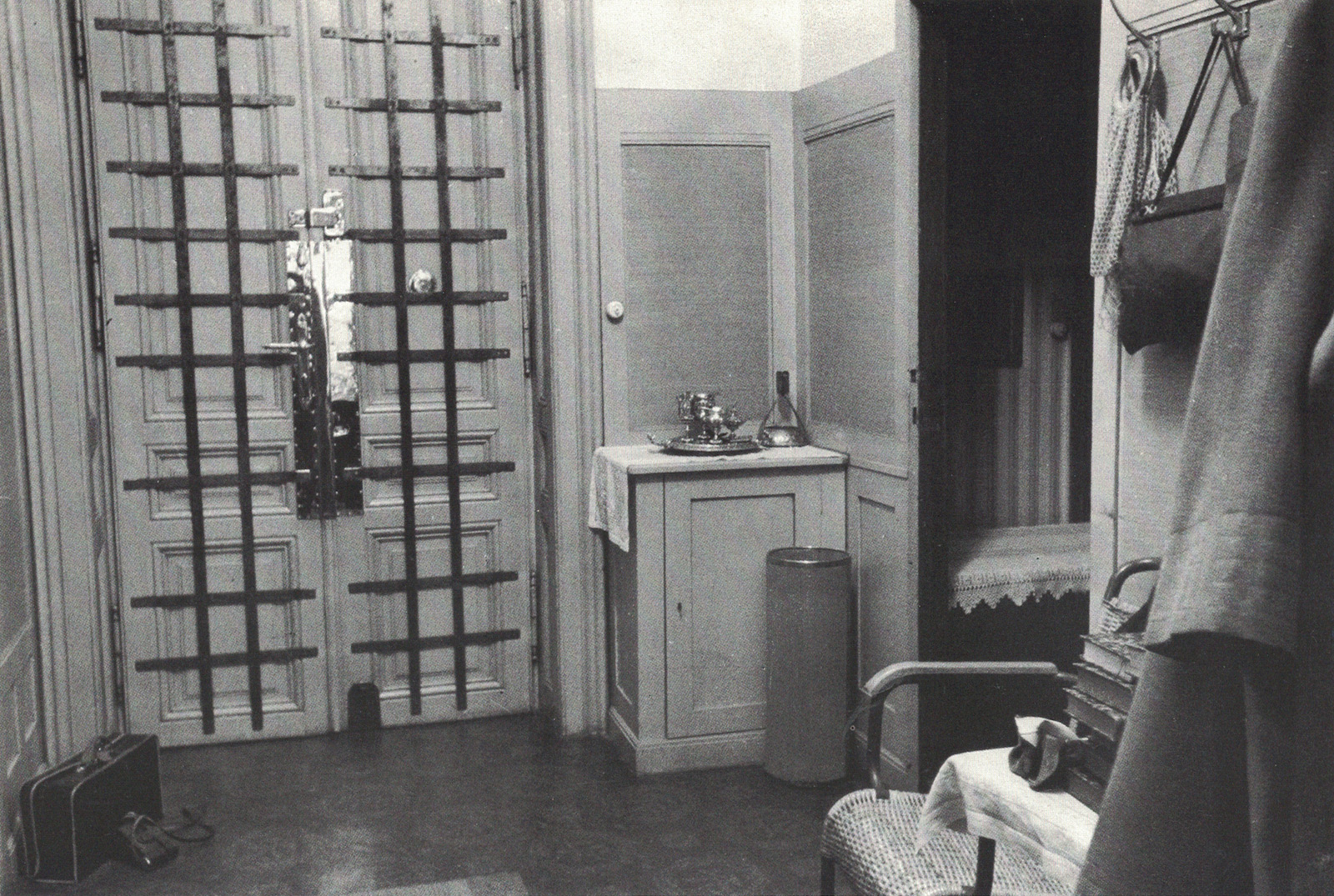
Just inside the tall white door of Sigmund Freud’s waiting room, with its cross-hatched metal strips evoking prison bars, stands a dark valise ready for flight. Beside the case, dropped in disarray, lies a leather camera case, straps snaking into the air, then coiling across the wooden floor. The image is the first interior shot in Edmund Engelman’s book comprising fifty-four of the photographs he took in May 1938 of Freud’s apartment building, home, and offices at Berggasse 19.[1] In the suite of pictures, this is the only one to advertise the photographer’s own presence. Perhaps the serendipitous configuration proved irresistible to him; the valise at the threshold makes a potent emblem of Freud’s impending departure from the city where he’d spent almost the whole of his life. The adjacent cast-aside camera holder, meanwhile, attests to the case’s true function—a kind of signature left by Engelman to indicate that the evidence of the resident’s imminent exit is only symbolic, just as the photographer himself is only “there” as the conservator of transience, a cipher behind the cyclops eye of the lens.
Engelman, who turned thirty-one that May—a fortnight after Freud had observed his eighty-second birthday and two months after the Anschluss—shared something of Freud’s sense of having already become a phantom presence in Vienna, flickering between shadows, surviving at the edge of absence. The young photographer, who was himself Jewish and would escape from Austria two months after Freud, wrote of the mix of excitement and fear he felt moving through the nearly deserted streets of Vienna en route to Berggasse that wet spring morning.[2] Surely, he thought, it was obvious to everyone that he was going to Freud’s offices to photograph him, a task that the Nazis (who kept the apartment under constant surveillance) would seize on as an excuse to persecute them both. Despite the louring sky and the fact that film stock of the day was inadequately sensitive, he’d been instructed to shoot the dim interiors without any extra illumination since this might attract attention, adding to the somber, limbo-like quality of the images.
Engelman’s photographs carry an aura of imminent disappearance—prologue scenes to a pitiless violence that will culminate in the ecstasy of occupying the premises of Vienna’s now-voided heterogeneous civilization. In an interview from 1989, Hertha Pfeiffer, whose family was offered Freud’s home by the Nazis in 1942, spoke with unfaded, dazed rapture about the experience. “We got the apartment … the Freud apartment. … My God, the apartment was available. … The apartment was available. Completely empty. There was absolutely nobody in it. That’s the way it was then. It was so simple. There was no problem.”[3]
Her words echo with the timeless thrill of invaders discovering the fixed order of the world to be permeable after all. Even the most towering barriers may suddenly dissolve. Where another people once worked and lived, a hollow can be made. Those who once called some place home can be erased, while the frame of their former existence may remain intact, gaping, awaiting new occupants.
For the former inhabitants, the discovery of their susceptibility to a kind of literal derealization by the general population proves equally shocking. The psychic wound inflicted on Vienna’s Jews by the expropriation of their existence was no less disorienting, even if their sense of belonging had always been circumscribed, contingent, and contested. A home that your neighbors never fully accept as your own is still a world apart from the experience of forced dispossession, the vertigo of finding yourself in the naked air with nothing between you and the adversary.
After the Nazis came to power in Germany, Freud told Marie Bonaparte that he and his family spent their days in a state of constant anxiety, trying to decide whether the events of 1683—the Turks surging against the walls of Vienna—would now recur “with the repulse of these barbarians who this time come from another quarter.”[4] Then, however, “a friendly army came to the rescue, while today the world around seems to be short-sighted enough to leave us to our own resources.”
The sense of being trapped in a rerun of historical trauma laced with just enough plot twists to make the climax unforeseeable tormented many people in this period. Jews, who had enshrined the repetition of catastrophe as one half of their defining historical dyad—complemented by the miracle of divine intervention—were especially attuned to these sinister echoes, from which Freud’s central notion of repetition-compulsion may have taken a cue.
Many of those who came to Freud for treatment in his last years in Vienna sought liberation from precisely this feeling of endlessly eddying, impotent stagnation. “I wanted to free myself of repetitive thoughts and experiences—my own and those of many of my contemporaries,” the poet H.D. wrote, explaining why she’d sought out Freud’s help.[5] “I knew that I, like most of the people I knew, in England, America, and on the Continent of Europe, was drifting. We were drifting. Where?” It seemed they were encircled by the “supernormal or supernatural,” and the current was gathering force. She hoped “the old Hermit who lived on the edge of this vast domain” would tell her “how best to steer [her] course.”
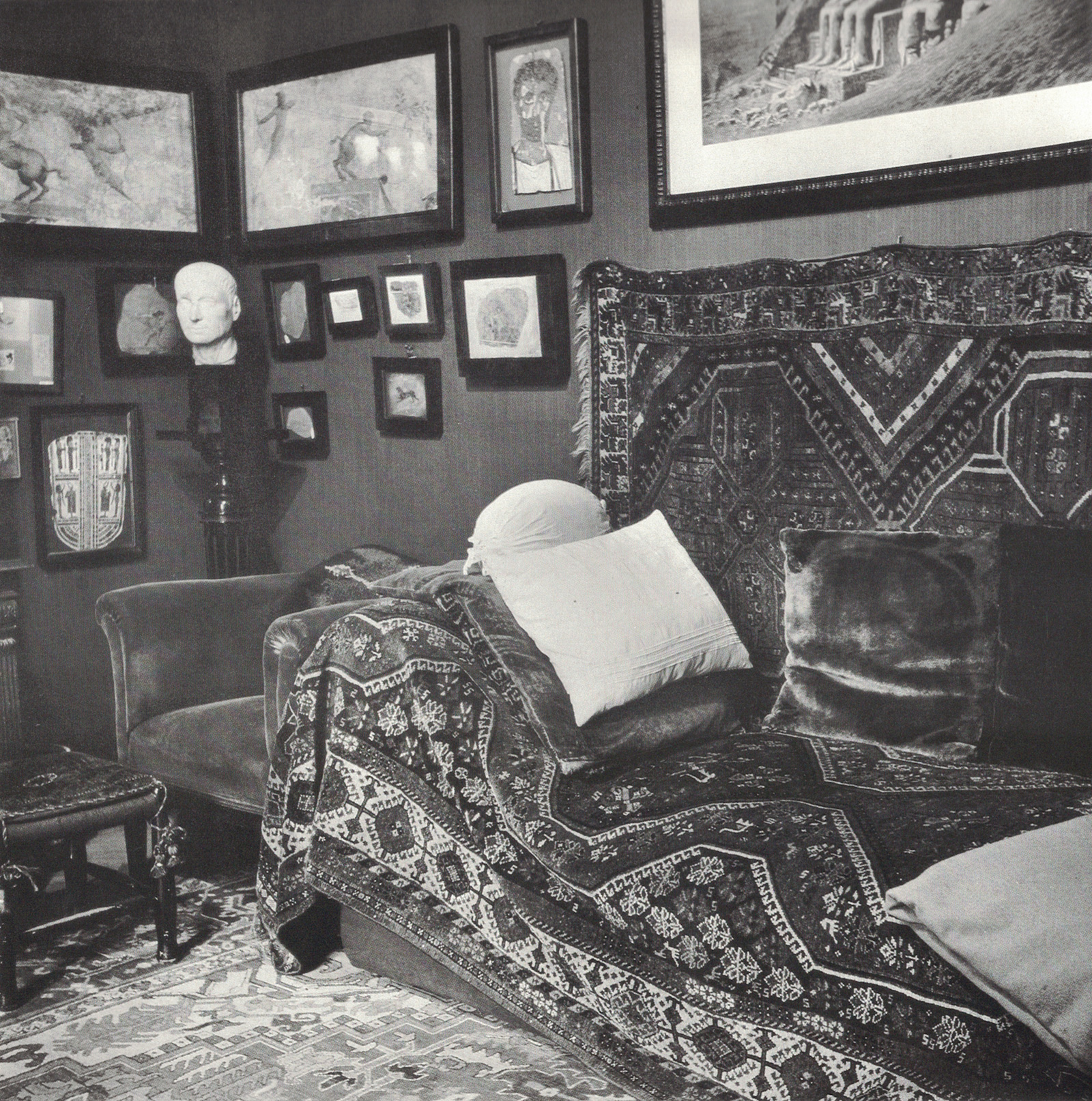
But she found instead that in her sessions, her thoughts and imaginings were allowed to luxuriate—were “not cut away, were not pruned even.”[6] Rather, they were “collected, collated,” and “sometimes skillfully pieced together like the exquisite Greek tear-jars and iridescent glass bowls and vases” that glowed in the twilight from the cabinet shelves facing her as she stretched on the couch. The dead were alive in memories and dreams, she now viscerally realized. Freud was sailing her into the underworld.
One day, late in her treatment, when the threat of the Nazis felt palpably imminent, Freud began speaking about his descendants, and she realized that this was how his mind worked; confronted “with the blank wall of danger, of physical annihilation,” he turned to the question, “What will become of my grandchildren?”[7] These were the terms into which he translated the mystery of immortality. She felt a “sudden gap, a severance, a chasm.” There was the doctor-hermit-professor who belonged to his patients, and another man “who belonged to [the] family,” which was, moreover, “a large family with ramifications, in-laws, distant relatives, family friends.” It all sounded “so tribal, so conventionally Mosaic.” Where she sought vast synthetic symphonies, he gave her relentlessly particularized, tiny-print genealogies, so that she found herself feeling “the old impatience, a sort of intellectual eye-strain.” The only eternity he could visualize “was in the old Judaic tradition,” like Abraham, Isaac, and Jacob, enduring everlastingly “in his children’s children, multiplied like the sands of the sea.”
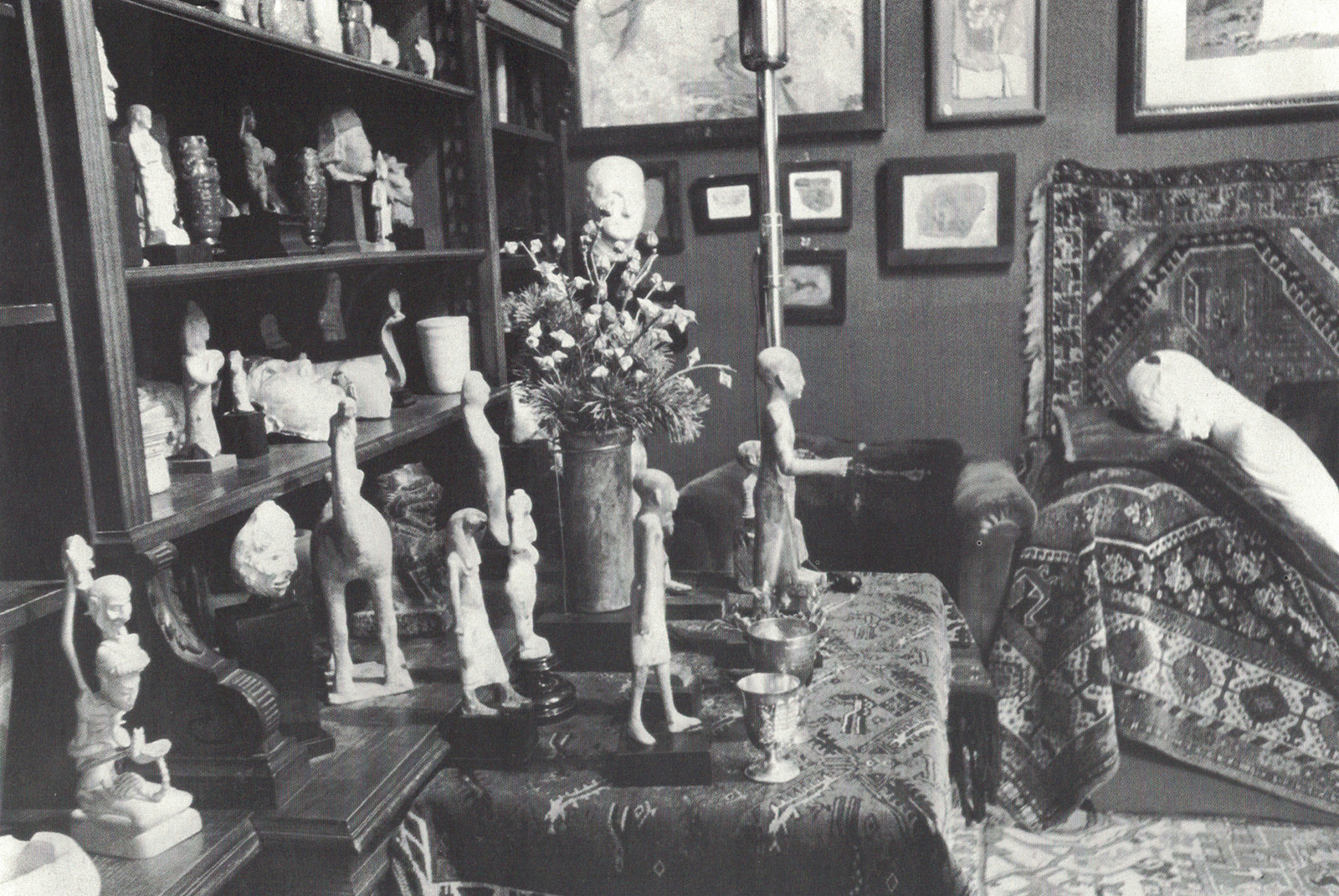
All through that analytic session, the longtime family maid, “little Paula,” kept peering “so fearfully through the crack in the front door.”[8] There were rifles out there; H.D. had seen them, stacked bivouac-style at street corners. They gave a “neat, finished effect” to the scene, like in an old-fashioned print. At one point, she jerked out her arm to steal a glance at her wristwatch, and the professor reprimanded her. “I keep an eye on the time—I will tell you when the session is over.” She tucked her cold fingers beneath the soft rug. Did Paula fold the rug and put it back at the foot of the couch after each consultation? Or did the preceding patients rearrange the rug, H.D. wondered, as she herself carefully did each time before departing? What were the rituals of the successions of analysands, the lost and the broken, who came into Freud’s apartment seeking obscure refuge from the psychosis unspooling beyond the doors of this building? Was there some form of propitiation or release they could learn from the shrine-like setting and the doctor whom H.D. described as being “midwife to the soul. … not the sphinx but the sphinx-moth, the death-head moth.” The immemorial gods were arranged in a crescent on the table before him, each one the sculpted emblem of an idea or dream evoking sacred truths, just powers, and the divine heterogeneity of human fantasy. Sometimes Freud chose a particular object to call to the attention of a patient. H.D. was uncertain whether he was gauging her reaction to his statues, or trying to determine whether the “dynamic idea” they’d embodied was still intact, notwithstanding the “fact that ages or aeons of time had flown over many of them.”
In June 1933, five years before Engelman’s photo shoot, and less than six months after Hitler was appointed chancellor of Germany, Freud wrote psychoanalyst Marie Bonaparte that the earth was turning into a colossal prison. Within this vast penitentiary, “Germany is the worst cell,” he declared, while the future character of the Austrian cell remained “quite uncertain.”[9] He returned to a variation of this metaphor a year later in a letter to the novelist Arnold Zweig composed in the aftermath of Austria’s short, brutal civil war. Things could not continue as they were at present, he opined. Some climactic event had to occur, whether that was revealed to be the arrival of the Nazis, the resurgence of “our own home-made Fascism,” or the appearance of Otto von Habsburg.[10] He kept thinking about a story that he couldn’t entirely remember. “It’s called ‘The Lady and the Tiger’ and in it a poor prisoner is waiting in a circus, not knowing whether they are going to let the wild beast loose upon him or whether the lady will appear who by choosing him for her husband will release him from punishment.” The point, Freud explained, was that the story finished without revealing who turned up, the lady or the beast. “This can only mean that for the prisoner it does not matter which has happened.”
The Viennese penchant for ambivalence reflected a recognition that at the end of all the political prevarication, whatever decision was reached would likely prove worse than their chronic state of jaded indeterminacy. “In Berlin, things are serious but not hopeless; in Vienna, they are hopeless but not serious,” Karl Kraus allegedly quipped.[11] Freud himself intended to stick it out, he reported to Zweig. Where could he travel to in his condition of frail dependency? “Everywhere abroad is so inhospitable.”[12] That said, he acknowledged, “if there really were a satrap of Hitler’s ruling in Vienna,” he would have to leave, no matter the destination.
After Hitler’s ascendancy, Zweig, a longtime Zionist based in Berlin, swiftly made his way to Palestine. At first, he felt confident that he’d made the right choice, even though, he told Freud, once one was actually living in the historic homeland amid one’s people, “one sheds one’s Jewish national prejudices just as a dog shakes off his fleas in the water.”[13] Despite Zweig abandoning his rose-tinted view of the Zionist settlement project, life nonetheless seemed fundamentally good. Recently, the mimosa, lemons, and mountain flowers had begun blooming, and he wrote of the “human qualities” of the newly arrived populace nourished by the commingling of disparate cultural backgrounds. Zweig, however, found that even in Palestine, he simply could not “shake off the whole Hitler business.” If only our individual capacity to escape calamity brought with it freedom from consciousness of the horrors being visited on those left behind! “I don’t live in the present, but am ‘absent,’” Zweig wrote. “My work grows shapeless, insipid and shallow and my imagination, instead of going into characters, expresses itself compulsively in sadistic wish-phantasies about war.”
A year later, he informed Freud that he did not belong in Palestine after all.[14] Having spent the previous two decades as a dedicated Zionist, this alienation on arrival startled Zweig. It wasn’t only that he couldn’t stop thinking about everyone suffering back in Europe. He soon came to feel that “the Hebraic nationalism of the Hebrews” was demented. He had begun plotting to leave, but where to? “Can a man like me come to Vienna, where every political utterance of the State would be repugnant to me, just as mine would be to the State?” he mused to Freud. “And where else is there to go? It is more or less the same wherever one is if one is not at home.” The fantasized homeland founders on the real, even as the original homeland becomes foreign under the fanaticism of a new regime.
Freud didn’t respond directly to these tortured ruminations. He’d already told Zweig how in the face of revived anti-Semitic fervor, he couldn’t help wondering once again “how the Jews have come to be what they are and why they have attracted this undying hatred.”[15] His understanding of humanity’s ineradicable destructive drives shielded him against surprise regarding fresh eruptions of bloodshed, but something about the abiding, outraged elation of anti-Semitism still eluded him. One might be forgiven for thinking that the mystery drove Freud himself a bit around the bend when he answered his own question by announcing that he’d hit upon the secret formula: “Moses created the Jews.” This leap of faithlessness was Freud’s way of introducing his latest project, “The Man Moses: A Historical Novel,” which purported to explain Judaism as an Egyptian invention by way of a sort of loose brushstroke, Cubist portrait of the beginning of the Jews and the inception of their bad rapport with other peoples on a canvas rife with hoary totems and dead fathers.
Near the end of Moses and Monotheism, the book that grew out of the draft manuscript referenced in the correspondence with Zweig and which occupied much of Freud’s free time while the nominally civilized society around him was unraveling, he also offered a crisp, caustic appraisal as to why Jews perennially attract so much loathing. One might launch the investigation by registering the character trait that above all governs Jews’ interactions with others, Freud wrote. “There is no doubt that they have a very good opinion of themselves, think themselves nobler, on a higher level, superior to the others from whom they are also separated by many of their customs.”[16] Behaving in accord with their belief that they are God’s chosen people, “the declared favourite of the dreaded father,” Jews attract a primal, enraged jealousy. Add to this the fact that the Jews declined to acknowledge their culpability for Christ’s murder after God had made the extraordinary gesture of incarnating Himself as a Jew no less, and—in Freud’s analysis—the roots of anti-Semitism become evident. It was the refusal to take on the guilt of killing God that made Jews appear especially despicable, perhaps still more than the killing itself. Insofar as Christianity is founded on the recognition that it was human sin that had impelled Christ’s martyrdom, its adherents can proclaim, “It is true, we did the same thing, but we admitted it, and since then we have been purified.” Others learn from their sins and at least try to improve; Jews don’t even attempt to transcend themselves.
While Freud was able to endure the times partly by burying himself in labyrinthine speculations about the origins of everything, Zweig was unable to entirely repress his experience of present-day Palestine. It was a regrettable aspect of his writerly identity that he couldn’t stay clear of politics, he told Freud in 1936. “I always seem to be caught up in something.”[17] As he watched the nationalistic “reconstruction” work going on around him in Haifa, he was dismayed to see the most fundamental principles of coexistence being neglected. Almost nothing was undertaken “to foster Jewish-Arab cooperation, the necessity for which should be obvious to any reasonable person.”
Freud found Zweig’s struggles in Palestine moving, but predictable. It wasn’t the first time he’d heard about the trouble that individuals steeped in European culture experienced attempting to adapt to the place. Not to mention that the émigrés brought with them all the failings and vices of wherever they came from. This was the flip side of the diverse, homegrown cultural attributes whose commingling Zweig had at first celebrated in his fellow Zionists.
Freud had in fact shared with Zweig his own disenchanted view of Palestine back in 1932, after the writer had traveled there on a visit. “How strange this tragic and fantastic country you have just visited must have appeared,” Freud wrote.[18] To his mind what was truly incredible was the thought that “this strip of our native earth is associated with no other progress, no discovery or invention,” beyond the deities whose statues Freud so prized. Anywhere else one looked in the ancient world, one encountered fertile contributions to the progress of civilization. The Phoenicians were said to have invented glass and the alphabet. Minoan art emerged from Crete. Freud breaks into a kind of alphabetic aria extolling antiquity’s glories: “Pergamon reminds us of parchment, Magnesia of the magnet, and so on ad infinitum.” Palestine, on the other hand, “has produced nothing but religions, sacred frenzies, presumptuous attempts to conquer the outer world of appearances by the inner world of wishful thinking. And we hail from there,” he cried. There was the rub of it: however little one might wish to have to do with the place, it was “impossible to say how much of the life in that country we carry as heritage in our blood and nerves.” Though we left the earth of Palestine behind long ago, Freud conceded, we ourselves may still incarnate its traditional psychopathologies.
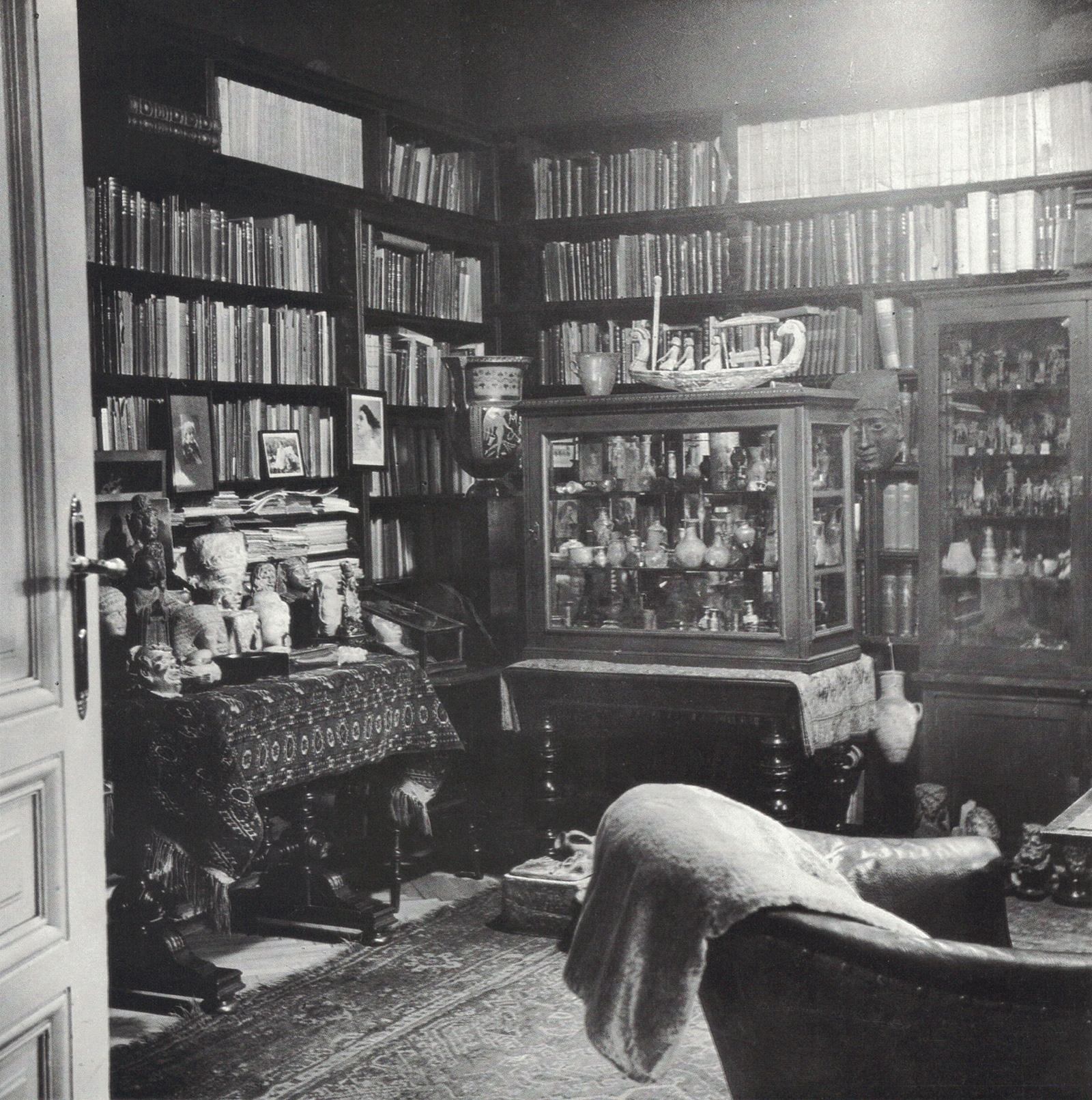
As Zweig had observed, Freud himself felt impelled to make his private rooms in Vienna a reliquary-sanctuary of their Semitic and Egyptian cultural foundations. Which was to imply that he had stayed tethered to the origin point on the long, braided chain of ancient memorabilia, just as Zweig had found that part of his own mind stayed behind in Europe’s seething immediacy after his “return” from his perceived exile in Germany to the fabled Promised Land.
Freud stressed repeatedly, however, that the lingering connection was no source of nourishment for anything other than contemplation, instead resembling a calcified umbilical cord that, left uncut into adulthood, threatened to strangle anyone who tried to reactivate the bond. After the Arab-Jewish riots of 1929, the Jewish Agency for Palestine had reached out to Freud, soliciting his support for a critique of British restrictions on Jewish life in Palestine, an appeal to which he had written an excoriating response. He sympathized with Zionism’s goals of establishing a home for the Jewish people somewhere, and was proud of the fledgling university in Jerusalem, but the idea that Palestine could become a Jewish state seemed delusional to him. It would have been far more sensible “to establish a Jewish homeland on a less historically burdened land.”[19] Indeed, it filled him with sorrow that Jewish fanaticism had done so much to awaken Arab distrust, and he could “raise no sympathy at all for the misdirected piety which transforms a piece of an Herodian wall into a national relic, thus offending the feelings of the natives.”
At the same time, Freud wrote, he recognized that no place but Palestine could arouse the enthusiasm of the masses necessary to motivate large-scale Jewish migration. He valorized the sheer will to survival evidenced throughout Jewish history. As he had once told his fellow members of Vienna’s B’nai B’rith society, he himself was irresistibly attracted to the Jews and to Judaism, which had been forged from “many dark emotional powers all the more powerful the less they could be expressed in words,” along with clear awareness of an “inner identity”—a “psychological structure” to which he felt himself bound.[20] The way that Freud described himself being galvanized by the chthonic forces of Judaism seems to make Jewishness conjunctive with the unconscious itself, but such an equation offered no compass for making one’s way through diurnal reality.
As the 1930s degenerated, Freud’s elaborate epistolary speculations about historical-psychological identity start to be accompanied by a tattoo of imperatives: blunt advice about possible escape routes and sanctuaries. While he would have valued Zweig’s company, Freud applauded his decision not to pick Vienna as his new home. The government may have been different from that in Germany, but “the people in their worship of anti-semitism are entirely at one with their brothers in the Reich. The noose round our necks is being tightened all the time even if we are not actually being throttled.”[21] Fate itself seemed to be conspiring with the National Socialist mob. Perhaps Palestine was not such a bad choice after all, he cautioned Zweig. Not on account of its historic associations, but simply because it was part of the British Empire. Zweig responded that, in fact, he was thinking about going to the United States (although Freud had told him that, based on his own impressions, he would find life there even more unbearable than in the Holy Land).
Home, homelessness, abyss—the declension of a conceit through unfamiliar, desperate cases. “I no longer understand this world,” Freud thought to himself repeatedly during his final year in Europe, quoting a line from an old German drama.[22] To Ernest Jones, he confessed that from time to time he found himself thinking, “‘Le jeu ne vaut pas la chandelle,’ yet although one is right one must not agree with oneself.” Life’s value may be contingent, but stoic endurance was yet a moral imperative. One must remain of two minds.
When Engelman accepted responsibility for photographing the setting of Freud’s life, he was told he’d have to do his work without meeting or, indeed, ever seeing the actual subject of the project. Thus, Freud was to be rendered negatively, as it were, the contours of his character made visible by impressions left in the encasing shell of his material existence. Already eighty-two years old, sick, accepting few visitors, and disconcerted by the Nazis’ recent intrusion into his home, Freud should be spared the sight of unknown faces, his protectors felt.
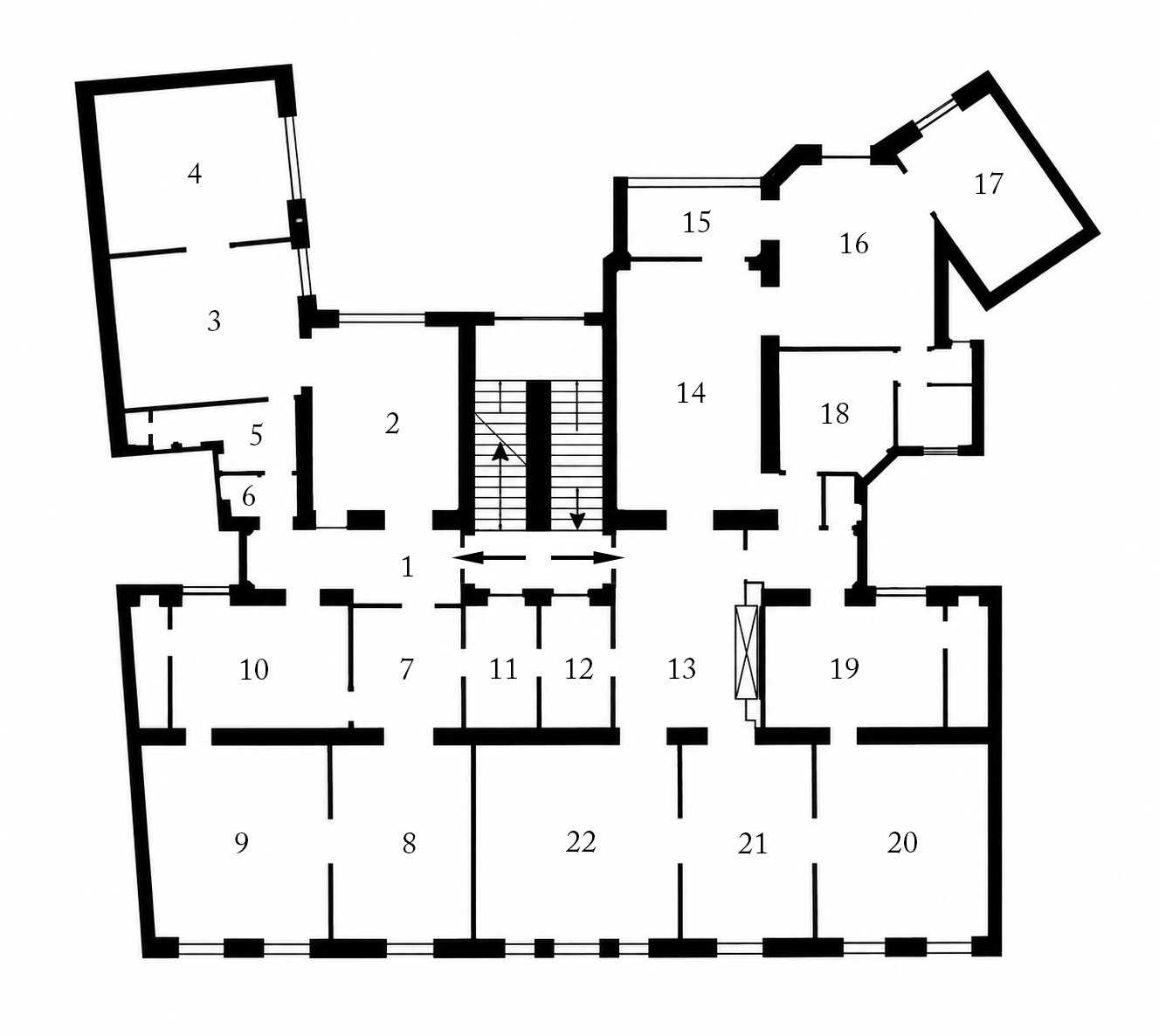
Floor plan of the Freud apartment at Berggasse 19, Vienna, May 1938. This diagram reflects the most up-to-date information that the Sigmund Freud Museum—which has occupied the apartment since 1971—has gathered regarding the dwelling’s layout and the functions of its rooms at the time Engelman took his photographs. It should be noted that the floor plans in at least the French and English editions of Engelman’s book are inaccurate.
Key: 1. Entrance hall leading to Sigmund and Anna Freud’s consulting rooms and Anna’s quarters 2. Waiting room used by patients of Sigmund and Anna Freud 3. Sigmund Freud’s consulting room 4. Sigmund Freud’s study 5. Walk-through room used by patients exiting Sigmund Freud’s consulting room. A small private room at the end of corridor was used by Freud for personal medical needs. 6. Toilet 7. Walk-through room leading from entrance hall to Anna Freud’s quarters 8. Anna Freud’s bedroom and living room 9. Anna Freud’s consulting room 10. Kitchenette 11. Walk-through room 12. Walk-through room 13. Entrance hall of family apartment 14. Salon 15. Veranda 16. Martha and Sigmund Freud’s bedroom 17. Bedroom of Minna Bernays, Martha Freud’s sister 18. Bathroom and dressing room 19. Family kitchen 20. Minna Bernays’s living room 21. Living room 22. Dining room.
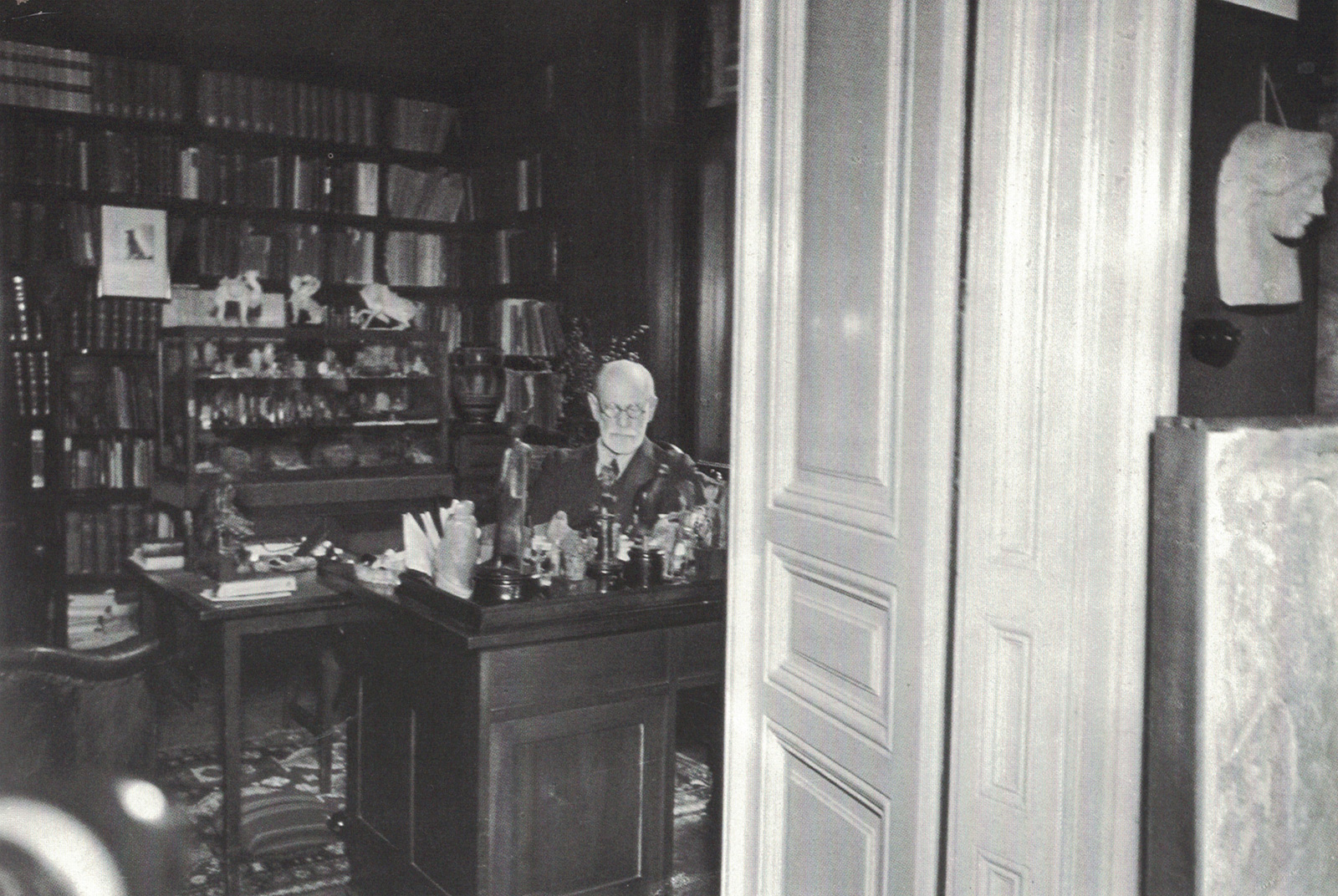
Though disappointed, Engelman agreed to the conditions. He was given a floor plan of the apartment and apprised of Freud’s daily routine, which enabled him to plot the path of his picture taking so that he would remain undetectable. But on the third day, engrossed in taking photo after photo of the desk in Freud’s study, he heard short, rapid steps approaching before he could slip away. Engelman suddenly found himself facing Freud. They stared at each other in amazement. Engelman was struck dumb. Freud looked apprehensive, albeit in “a calm, matter-of-fact way.”[23] A minute later, the analyst August Aichhorn, who had commissioned Engelman’s labors, walked into the study and introduced the two, sparing them further embarrassment. The men shook hands with relief. Engelman recalled that he had a copy of the portfolio he was assembling on Berggasse 19 in his valise. He retrieved it and handed it to Freud, telling him that the work was meant as a souvenir that he could take with him when he left Vienna. Freud turned the pages slowly, looking at each image, smiling more and more broadly as he went through the album. “This will mean much to me,” he said.
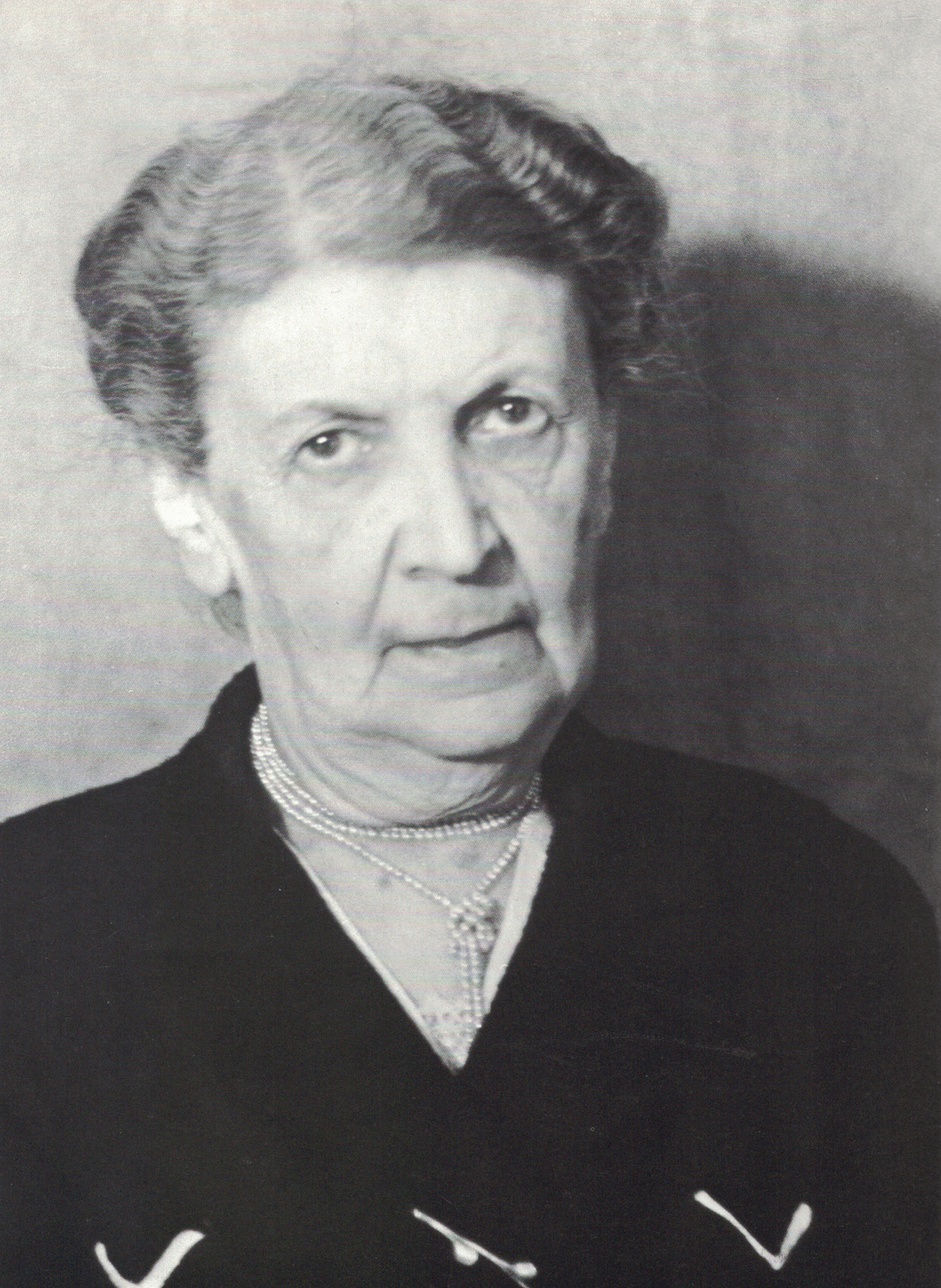
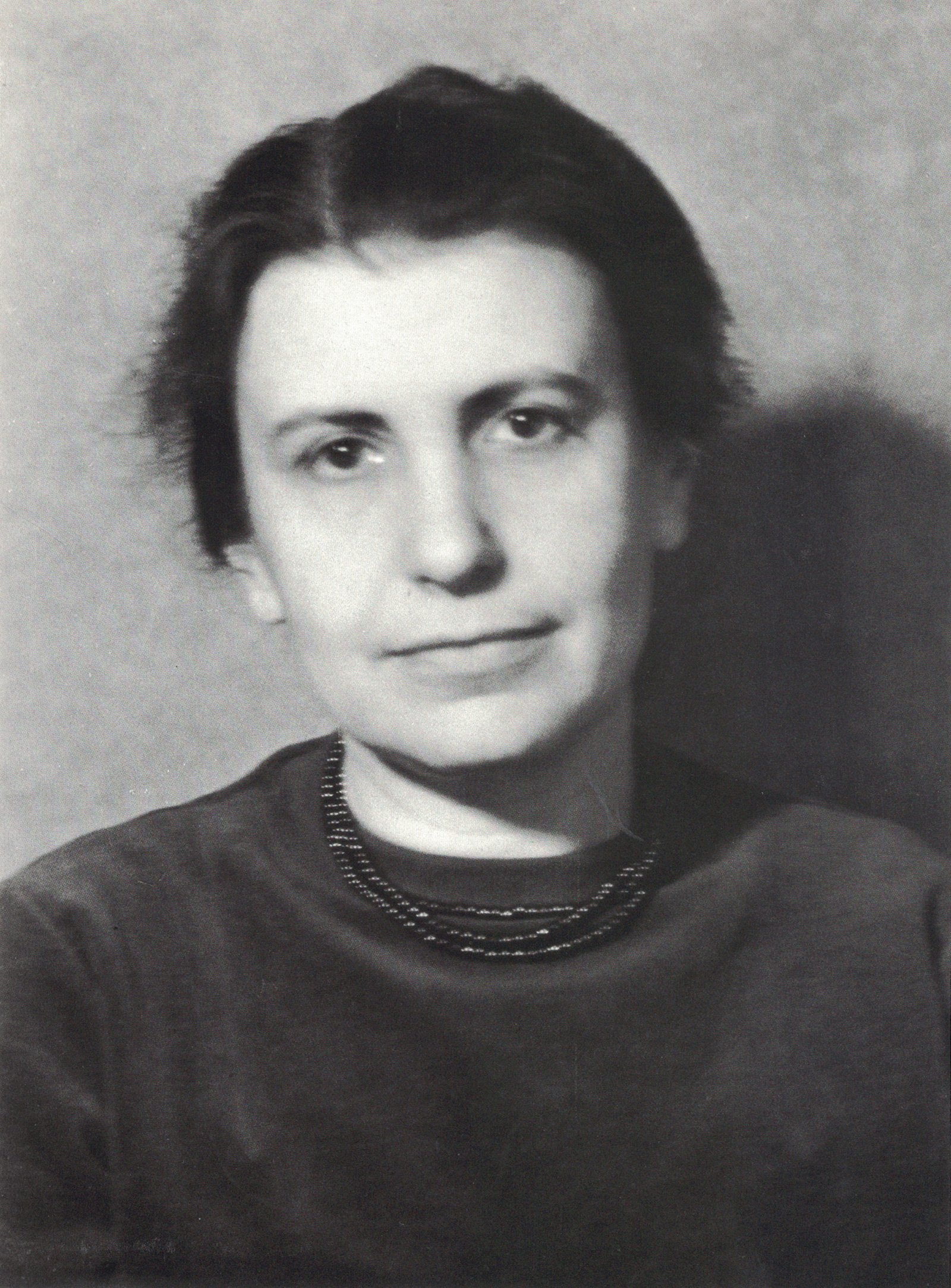
Thereafter, Engelman was allowed to make various portraits of him and his family. Presented with one of the final images, Freud inscribed on it “Many thanks to the artist—Freud 1938,” and handed it back.[24] In this photo, Freud’s head is turned slightly, he looks off to the left, lips compressed solemnly between the strands of his finely groomed white beard and moustache. His round, black-frame glasses catch blades of light. His expression is grim, resolute, defiant, sorrowful, angry—stonily self-possessed. Stefan Zweig, who had befriended him, remarked on how as Freud’s countenance aged, it “revealed something harsh and unconditionally militant.”[25] It was as if he were “uttering an emphatic ’No,’ or coldly saying ‘That is false.’” But this trace of “Old Testament grimness” betokened what enabled Freud to see through people’s pretenses, the facades they erected to hide their true motivations—which also provoked resentment since it left them feeling exposed in their base urges, only governable by laws imposed from outside.
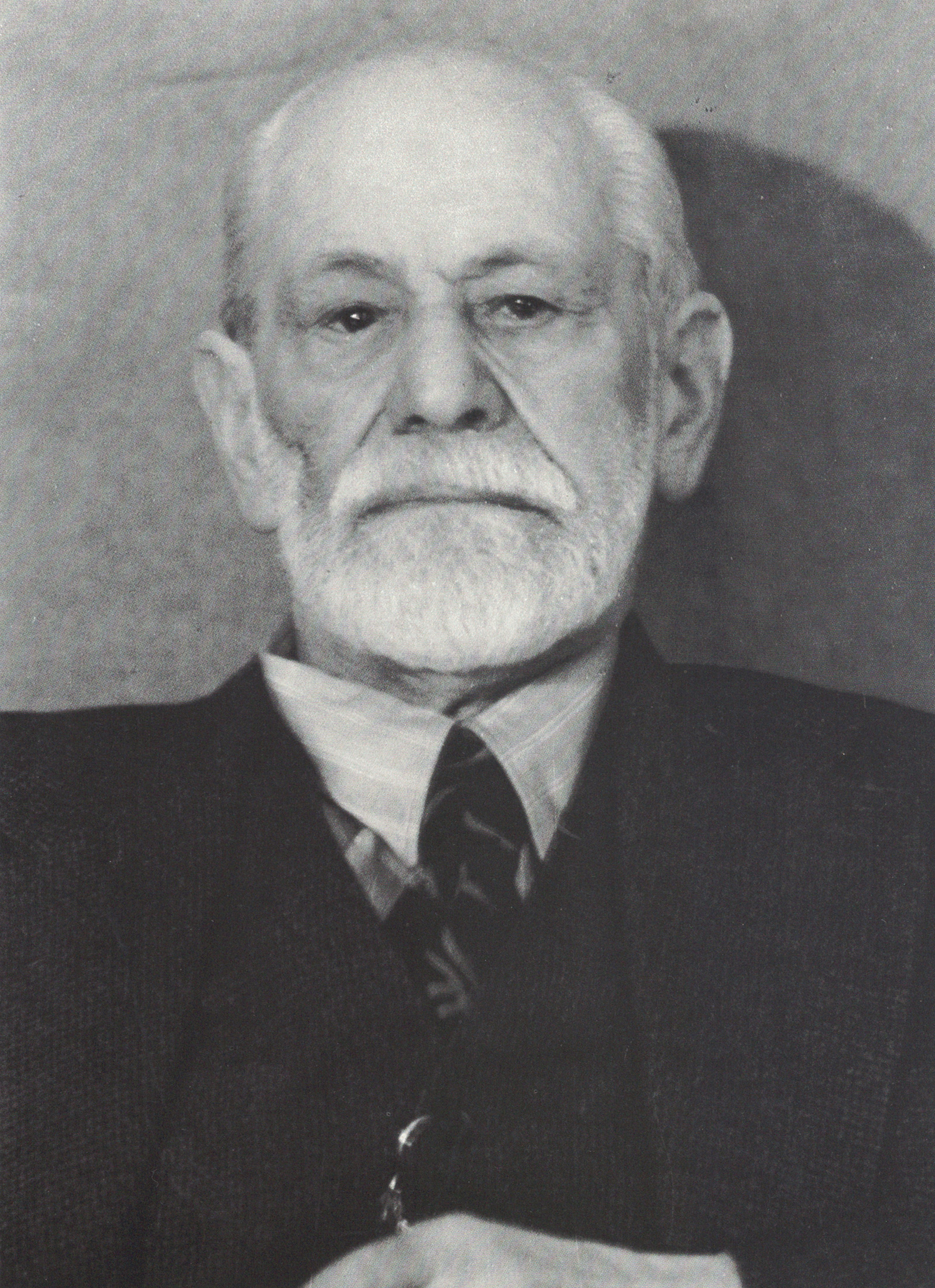
Indeed, in this late portrait, Freud might almost be suspected of modeling his look on that of Michelangelo’s Moses, the sculpture depicting the hero of Exodus cradling the tablets of the law. Freud had observed of this figure that his attitude represented the supreme mental achievement of which humanity is capable: the conquest of frenzied passions. “What we see before us is not the inception of a violent action but the remains of a movement that has already taken place,” Freud wrote.[26] In his view, Michelangelo had chosen to immortalize a moment that runs counter to the biblical story, wherein Moses has in fact successfully curbed his rage against the delirious blasphemy of the people cavorting around their golden idol. On first witnessing this betrayal, Moses’s anger at the crowd’s rejecting the precepts that would teach them to flourish had almost caused him to spring up and smash the tablets, but then he overcame “the temptation, and he will now remain seated and still, in his frozen wrath and in his pain mingled with contempt.” He will not let the tablets shatter, since it is on their account—the sublime wisdom inscribed on their surfaces—that he regulated his own conduct. “He remembered his mission and for its sake renounced an indulgence of his feelings.”
In his analysis of the sculpture’s genesis, Freud envisions both Michelangelo and Pope Julius II, for whose tomb Moses was intended, as thwarted figures of action. Julius had sought singlehandedly to unite all of Italy under the Vatican’s command—struggling impatiently during his brief Papacy—to achieve his ends by any means necessary. Michelangelo strove on his own to realize dizzyingly grand designs that the authorities spitefully obstructed. The statue contained both an element of reproach to the deceased pontiff and a note of self-caution, a premonition of their inevitable shared failure partially contravened by this representation of a heroic act against action, Moses “rising superior to his own nature.”[27]
Although the essay was composed in 1913, shortly before the outbreak of World War I, Moses clearly also represented for Freud the ideal response to the savage, popular ecstasies of the subsequent decades: We must hold ourselves back from the pitch of the fray, or our own paroxysm of indignation—however antithetical its impetus—will replicate and amplify the conformist fury parading down the streets and trumpeting along the airwaves. Instead, however, we behave toward our enemies as though their deaths do not matter, and toward the prospect of our own demise as though it were make-believe, Freud proposed elsewhere. In this double attitude of disregard and denial, we unleash our own inhumanity, stoking the fires of blind strife, failing the fine-spun promise of civilization. We must, rather, recall ourselves to the labor of our own higher tasks, which in Freud’s schema is always a variation on “know thyself” and “contemplate the world,” rather than “live thy dreams” or “dominate others’ fantasies.” By cultivating one’s own understanding, one might make rationalism itself more appealing—even socially infectious, Freud believed on less pessimistic days.
It was also in 1913 that Freud reportedly told Theodor Herzl’s son, Hans, that he’d been right to stay away from the Eleventh Zionist Congress. It was time for him to discard his father’s ambitions. “You must stop your dangerous trips across the enchanted bridge,” Freud advised, enjoining Hans to bury his progenitor within his spirit.[28] “Your father is one of those who have turned dreams into reality,” which made Theodor a member of a rare, hazardous breed, together with figures like Garibaldi and Lenin. “I would simply call them the sharpest opponents of my scientific work,” Freud commented. Where he attempted to elucidate night’s reveries, they “confuse the issue, turn it upside down, command the world while they themselves remain on the other side of the psychic mirror. … They are robbers in the underground of [the] unconscious world.”
But what happens when the dark dream-life of others penetrates our private havens? What if the state, instead of coming to our rescue, has itself lost its reason?
On the afternoon of 12 March 1938, with rumors of the Anschluss swirling across Austria, Freud heard the newspaper sellers crying loudly outside his windows. He asked Paula to rush down and purchase a copy of Abend, a paper that had been a staunch champion of Austrian independence and could be expected to accurately report the progress of negotiations. His eldest son, Martin, watched him take the paper gently from Paula, scan the headlines, then crumple the paper in his fist and hurl it onto the floor—smashing the facade of his self-control. Even the Abend had reported the news of Hitler’s impending arrival with jubilation. “Finis Austriae,” Freud later wrote in his diary.[29]
After a trauma has been inflicted on us, or our loved ones, or a world we can’t dislodge from our heart, regardless of the clamorous, binary accusations of right and wrong, how do we keep ourselves from shattering the tablets we ourselves have been entrusted with, whatever god, scientific practice, or natural phenomenon inspired them? The commandment to refrain from destruction—of life, ordinary lives, with all their heterodox expressions of passion and judiciousness, beauty, meaning, species of shelter, memorials, birdcages, children’s gazes, unrealized dreams—is always engraved there; our own restraint enacts and preserves this cardinal dictate. It’s not about “love” in a sentimental sense, but rather the collective and individual summons to participate in the conservation of creation, an action that may take the form of radical, self-contained vigilance. “To tolerate life remains, after all, the first duty of all living beings,” Freud wrote in the aftermath of the Great War.[30] “Illusion becomes valueless if it makes this harder for us.”
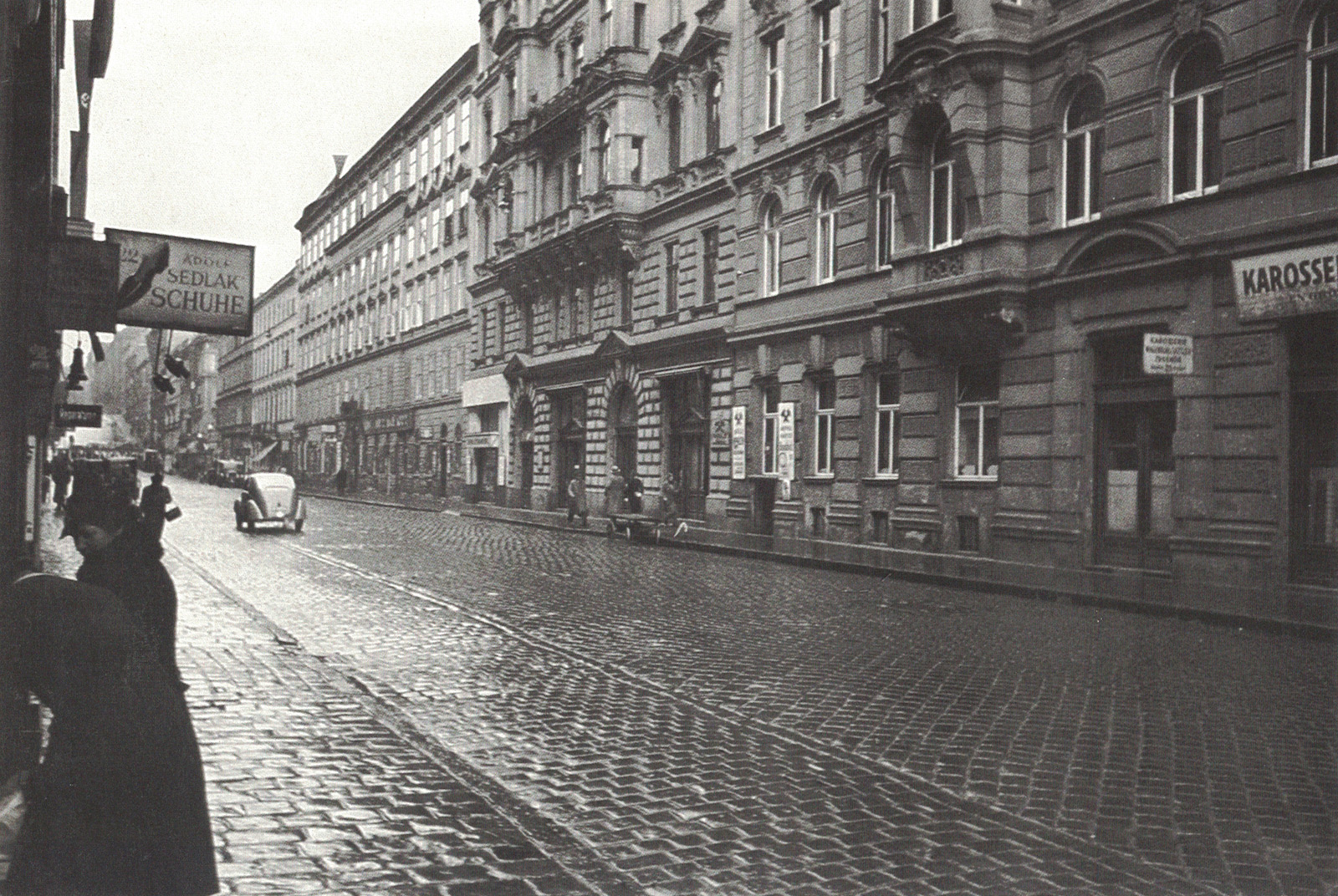
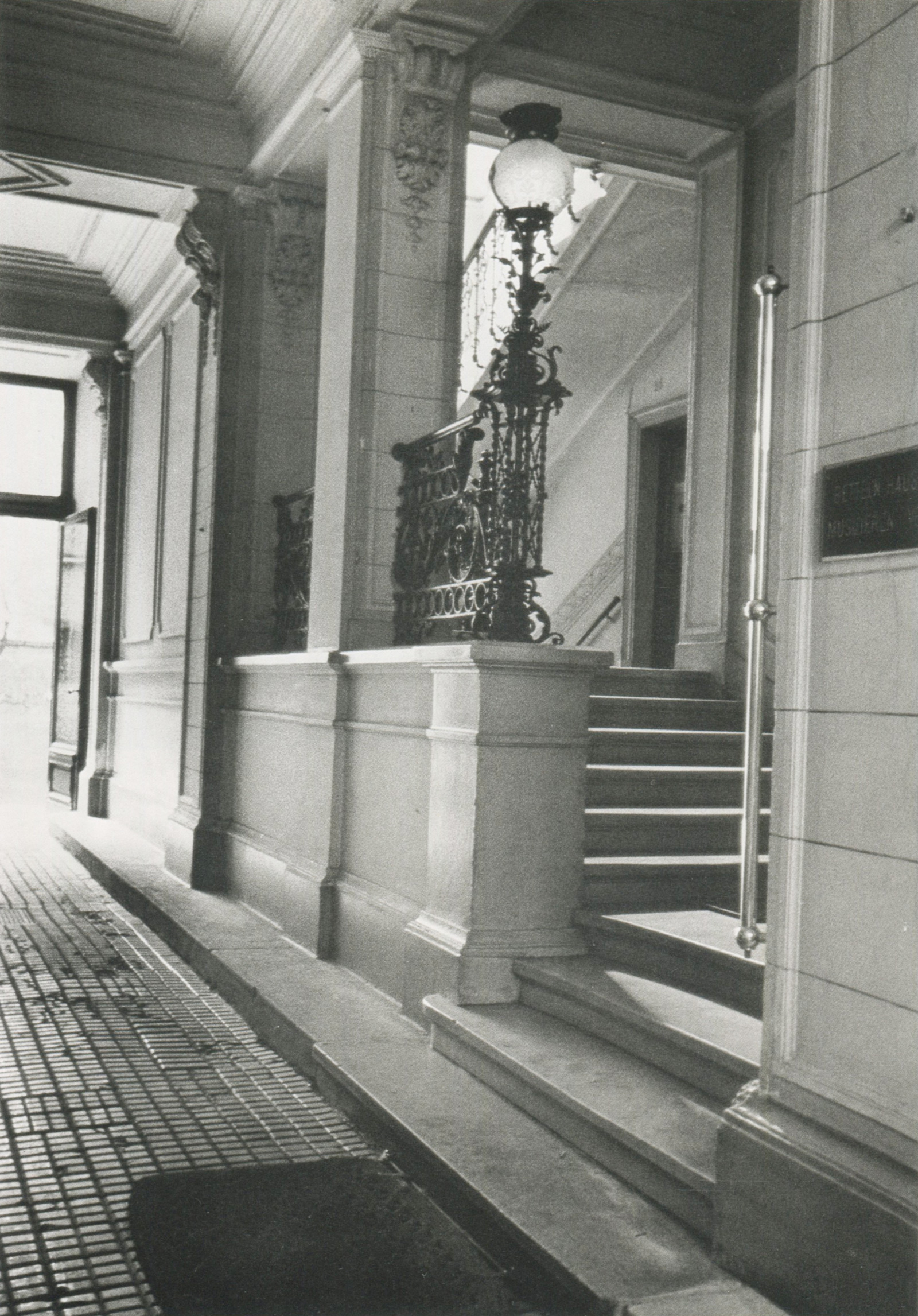
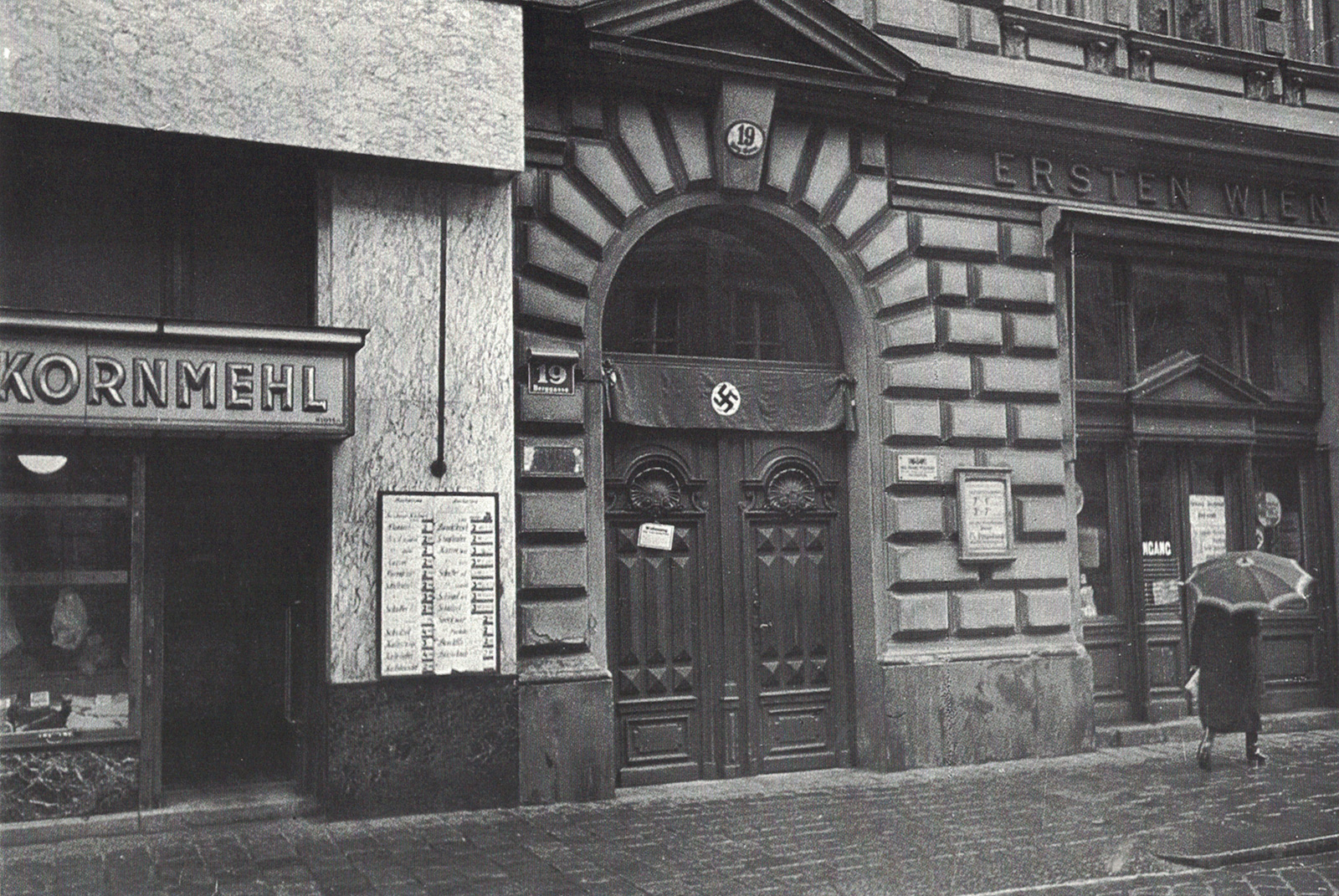
In Engelman’s book, the image of Freud’s waiting room follows a photograph of the black exterior of his front door, embellished with his nameplate. Preceding that photo is a shot of an empty, winding stairway, its white stone steps bordered by a black iron railing attached to the stairs by fancy grillwork. In advance of the stairs come three photographs of Berggasse 19’s vacant entranceway with Italianate garnishing and corroded tilework. Turning back yet another page, one finds a picture of the building’s front door, surmounted by a banner with a swastika. It’s framed on the right by a kosher butcher, while on the other side, a figure hurries off down the cobblestones, head transformed into the spiky circle of an umbrella that formally echoes the swastika’s twisted pinwheel.
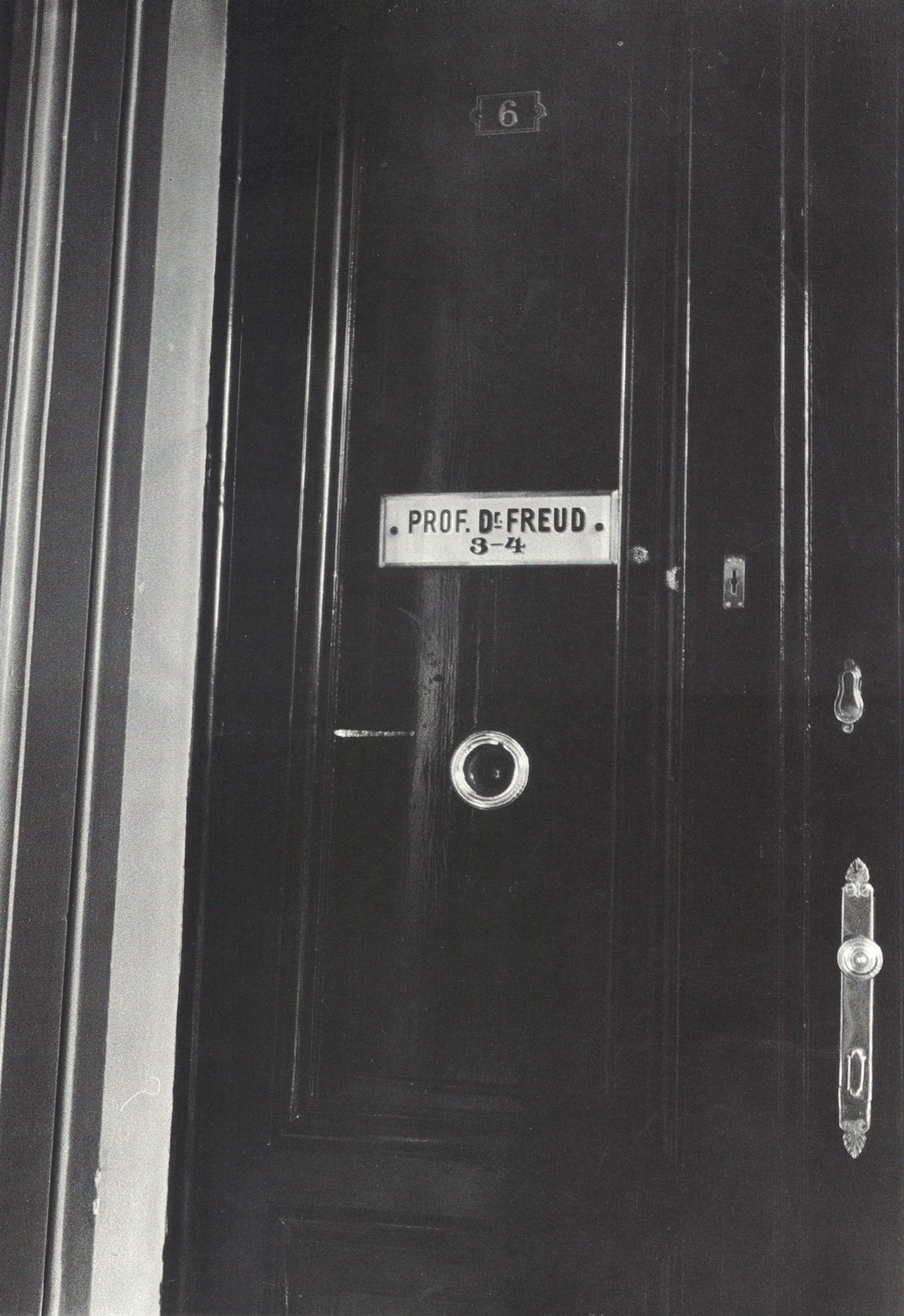
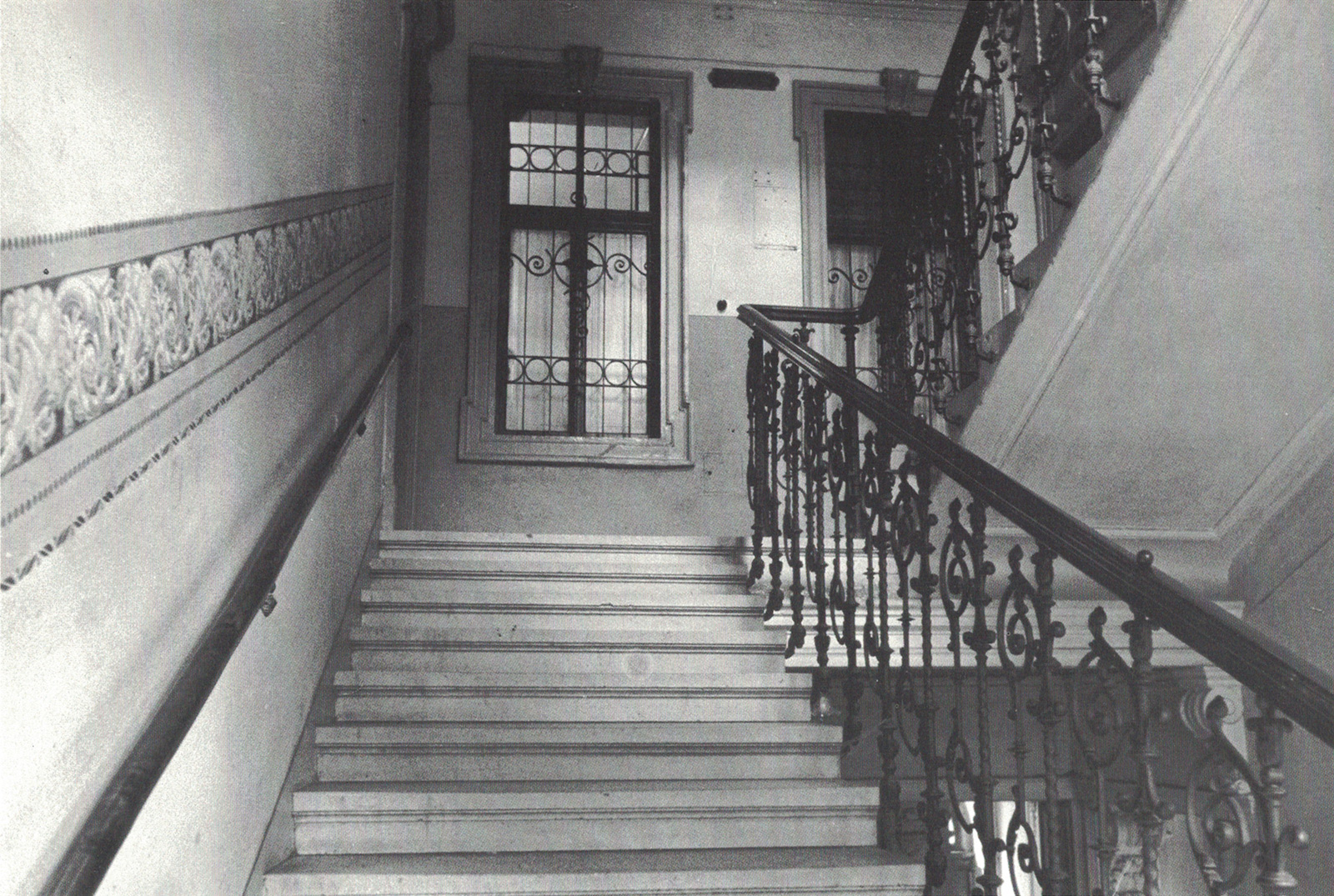
If we retrace our steps over and over, will we finally understand where we made the wrong turn, how all at once a place we knew so intimately that it felt like part of our own psyches became a ghoulish caricature of home? H.D. had hardly begun her psychoanalytic treatment in 1933 when she began finding swastikas chalked on the pavement of Berggasse leading up to Freud’s door. Rain didn’t destroy them, and people were frightened to be seen scrubbing them away. Along with these “death-head” insignia, as she called them, her walk to Freud’s apartment was periodically decorated with “coquettish, confetti-like showers from the air, gilded paper swastikas and narrow strips of printed paper like the ones we pulled out of our Christmas bon-bons” bearing messages about Hitler’s bounty.[31] The writing was on the wall long beforehand, she and other observers noted afterward.
After all, we’ve seen the writing encrusting our own walls, an orgy of sibylline graffiti, yet here we remain just the same, staring at the words, numb, disoriented, already bereft, but with an undiminished itch of foreboding. Perhaps we’re not quite sure which slogan to extract from the scrambled tirade of admonishments. Or possibly the warning we do pick out, which we know to be true, proves to be not exactly prescriptive. And regardless, things may still turn completely around at the last moment, mightn’t they? Most writing on the wall is eventually revealed to be apocalyptic pornography. And even were it all true, the wall is yet one of four we must somehow contrive to live inside of.
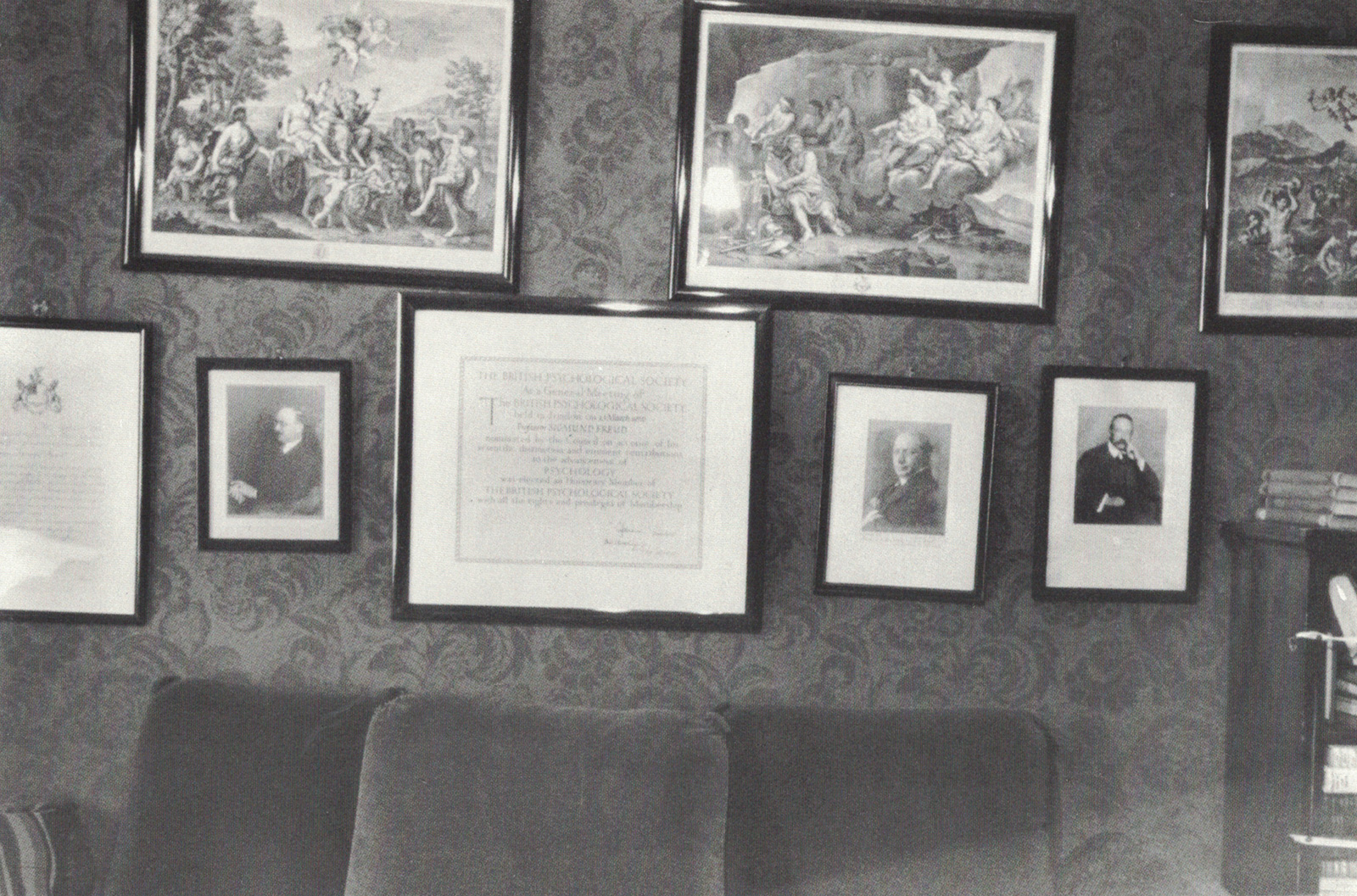
After the foyer, we enter Freud’s waiting room, the most claustrophobic image of the series. Unable to find a vantage point that offered any perspective, Engelman chose to focus on one wall of the space, cluttered with unremarkable prints of grouped gods and goddesses, photos of colleagues, and professional certificates. Tops of couch cushions protrude almost flush with the base of the first row of pictures, which hang off-kilter, bleached by glare shining off their glass coverings.
He seems still to be picking his way toward his subject in all these preliminary images. The exterior shots weren’t included in the original brief extended by Aichhorn. Engelman writes that he was drawn to photograph the outside environs because he believed war was inevitable, and that in the conflict, Freud’s building might be demolished. It’s futuristic detective work: assembling clues to the consequences of a convulsion of violence that hasn’t yet occurred.
Austria’s future remained hazy in the eyes of many of Vienna’s culture’s most astute observers up until the end, even afterward. The Viennese (unlike the majority of Austrians outside the metropolis) offered a dozen reasons for believing that Austria would be spared. It was ruled by a pompous Catholic government that everyone felt certain would never stoop to consorting with a boorish anti-Christian like Hitler; it had been promised protection by the best of the Great Powers, along with the League of Nations; and the seemingly more civilized face of fascism in the guise of Mussolini reassured them that Austria’s independence would be guaranteed in perpetuity.
“Not even the Jews worried,” Stefan Zweig recalled.[32] “They acted as if the cancelling of all the rights of physicians, lawyers, scholars, and actors was happening in China instead of across the border three hours away, where their own language was spoken.” Everyone relied on stock phrases to self-soothe, variations of “This nightmare is so horrific it can’t last.” Few knew Walter Benjamin’s maxim pronounced some years earlier: “The assumption that things cannot go on like this will one day find itself apprised of the fact that for the suffering of individuals as of communities there is only one limit beyond which things cannot go: annihilation.”[33]
It was only because he himself lived in Salzburg, so near to the Eagle’s Nest that he could see the mountain face where Hitler and his henchmen were plotting, that Zweig took the threat seriously. Under cover of darkness, young enthusiasts snuck across the border from Germany to drill with Nazi sympathizers, as did agitators disguised as tourists who were busily organizing cells among people of all classes. One could see the sorts of paramilitary actions they were training in—why did no one pay attention? Old acquaintances suddenly began turning away from him when they passed on the street. Friendships across political divides became unsustainable. “It is the petty, personal experiences in life that are the most convincing,” Zweig observed piercingly.[34]
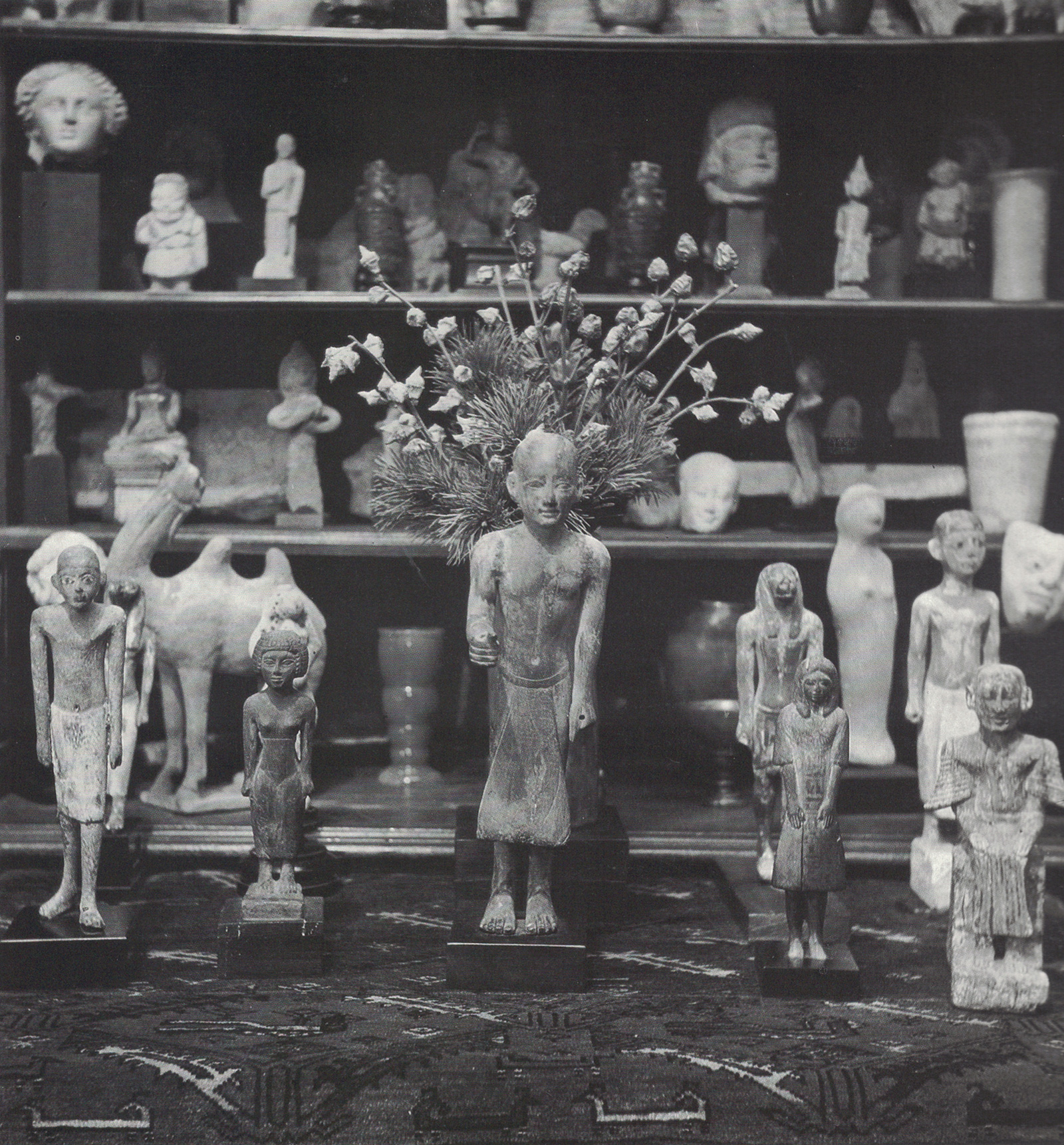
For some Jews, the persistent hung jury on Vienna’s true character may also have resonated with traditions of post-Exilic Judaic thought that made of internal division and ambiguity, if not exactly virtues, at least telltale stigmata of intellectual honesty. Scholars have noted how dualities dominated Freud’s theories: Eros and Thanatos, bisexuality, the pleasure principle and reality principle, et cetera. Among his collected figurines are multiple two-faced Janus figures. He kept a double-headed, satyr-maenad, Etruscan balsamarium on his desk during his last years. In his consulting room, there were exits and entrances recalling to patients Janus’s two-directional countenance. Jones observed Freud’s enduring fascination with the “primitive” idea of the doppelgänger, which he believed began “as a magical preservative against the fear of extinction.”[35] In the words of the Talmud, “Rabbi Abba said in the name of Shmuel, For three years, the House of Hillel and the House of Shammai argued. One said, ‘The halakha is like us,’ and the other said, ‘The halakha is like us.’ A heavenly voice spoke: ‘These and these are the words of the living God.’”[36]
One has to be able to inhabit two positions simultaneously to survive, if not physically, morally; if not morally, spiritually; if not spiritually, psychologically; if not psychologically, at least dialogically—as a matter of conversational principle.
But the art of learning to live with—even to value—Vienna’s particular, irresolvable contradictions proved a subtle menace to the city’s Jewish population, beguiling many into remaining until escape became difficult or impossible. On the one hand, Vienna’s creative ferment was uniquely stimulating. On the other, it was unfortunate that a significant proportion of the city’s population reveled quite so euphorically in their anti-Jewish sentiments. If, as the old joke has it, the definition of an anti-Semite is “one who hates Jews more than absolutely necessary,” then the Viennese were poster racists, flaunting their prejudice with aimless extravagance. In the midst of a discussion centered on public displays of anti-Semitism in Arthur Schnitzler’s novel The Road into the Open, a character declares that for Austrians, heated outbursts in public assemblies were always performative: “One is inwardly indifferent and outwardly crass.”[37] Then again, a proud convention of vulgar histrionics could camouflage authentically lethal intentions.
Engelman, who came of age in the 1920s, struggled to parse the divided personality of Vienna’s public sphere, just as Freud had done in his own youth. It was true, Engelman wrote, that the majority of the city’s Jews understood that that they could never penetrate the “highly stratified and intensely anti-Semitic inner circles of the city’s power structure.”[38] However, at the same time, “educational and cultural opportunities seemed to us unlimited and we strove mightily to take advantage of them.” In retrospect, the internal discord young people experienced while riding the crest of thrilling artistic and intellectual developments, even as the legal and democratic armature of civil society disintegrated around them, seemed simply “unbelievable.” The city’s anti-Semitism was just “part of Vienna, just like the Prater and the cafés,” Engelman remembered. “It seemed almost taken for granted, the price we paid for our pleasures.”
Indeed, there can be a perverse allure to settling in an environment where one’s inherited identity is expunged or disparaged, so long as one’s individual creations may still rise from the ashes to find admirers—on occasion even a place in the cultural firmament. For many families splayed between old and new worlds, the governing society has to really go out of its way to condemn parents’ selfhood more than the children themselves do.
Parricide is the foundational crime of Freud’s theories, and the grail of many analysands, Freud arguably among them. His self-analysis, the bedrock material of The Interpretation of Dreams, famously took wing from his father’s death in 1896. For ambitious Jews of his generation whose fathers remained even partially enmired in Judaic tradition, Vienna itself, as a beacon of modernity, sometimes assisted with the Oedipal project. After reviewing highlight parricides from mythology in The Interpretation of Dreams, Freud notes that in his own time, “fathers are apt to cling desperately to what is left of a now sadly antiquated potestas patris familias.”[39] As a result, “even in our middle-class families fathers are as a rule inclined to refuse their sons independence and the means necessary to secure it and thus to foster the growth of the germ of hostility which is inherent in their relation.” In the letter alluded to earlier, in which Freud compared himself to Jacob, it’s surely not coincidental that Jacob was also his father’s name. Freud feels himself inhabiting his father’s identity at the moment when he’s driven to leave Vienna.
Freud’s son Martin argued that his father’s frequently expressed hatred for Vienna was mostly a pose. After all, “he could have left Vienna at any time during the many secure years before the Hitler shadow began dimming the city’s gay sky.”[40] He had never even seriously contemplated leaving, as far as Martin knew. It’s true that even after he’d fled to London, Freud could not help giving, like Lot’s wife, protracted, nostalgic glances backward. “The feeling of triumph on being liberated is too strongly mixed with sorrow, for in spite of everything I still greatly loved the prison from which I have been released,” he lamented to Max Eitingon.[41]
Jones found it bizarre on this note that although Freud had a “passionate fondness” for the countryside, for nine months of the year he would immure himself in the precincts of Berggasse, not even taking Sunday tram excursions to replenish himself in one of the nearby pastoral refuges.[42] This must be due, he decided, to the fact that Freud and his friends, the insular group of Jewish physicians who met every Saturday night for dinner and a game of tarok, “had been brought up that way, so they continued their rather Ghetto-like existence.”
The idea that the Jews had created a new invisible ghetto for themselves now that the non-Jewish population no longer locked them into one was also the theme of Das neue Ghetto, a play by Theodor Herzl that affected Freud strongly when he saw it in 1898. The dream he attributed to that experience—centered around the phrase “My son the Myops”—provoked one of his most lavishly rampaging cascades of associations, in which, he reported, thoughts about “the Jewish problems, concern about the future of one’s children, to whom one cannot give a country of their own, concern about educating them in such a way that they can move freely across frontiers” were recognizable elements of a tangle that also featured Yiddish and nonsense words, an unacknowledged confusion between Passover and Easter, the transference of the Jews’ exile from Babylon to Siena, one Dr. Herodes in Breslau, the Cyclops, eye trouble, and multiple speculations on bilateral symmetry.[43] While the dream has been reinterpreted in many ways since Freud’s death, it is manifestly concerned with the longing to balance the contradictory pulls of cosmopolitanism and inherited identity. If, in this light, the real prison is not Vienna, or even Europe, but Jewishness, it was a prison that allowed the inmates an axial, panopticon view onto exterior society. Freud envisioned himself as acutely conscious of the majority culture’s suffocating herd mentality—and honor bound not to submit.
In a letter Freud wrote to his future bride, Martha Bernays, in 1883, he described a trip from Dresden to Riesa during which he came to feel his airless train compartment unbearable, even while everyone else sat patiently asphyxiating. “You know how I am always longing for fresh air and always anxious to open windows,” he wrote.[44] Finally, he got up and popped the window open, sticking his head out to breathe. Other people in the carriage shouted at him, whereupon he agreed to close that window, since it was on the windy side of the train, but asked that a window across the aisle be cracked to compensate. While this compromise was being discussed, someone in the background called out, “He’s a dirty Jew!” With that, “the whole situation took on a different color,” Freud recounted. One of his first opponents became anti-Semitic as well, remarking, “We Christians consider other people, you’d better think less of your precious self.” Abuse was traded back and forth, and while as recently as a year earlier, Freud reported, he would have been “speechless with agitation,” now, he professed himself unafraid of the mob and completely prepared to kill his chief adversary.
Things simmered down after Freud directly challenged the most vocal anti-Semite, but his conviction of his right to demand more air, regardless of group opinion, remained, and helped fuel his lifelong suspicion of social conventions with their moralistic judgmentalism. The incident also sheds light on one of the most resilient features of anti-Semitism: its way of instrumentalizing people’s wish to better themselves allows it to be exhibited side by side with their virtues, even as symptomatic of spiritual healthiness. Originally, Christians were taught to hate Jews because Jews killed humanity’s savior, the God of Love and Forgiveness; then, Jews became the collective embodiment of money-grubbing instincts, which everyone should be striving to rise above. For the Nazis, Jews were poisonous parasites, corrupting not just the body politic but the capacity of individuals to realize the potential of their own constitutions, and so on. Anti-Semitism, in this view, is a protean, opportunistic vehicle for externalizing fear and self-hatred while cementing the warm bonds between everyone else. On Freud’s train, the most outspoken denigrator of the Jews makes his argument by distinguishing them from the united community of respectful, compassionate people.
Yet, from his ostracized position, Freud found himself better able to recognize the interior truths that polite society excluded. In his autobiographical study, Freud described how when he first entered university as a medical student, he found he “was expected to feel myself inferior and an alien because I was a Jew.”[45] He refused to do either, and the experience of rejecting the negative connotations of his separateness proved crucial, he went on. “I was made familiar with the fate of being in the Opposition and of being put under the ban of the ‘compact majority.’ The foundations were thus laid for a certain degree of independence of judgement.”
Lou Andreas-Salomé described a conversation with Freud in 1913 during which he enlightened her about a colleague’s methodological breakthroughs. She came away from Freud’s home that day whirling with insights about how “we attain our separate individuality only by repelling something and being repelled by it. If hate and the doom of death are found in the underworld of dreams, that only betokens the first point of departure … without which an ego would no more come to be than would pulmonary respiration without the interruption of the direct supply of oxygen from the maternal body.”[46] Freud seems to have set her thoughts racing on how learning to incorporate the condition of non-belonging into one’s outlook was an essential step toward the creation of an integral self.
Instead of heeding the majority population’s injunction to self-transcendence in the name of the group, Freud proposed descending ever deeper into the self, penetrating layer after layer in search of the origins of individuality. While the anti-Semitism of Freud’s environment became integrated into its vision of social and scientific progress by positioning the Jews as the exception that proves the Golden Rule, Freud turned backward to illuminate a lower substrate of commonality. Reversing the direction of his gaze, he chose to heed Juno’s example in the Aeneid, when the goddess declares, “If I cannot bend the Higher Powers, I will move the Infernal Regions”—the vindictive promise that became the epigraph of his dream book.[47]
In real-world terms, this also meant that whatever salvation existed in the present could only take the form of intellectual discovery. “In reality, there is no such thing as ‘eradicating’ evil,” Freud insisted, since the term merely reflected the needs of particular human communities at particular moments in time.[48] Meanwhile, psychoanalytic investigation revealed a shared fundament of primordial impulses that were not in themselves either good or bad, and were given shape culturally in foundational pantheons that illuminate our fateful psychological ambivalences, conjunctive love and hate above all. We need the gods back before our eyes, Freud suggested. We need to save them to survive psychologically. In Freud’s view, original sin might be understood as the moment Abraham shatters the idols his father made and walks out on him. His archaic Judaism proposes returning psychologically to the ruins of his father’s house and reassembling the fragments.
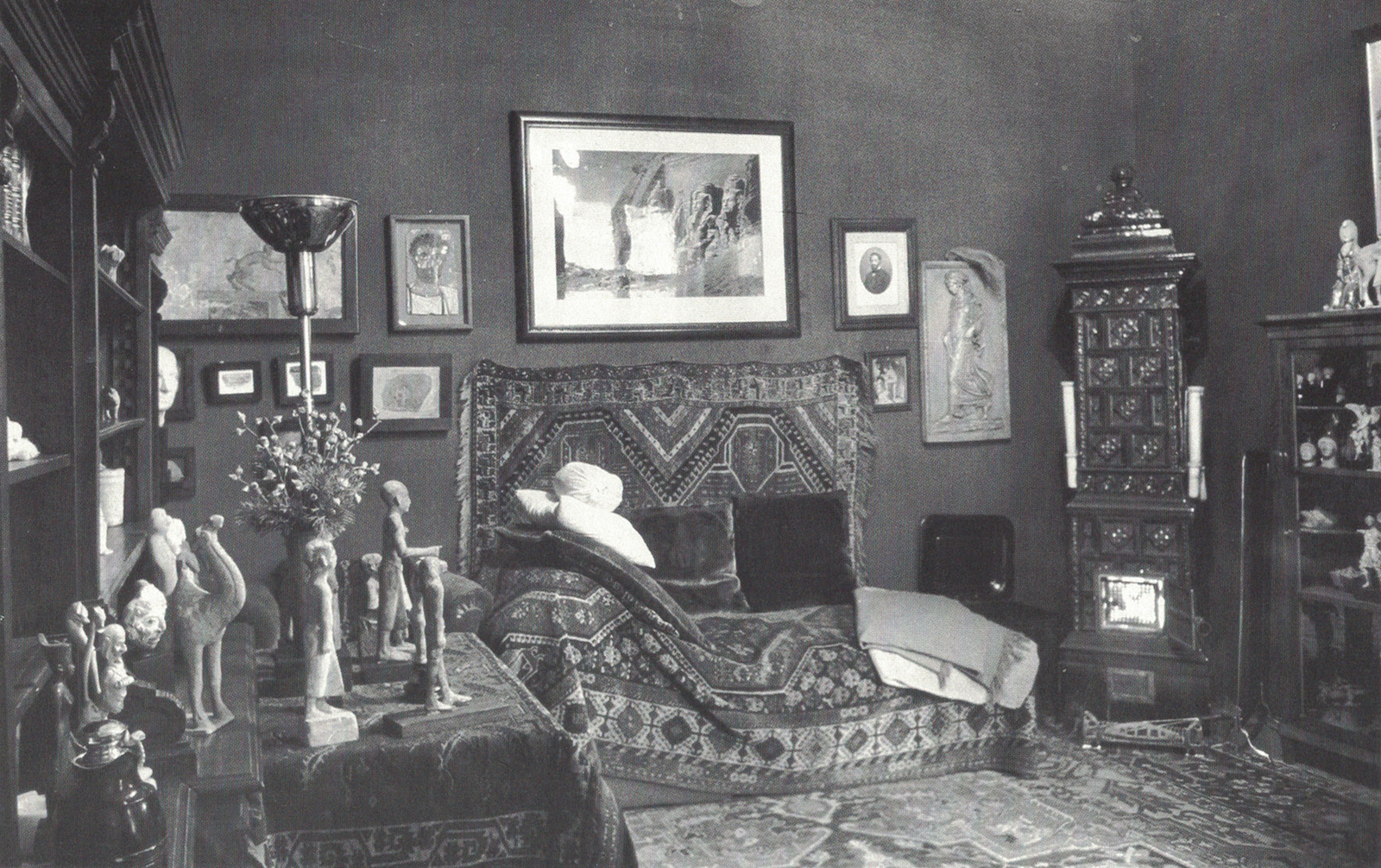
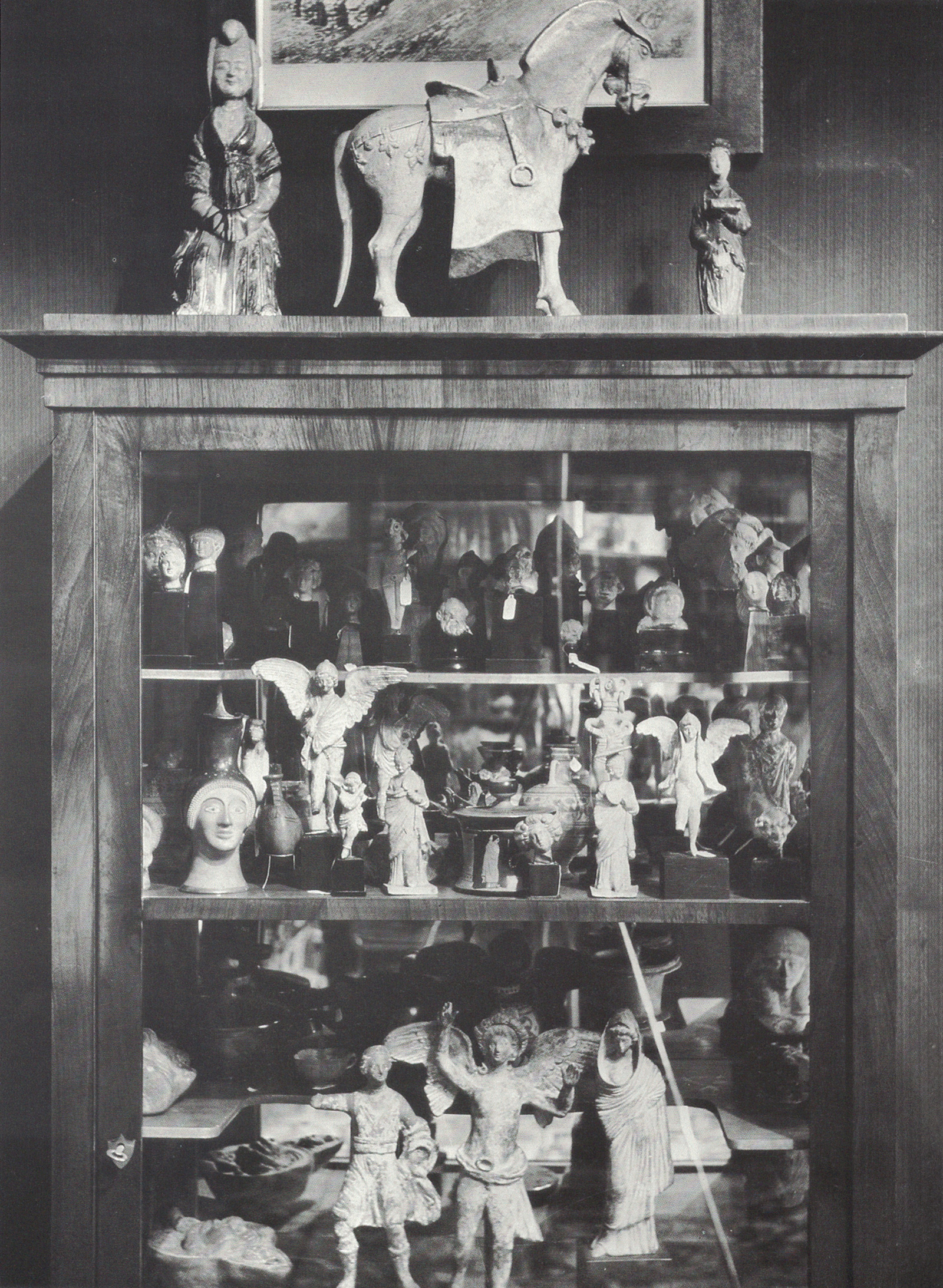
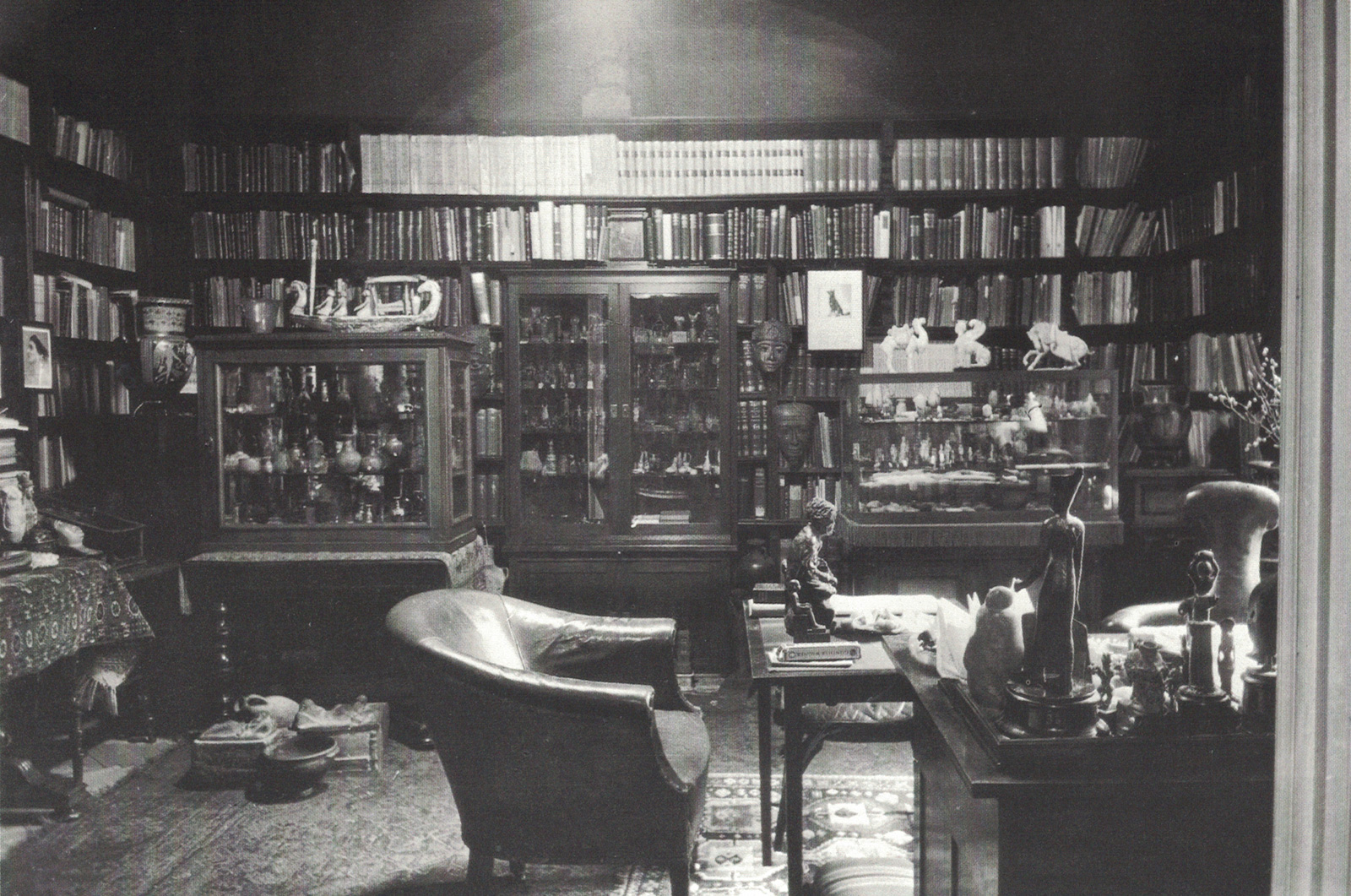
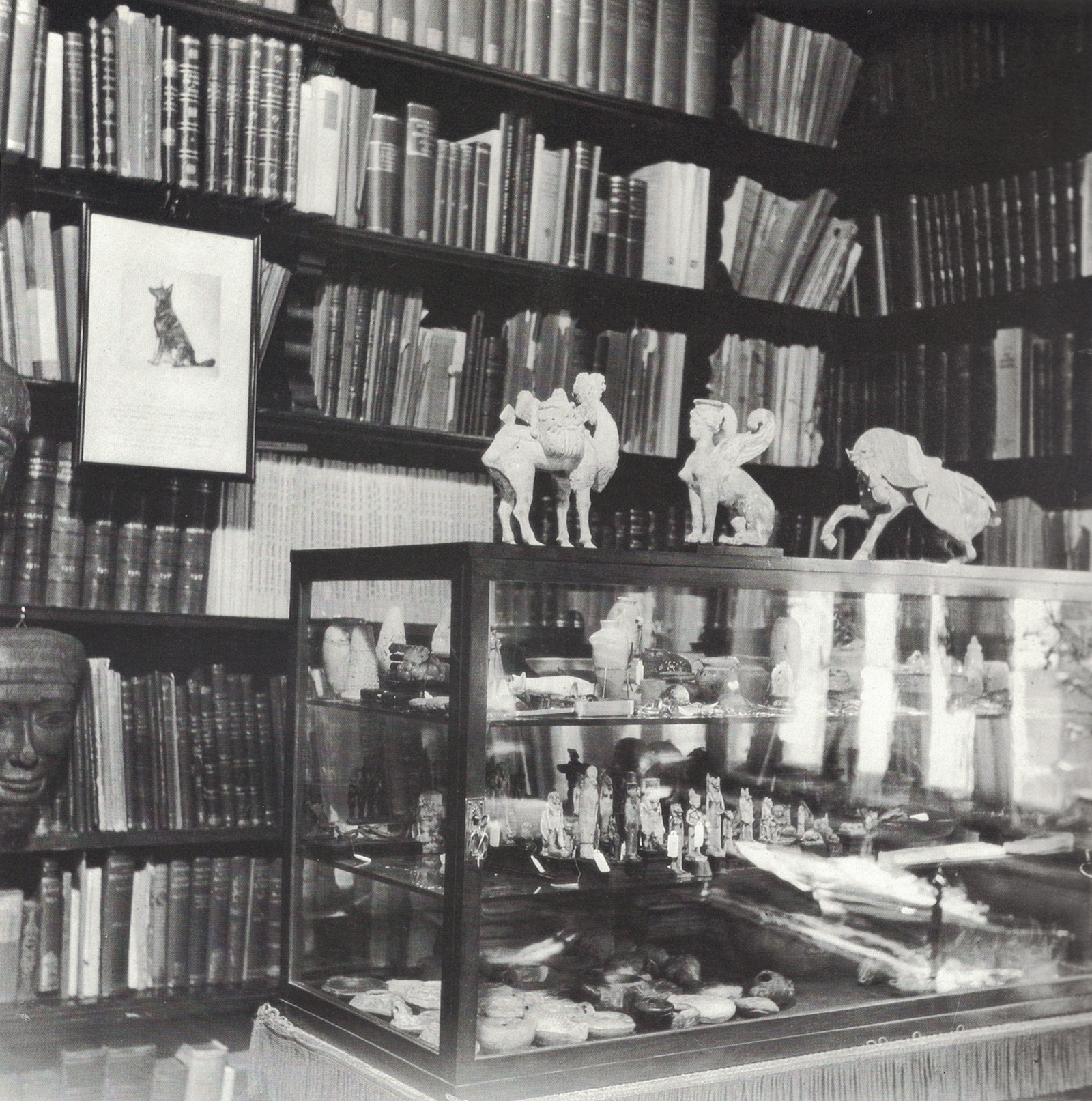
Away from the forbidding streets, barren lobby, and cryptic antechambers, Engelman’s lens at last opens onto the spacious, enveloping scene of Freud’s consulting room. Antiquities loom everywhere; the dream-vessel of the oriental carpet–draped couch serves as the centerpiece.
Like other visitors to Freud’s working space, Engelman described feeling overwhelmed by the sheer number of antiquities on display. “Wherever one looked, there was a glimpse into the past.”[49] The vision struck him as revelatory of some essential truth regarding Freud and his project, “Torn by my excitement and eagerness to look closely at every piece of art and every memento, I had to pull myself together to live up to the purpose of my visit,” he wrote. “I carefully started to take one picture after the other. … I took overlapping photos of every spot of the consulting room. I had to make sure that nothing was missed.”
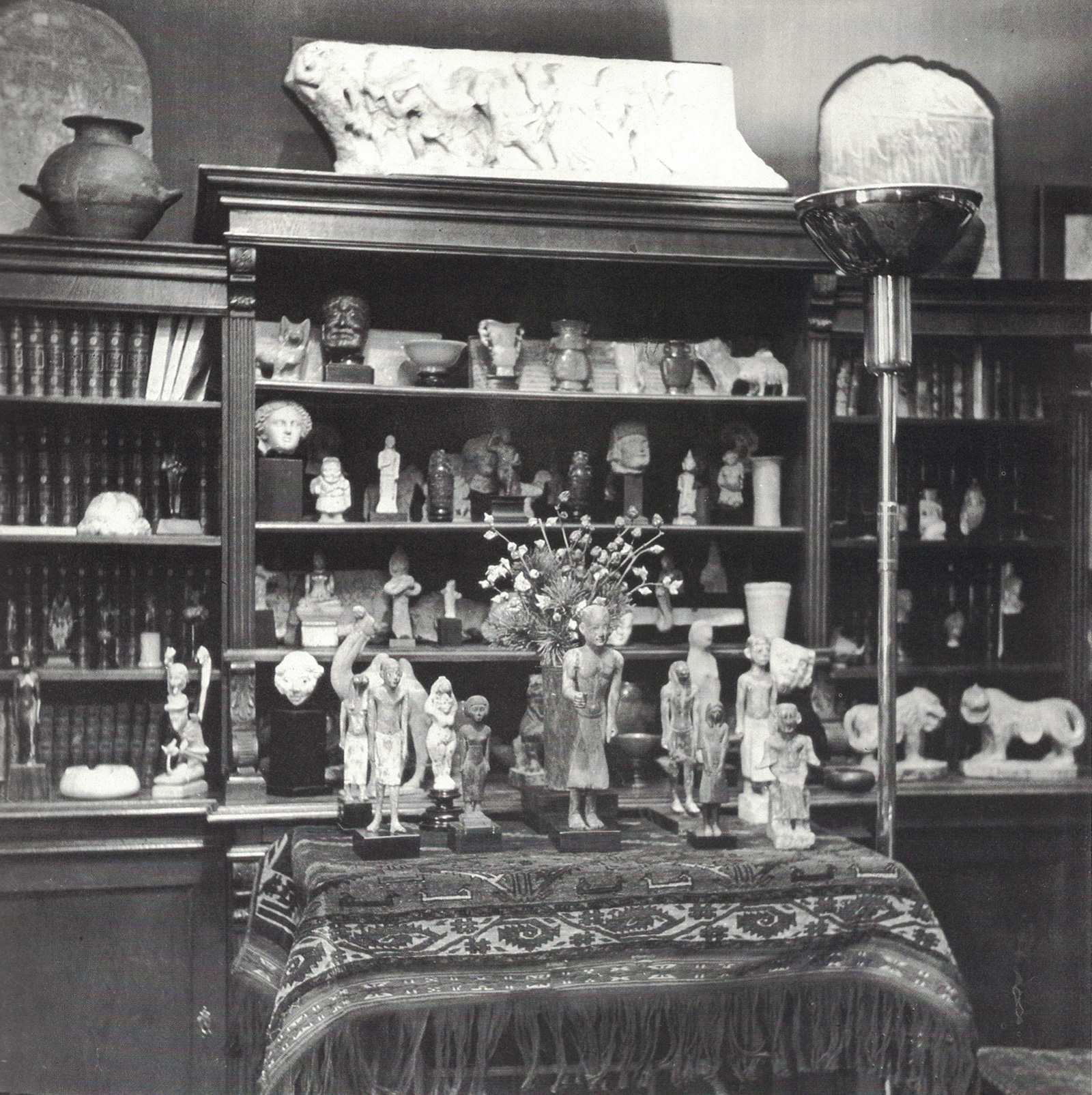
This is the antithetical experience to that recalled by Hertha Pfeiffer when she found Freud’s apartment thrown open to her family’s predations. Engelman’s encounter is with a space so full of time and its discontents—the syncretic panoply of humanity’s fixations—that the concentration of entities makes it almost untraversable.
When H.D. first entered these rooms, she looked around and was similarly mesmerized by “pricelessly lovely objects” displayed on the shelves either side of the psychoanalyst.[50] “I was to greet the Old Man of the Sea, but no one had told me of the treasures he had salvaged from the sea-depth.” This was his home, and he was “part and parcel of these treasures.” Freud’s prized repository of humanity’s fantastical responses to the mysteries of creation struck H.D. as an index of his investment in “the tradition of an unbroken family, reaching back through this old heart of the Roman Empire, further into the Holy Land.” She, like others, sensed that Freud’s feeling of belonging stopped in space alongside his immediate loved ones but continued through the temporal depths into a nearly limitless clan of human cultural achievement.
Civilization and Its Discontents is generally interpreted as a study of the impasse between instinctual drives and the restraints imposed on those impulses by the social bonds we must enter into in order to thrive, which together compose civilization. But there is a shadow agon at work in the text, which poses the question of belonging on an ultimate level.
At the text’s opening, Freud recounts how he’d sent a copy of his “small book that treats religion as an illusion” to an exceptional individual, a man he counted as a personal friend whom he later revealed to be the French humanist Romain Rolland.[51] Rolland responded that while he agreed with aspects of Freud’s judgment on religion’s uses, it was a pity Freud hadn’t investigated the wellspring of religious sentiments. It was something he himself had personal knowledge of: “a sensation of ‘eternity,’ a feeling as of something limitless, unbounded—as it were, ‘oceanic.’” The mental experience of time and space blurring into a deathless state of belonging was a “subjective fact,” bringing no assurance of personal immortality, Rolland acknowledged. It was, nonetheless, the source of energy underlying all the various churches and faith systems, and in this way, he implied, invaluable to the sense of communal identity that enabled civilization as such to coalesce. The very notion of private immortality appears trivially selfish in this light, since perpetuity is one with togetherness.
These views caused Freud great difficulty, and in a letter to Rolland written while he was composing Civilization and Its Discontents, he remarked that since receiving Rolland’s criticisms, he’d felt no peace. “If I have understood my friend rightly,” Freud writes in the essay, Rolland means the same thing as the dramatist Grabbe did when he put into the mouth of Hannibal, as he steeled himself for suicide after defeat on the battlefield, “We shall not fall out of this world. We are in it once and for all.”[52] But Freud could discover no such “oceanic” feeling in himself, and probing the feeling by conventional scientific means was impossible. Ultimately, he could see no path for even limning this sense of “an indissoluble bond, of being one with the external world as a whole”—except through psychoanalysis. Analysis reintroduces differentiation, the process itself countervailing merged psychic states and identities.
It’s a surprising place to begin a speculation on the problem Freud will later encapsulate with the question: “How has it happened that so many people have come to take up this strange attitude of hostility to civilization?”[53] But in fact, the question of what prevents individuals from blending into the mass proves critical for understanding the sustainability of civilization, just as the will to murder, destroy, and wreak havoc become negative manifestations of the oceanic experience, which Freud traces back to the infantile state in which there is no boundary between ego and object.
The oceanic feeling that Rolland exalts under the aegis of a cosmic spirit of love becomes in practice an insurance policy against debilitating individual loss, which perhaps paradoxically might lead to a greater carelessness regarding any particular element of creation. Our connection to everything is complete and eternal. Specific actions may thereby be sapped of ultimate consequences in this state of absolute oneness. Scattered throughout Freud’s canon are hints that universalism, with its false assurance of togetherness, is the great threat to the survival not only of our cultural legacy but of humanity and the planet at large.
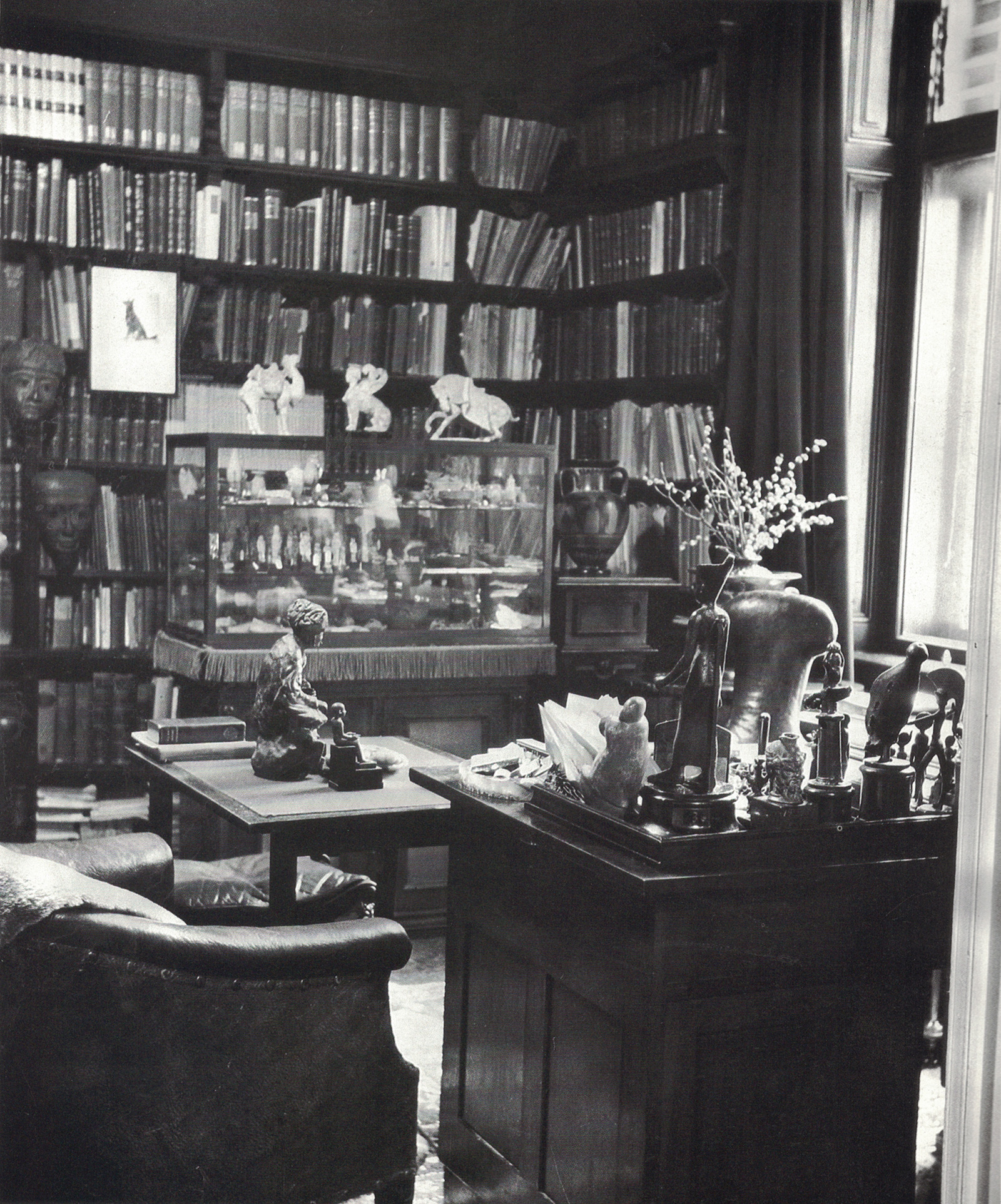
In the first part of Thoughts for the Times on War and Death, composed in the aftermath of the Great War, Freud wrote of that debacle as a kind of tuition against precisely this fantasy. Before the war, the public relied on an impression of “unity among the civilized peoples” to create for themselves a new, wider homeland filled with the natural beauties of every variety of environment through which they could move freely.[54] This new homeland was a museum as well, “filled with all the treasures which the artists of civilized humanity had in the successive centuries created and left behind.” While “the enjoyment of this common civilization was disturbed from time to time by warning voices,” people refused to believe them. Where they did give credence to the admonitions, they remained convinced that the next war would itself be conducted on relatively civilized grounds. “Then the war in which we had refused to believe broke out, and it brought—disillusionment.”
“More bloody and more destructive than any war of other days,” Freud continued, the conflict “disregards all the restrictions known as International Law … it ignores the prerogatives of the wounded and the medical service, the distinction between civil and military sections of the population. … It tramples in blind fury on all that comes in its way, as though there were to be no future.”[55] It is easy to understand how the former “citizen of the civilized world” now stands “helpless in a world that has grown strange to him,” his homeland destroyed, “his fellow-citizens divided and debased!”
And yet for Freud, there is something disingenuous in this grand disappointment, since the whole confectionary picture we treasured of pre-war civilization was based on a false conception of our nature, which never evolves definitively beyond any prior paradigm. We neither rose so far above our primordial drives nor destroyed anything beyond our most recent strata of cultural acquisitions. That uppermost layers were always thin and porous. Acknowledging how contingent circumstances can strip away the finer crust from any of us like lightning, we might feel less alienated from our fellows—more able to think clearly about fashioning lasting social structures on firmer grounds than wishful fancies. Were we less invested in a sense of our own superhuman capacities for progress if only certain regressive individuals, nations, and races didn’t stand in the way, we might find a better approach to harmoniously organize the whole of society with all its disparate characters. We are an endlessly, irremediably individuated species—if not in our core drives, in the time and conditions of their diverse expressions. The demand for uniformity, whether arising from the right or left, is the herald of fascism. “A little more truthfulness and honesty on all sides—in the relations of men to one another and between them and their rulers,” Freud writes, would be a first step toward defusing the fantasies of superiority to one another and our own mortality that make war a beguiling outlet for frustration at our failure to get our own way.[56]
We can fall out of the world. Those imagining otherwise are a threat to life on the planet. At the end of the essay’s second part, Freud declared that rather than the old adage, “If you want to preserve peace, arm for war,” a more tonic suggestion would be: “If you want to endure life, prepare yourself for death.”[57]
Engelman returned to Freud’s apartment after the war, when it had been vacated once more: “It was thoroughly dilapidated and common looking. I walked through the badly abused premises; little sign of their former dignity remained. The beautiful tile stoves had disappeared and had been replaced by ugly heating devices. I did not notice any major structural changes. But I was overcome by the emptiness of the rooms I walked through.”[58] He began mentally setting the furniture back in its places. Where the couch had once been, he could still discern the outline of its feet. But when he returned a week later, workmen had begun renovating the offices and apartment. “The floor had been scraped and polished. The ghost of the couch had disappeared.”
Yet the furniture had not actually vanished. The couch reappeared in London after the Freuds escaped Austria, somewhat miraculously saved along with an impressive assortment of the family’s belongings. The melancholy endnote of Engelman’s reminiscences was reversed in the next generation, by Freud’s daughter Anna—his Antigone, as he named her—who bequeathed her father’s last home for the creation of a museum to his memory, in which the couch would serve as the focal point of a doppelgänger of Freud’s consulting room. “It is typically Jewish not to renounce anything and to replace what has been lost,” Freud himself remarked on the eve of his departure from Continental Europe.[59]
We fall away, but the world underneath us thus far endures, leaving something to build on if the vainglorious dispossessors are finally expelled from the picture by those who remember.
An earlier version of this essay was published in The Routledge International Handbook of Psychoanalysis and Jewish Studies, ed. Stephen Frosh and Devorah Baum (New York: Routledge, 2025).
- Edmund Engelman, Sigmund Freud: Berggasse 19, Vienna, photographs and epilogue by Engelman, introduction and legends by Inge Scholz-Strasser, translation of introduction and legends by Lonnie R. Johnson (Vienna: Verlag Christian Brandstätter, 1998), p. 34.
- Ibid., p. 89.
- Hertha Pfeiffer quoted in Inge Scholz-Strasser, “Berggasse 19” (introduction), in Edmund Engelman, Sigmund Freud: Berggasse 19, Vienna, p. 21.
- Ernest Jones, The Life and Work of Sigmund Freud, vol. 3, The Last Phase: 1919–1939 (New York: Basic Books, 1957), p. 182. Subsequent quotation in this paragraph is also from p. 182.
- H.D., Tribute to Freud (Boston: David R. Godine, 1974), p. 13. Subsequent quotations in this paragraph are also from p. 13.
- Ibid., p. 14. Subsequent quotations in this paragraph are also from p. 14.
- Ibid., p. 63. Subsequent quotations in this paragraph are from pp. 62, 3, 3, 62, 62, 62, and 62, respectively.
- Ibid., p. 62. Subsequent quotations in this paragraph are from pp. 59, 17, 116, and 68, respectively.
- Sigmund Freud quoted in Ernest Jones, The Life and Work of Sigmund Freud, vol. 3, pp. 182.
- Sigmund Freud and Arnold Zweig, The Letters of Sigmund Freud and Arnold Zweig, ed. Ernst L. Freud, trans. Elaine and William Robson-Scott (New York: Harcourt Brace Jovanovich, 1970), p. 65. Subsequent quotations in this paragraph are also from p. 65.
- There is debate as to whether Kraus was the source of this line, or whether it was in general circulation. For a typically equivocal reference, see Henry Schnitzler, “‘Gay Vienna’—Myth and Reality,” Journal of the History of Ideas, vol. 15, no. 1 (January 1954), pp. 99–100.
- Sigmund Freud and Arnold Zweig, Letters, p. 65. Subsequent quotation in this paragraph is also from p. 65.
- Ibid., p. 87. Subsequent quotations in this paragraph are from pp. 87, 73, 73, and 73, respectively.
- Ibid., p. 108. Quotations in this paragraph are from pp. 120, 113, and 113, respectively.
- Ibid., p. 91. Subsequent quotation in this paragraph is also from p. 91.
- Sigmund Freud, Moses and Monotheism, trans. Katherine Jones (London: The Hogarth Press and The Institute of Psycho-Analysis, 1939), p. 167. Subsequent quotations in this paragraph are from pp. 167 and 145, respectively.
- Sigmund Freud and Arnold Zweig, Letters, p. 133. Subsequent quotation in this paragraph is also from p. 133.
- Sigmund Freud, The Letters of Sigmund Freud, selected and edited by Ernst L. Freud, translated by Tania and James Stern (New York: Basic Books, 1975), p. 411. Subsequent quotations in this paragraph are from pp. 411, 411, 411–412, and 412, respectively.
- Sigmund Freud quoted in Yosef Hayim Yerushalmi, Freud’s Moses: Judaism Terminable and Interminable (New Haven, CT: Yale University Press, 1991), p. 13. Subsequent quotation in this paragraph is also from p. 13.
- Ibid., p. 12.
- Sigmund Freud and Arnold Zweig, Letters, p. 154.
- Sigmund Freud, The Letters of Sigmund Freud, p. 441. Subsequent quotation in this paragraph is from p. 444.
- Edmund Engelman, Sigmund Freud, p. 99. Subsequent quotation in this paragraph is also from p. 99.
- Ibid., p. 100. My translation.
- Stefan Zweig, Mental Healers: Franz Anton Mesmer, Mary Baker Eddy, Sigmund Freud, trans. Eden and Cedar Paul (New York: Frederick Ungar, 1962), p. 272. Subsequent quotations in this paragraph are also from p. 272.
- Sigmund Freud, “The Moses of Michelangelo,” in Freud, Art and Literature: Jensen’s Gradiva, Leonardo da Vinci and Other Works, translated under the general editorship of James Strachey and edited by Albert Dickson, vol. 14 (London: Penguin Books, 1985), p. 273. Subsequent quotations in this paragraph are also from p. 273.
- Ibid., p. 278.
- Sigmund Freud quoted in Avner Falk, “Freud and Herzl,” Contemporary Psychoanalysis, vol. 14, no. 3 (July 1978), p. 380. Subsequent quotations in this paragraph are from pp. 380, 380, and 381, respectively.
- Martin Freud, Sigmund Freud: Man and Father (New York: The Vanguard Press, 1958), p. 205.
- Sigmund Freud, “Thoughts for the Times on War and Death,” in The Pelican Freud Library, trans. and ed. James Strachey, vol. 12, Civilization, Society and Religion: Group Psychology, Civilization and Its Discontents and Other Works, ed. Albert Dickson (London: Penguin Books, 1985), p. 89. Subsequent quotation in this paragraph is also from p. 89.
- H.D., Tribute to Freud, pp. 59, 58.
- Stefan Zweig, The World of Yesterday (London: Cassell, 1947), p. 285. Subsequent quotation in this paragraph is also from p. 285.
- Walter Benjamin, “One-Way Street,” in Reflections: Essays, Aphorisms, Autobiographical Writings, ed. Peter Demetz, trans. Edmund Jephcott (New York: Schocken Books, 2007), p. 71.
- Stefan Zweig, The World of Yesterday, p. 286.
- Ernest Jones, The Life and Work of Sigmund Freud, vol. 3, p. 399.
- Eruvin 13b:10–11.
- Arthur Schnitzler, The Road into the Open, trans. Roger Byers (Berkeley: University of California Press, 1992), p. 21.
- Edmund Engelman, Sigmund Freud, p. 90. Subsequent quotations in this paragraph are from pp. 90, 91, 89, and 89, respectively.
- Sigmund Freud, The Penguin Freud Library, translated and edited by James Strachey with the assistance of Alan Tyson, vol. 4, The Interpretation of Dreams, edited by Angela Richards (London: Penguin Books, 1976), p. 358. Subsequent quotation in this paragraph is also from p. 358.
- Martin Freud, Sigmund Freud: Man and Father, p. 48.
- Sigmund Freud, The Letters of Sigmund Freud, p. 446.
- Ernest Jones, The Life and Work of Sigmund Freud, vol. 2, Years of Maturity, 1901–1919 (New York: Basic Books, 1955), p. 385. Subsequent quotation in this paragraph is also from p. 385.
- Sigmund Freud, The Interpretation of Dreams, pp. 572–575.
- Sigmund Freud, The Letters of Sigmund Freud, p. 78. Subsequent quotations in this paragraph are also from p. 78.
- Sigmund Freud, An Autobiographical Study, trans. James Strachey (London: Hogarth Press and the Institute of Psycho-Analysis, 1946), p. 14. Subsequent quotation in this paragraph is from pp. 14–15.
- Lou Andreas-Salomé, The Freud Journal, trans. Stanley A. Leavy (London: Quartet Books 1987), p. 94.
- The epigraph appears in Latin, “Flectere si nequeo superos, Acheronta movebo,” in Sigmund Freud, The Interpretation of Dreams. The English translation is from p. 769, footnote 1.
- Sigmund Freud, “Thoughts for the Times on War and Death,” p. 68.
- Edmund Engelman, Sigmund Freud, p. 97. Subsequent quotations in this paragraph are from pp. 97, and 97–98, respectively.
- H.D., Tribute to Freud, p. 96. Subsequent quotations in this paragraph are from p. 97.
- Sigmund Freud, Civilization and Its Discontents, trans. and ed. James Strachey (New York: W. W. Norton, 1961), p. 11. Subsequent quotations in this paragraph are also from p. 11.
- Ibid., p. 12, footnote 2. Subsequent quotation in this paragraph is also from p. 12.
- Ibid., p. 34.
- Sigmund Freud, “Thoughts for the Times on War and Death,” p. 63. Subsequent quotations in this paragraph are from pp. 63, 64, and 65, respectively.
- Ibid. Subsequent quotation in this paragraph is from p. 67.
- Ibid., p. 76.
- Ibid., p. 89.
- Edmund Engelman, Sigmund Freud, p. 103. Subsequent quotation in this paragraph is also from p. 103.
- Sigmund Freud, The Letters of Sigmund Freud, p. 440.
George Prochnik is at work on a study of Walter Benjamin’s travels. He has written for Granta, Times Literary Supplement, Literary Review, The New Yorker, and The New York Times, among other publications. He is an editor-at-large for Cabinet magazine.
Spotted an error? Email us at corrections at cabinetmagazine dot org.
If you’ve enjoyed the free articles that we offer on our site, please consider subscribing to our nonprofit magazine, which includes unlimited access to all our archives.