


Webster’s Timeline History: Webster’s Timeline Histories Reviewed, 2025–2026
Our authors weigh in on their sources
David Eggleton, Rosie Oliver, Sally O’Reilly, and John Smith
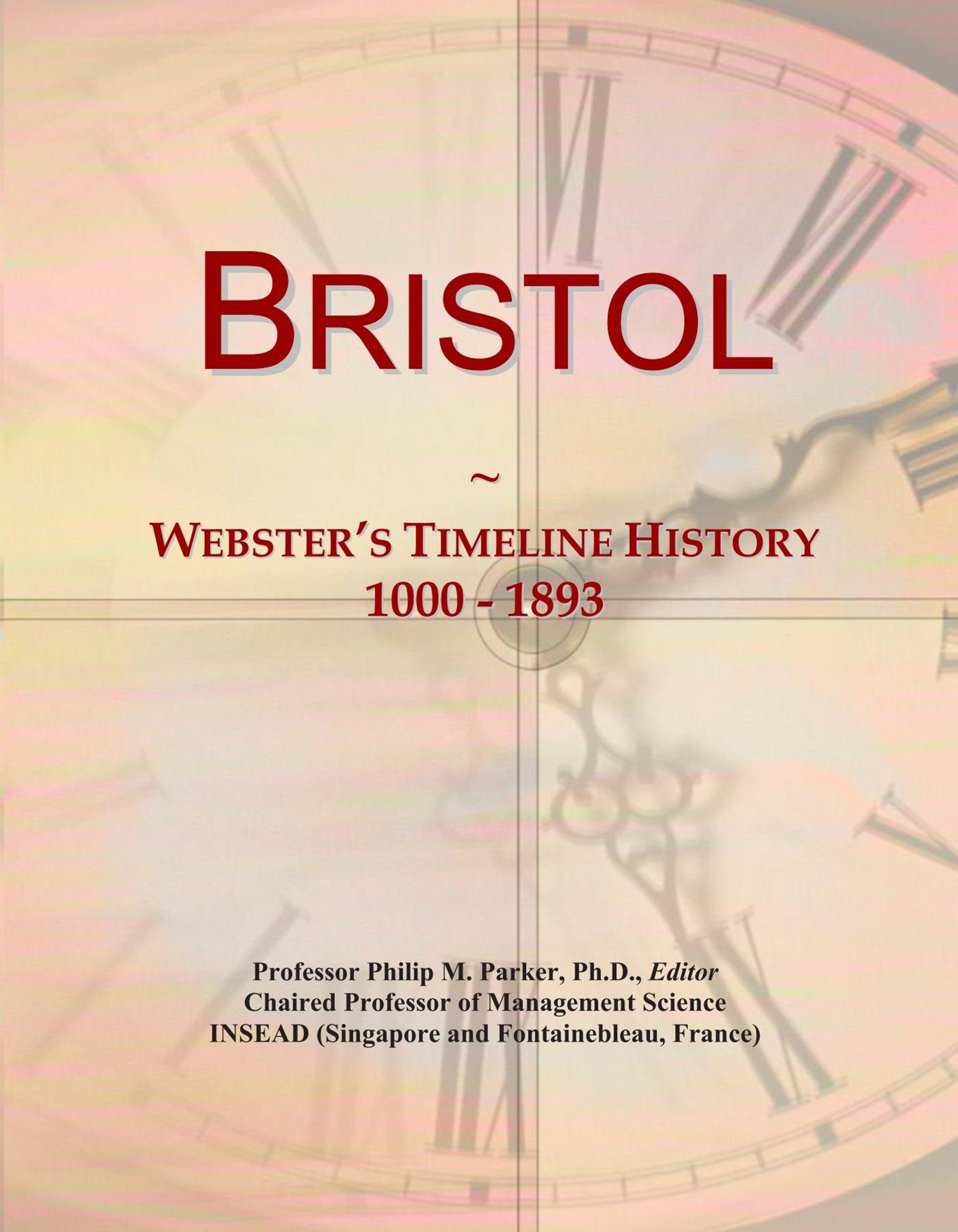
Webster’s Timeline History: Bristol, 1000–1893
For those who have never been to Bristol and who know very little about that obscure seaport nestled in a British backwater, Webster’s Timeline History: Bristol, 1000–1893, published in San Diego, California, serves as a self-declaredly authoritative, albeit dry-as-chalk-dust, guide, moving from the Norman Conquest and all that to the High Victorian era and all that. It is actually a crazy quiltwork of chronologically arranged references sourced online and erratically stitched together in 2009 by Professor Philip M. Parker, who had explored the internet with a globe-girdling search engine using the place name “Bristol” as his headword. The resultant compendium, gathered in the middling noughties, resembles search engine as siege engine. Having broken through, as it were, into multiple museological recesses carrying the dank odor of dungeons, the siege engine has returned to spit out portions, gobbets, and tidbits of a munched-over feast of toponymous trivia, deposited in print as if rendered through the chattering teeth of a devotedly dogged, and possibly demented, robot.
With Professor Parker acting at once as an editor sifting dross from dross, as an amanuensis wearing his metaphorical quill down to the stump while taking dictation from browsing web crawlers, and as a psychopomp of sorts, burning late-night oil in order to catalogue Bristolian quotations from a roll call of bygone town worthies, the reader must trust his assaying and amassment of Bristol home truths to tell it like it is. It’s the gospel of Bristol according to Parker, where all is cramped, crimped, clipped—and seen through a cupping glass darkly.
His starchy and stodgy digest piles up like harvested bushels of moldering chaff, containing the occasional silver needle, ornamental brooch, or curious gem. It’s a kind of sinkhole paste of printed matter. The first entry—which dates, unexpectedly, from the sixth century—is for “Wodin’s Dyke,” “a mediaeval defensive linear earthwork” that starts south of Bristol. The very last entry, from 1893, names George Edward Weare as “author of a collectanea relating to … Gray Friars …, together with a concise history of the dissolution of the houses of the Four Orders of Mendicant Friars in Bristol.” There you have it: an omnium gatherum from Alpha to Omega, not of all things Bristol, but of Bristol as an expression of bibliomania for those who still care about such things.
—David Eggleton
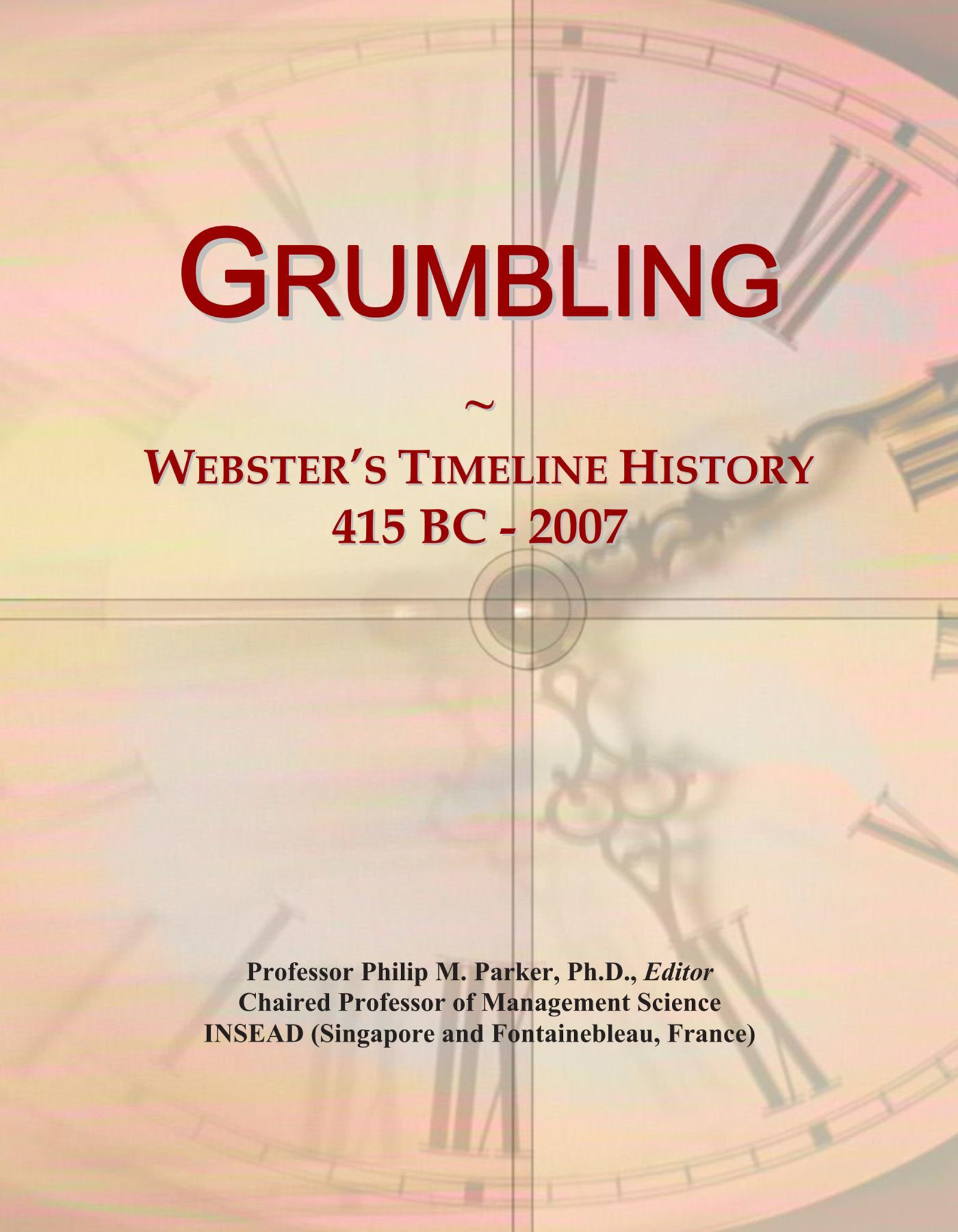
Webster’s Timeline History: Grumbling, 415 BC–2007
When I first opened the volume, two things struck me: the lack of any grumbling between 415 BC and 1399 AD, and that the vast majority of entries were quotations from literature. I read it through from start to finish, looking for references to grumbling that were not merely incidental to whatever else was happening. I started to notice themes: grumbling against oppressive power relations, culminating in revolution; sermonizing against grumbling in the 1850s and 1860s; grumbling winds in wonderfully sonic late-nineteenth-century storm scenes; and grumbling as a precursor to regime change in early twenty-first-century news reports. For something that was essentially an unfiltered internet data grab, the book felt oddly revealing of historical and literary trends. I used these themes to structure the piece, adding ambient grumbling audio suggested by the text. It was strangely satisfying to make, even if the result is complete nonsense!
—Rosie Oliver
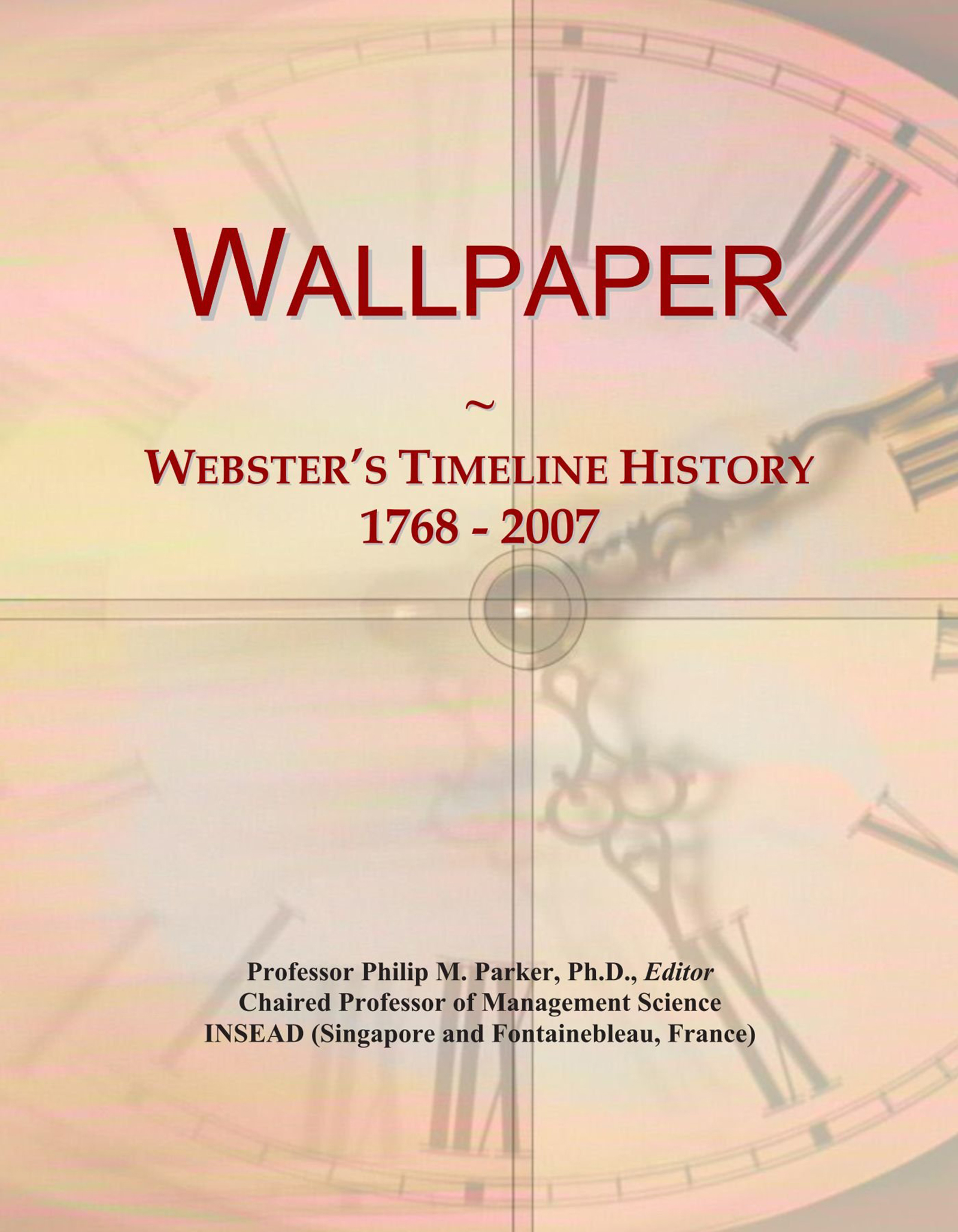
Webster’s Timeline History: Wallpaper, 1768–2007
This book is sheer rubble. A heap of scant hints at missing information. It was only by fabricating relations between these scraps that meaningfulness could be made to emerge. I have to confess to a smidgeon of additional research on Paul Eisler. So meager was his entry, I risked founding the whole essay on the tippiest of points. And it was only by bringing in great slabs of personal anecdote and a few struts of pre-existing knowledge that this could stand as a piece at all.
But there was a productive flipside to Webster’s. I had never before succeeded in wrestling my own past or selfhood into any kind of coherence. As far as I can tell, life is all noise, no signal. Wallpaper, 1768–2007 turned out to be an effective sieving technology. Its erratic, superficial “content” helped me separate from the soup of life a cluster of events, memories, situations, and mindsets that couldn’t help but resonate thematically. The series’s chronological principle was a bit of a gift, bringing into association people, events, and ideas that don’t often share the same page or breath. My pantomime of synchronicity is perhaps rather arch, but while writing, some convergences and echoes felt genuinely profound; others were gleefully comical in their clunk.
I suspect that all human history can be reached through any single trivial object. The liberation in this case was being assigned “wallpaper.” It would be fun, and possibly illuminating, to write interleaving memoirs through other Webster’s Timeline History titles. Given that the series is supposedly a million books strong, a completist goal is out of reach. Which leaves me with a “which sieve?” problem: how to choose which titles to further strain the soup of the universe through. Maybe I could take requests.
—Sally O’Reilly
Webster’s Timeline History: John Smith, 1580–2007
I found the Webster’s Timeline History on John Smith completely overwhelming. Whenever I tried to read it, I got a migraine. After many failed attempts, I eventually discovered a reference to myself on page 153, enabling me to focus my attention on a single page, which I could just about manage. I have no idea of what possible use these books could be for anyone.
—John Smith
David Eggleton is a writer and critic who lives in Dunedin, New Zealand. He is a co-editor of Katūīvei: Contemporary Pasifika Poetry from Aotearoa New Zealand, published by Massey University Press in 2024. Eggleton is a former New Zealand Poet Laureate, whose most recent poetry collection, Lifting the Island, was published by Red Hen Press in September 2025.
Rosie Oliver is an audio producer based in London. In 2021, her recording of the muted mechanical chiming of London’s St Paul’s Cathedral during the coronavirus pandemic was shortlisted for Sound of the Year, an award organized by the Museum of Sound, London. Her documentary podcast series include Women in Revolt! for Tate Britain and Rebel Dykes: The Podcast for Bijou Stories. The founder of Dotmaker Tours, she leads creative walks around London.
Sally O’Reilly is a writer based in London. Recent projects include the performance collective Big Throw (2024–present), the novella Help in Cucumbers (JOAN Publishing, 2023), and Where They Gather (October House Records, 2022), a spoken-word and music album with Kit Downes. For more information, visit sallyoreilly.org.uk.
John Smith is an artist filmmaker who lives in London. His recent film, Being John Smith (2024), has been awarded major prizes at numerous international film festivals. In 2025, he had solo exhibitions at Secession, Vienna, and at Kate MacGarry, London.
Spotted an error? Email us at corrections at cabinetmagazine dot org.
If you’ve enjoyed the free articles that we offer on our site, please consider subscribing to our nonprofit magazine, which includes unlimited access to all our archives.